

IsIs Brake Checking Illegal? Laws, Fault, and State Rules
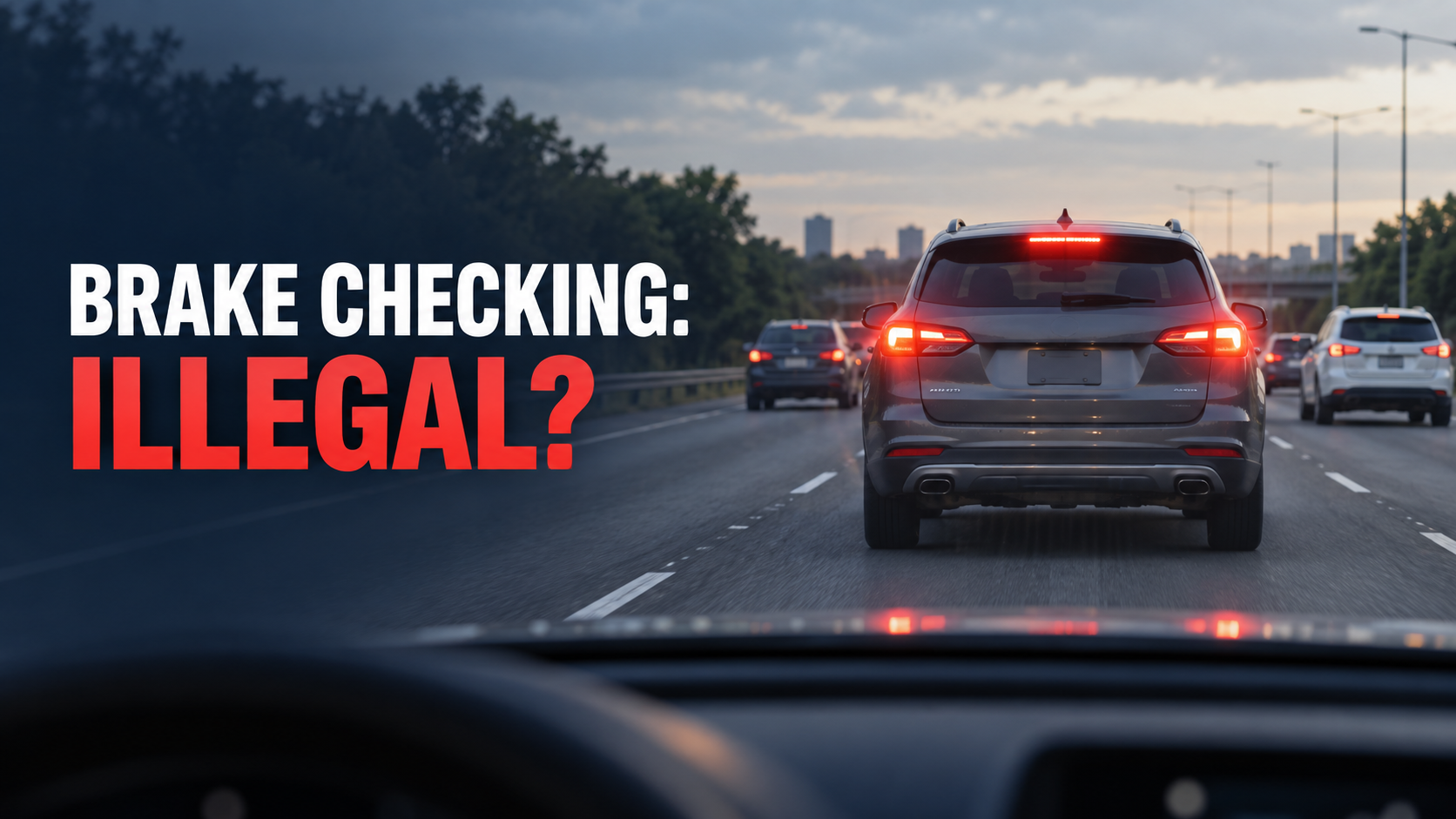
Yes, deliberate brake checking can be illegal. If you are asking is brake checking illegal, the key point is that most traffic codes don’t use the phrase “brake checking.” Instead, police and courts may evaluate the conduct under reckless driving, careless driving, aggressive driving, unsafe slowing, or traffic obstruction laws.
The details matter. Braking hard because a child enters the road is entirely different from slamming on the brakes to frighten or punish a tailgater. This guide explains what counts as brake checking, who may be at fault after a crash, how selected state laws apply, what evidence matters, and how to respond safely.
Legal disclaimer: This article provides general legal information, not legal advice. Traffic offenses, insurance rules, criminal charges, and negligence standards vary by jurisdiction and facts. Speak with a licensed attorney in the relevant state about a specific collision, citation, injury, or insurance dispute.
What Does Brake Check Mean?
A practical brake checking definition is the intentional use of sudden or unnecessary braking to force a following driver to slow sharply, swerve, or believe that a collision is imminent. The phrase usually describes retaliation against a driver who follows too closely, flashes headlights, honks, or otherwise causes frustration.
If you have seen the phrase “brake check” in a crash report or online discussion, intent is the key idea. A quick reduction in speed is not automatically a brake check because drivers must brake for traffic, pedestrians, animals, road debris, weather, and mechanical problems.
| Situation | Likely characterization | Why it matters |
|---|---|---|
| Braking to avoid a pedestrian | Legitimate defensive braking | The driver is responding to an immediate hazard. |
| Slowing for stopped traffic | Ordinary traffic response | A reasonable driver may need to stop quickly. |
| Tapping the brakes to warn of congestion | Warning signal, depending on execution | A brief warning is different from creating a collision risk. |
| Slamming on the brakes to punish a tailgater | Potential brake checking | Retaliatory intent and unnecessary danger may support a violation. |
| Cutting in front and immediately braking | Strong evidence of aggressive conduct | The lane change and sudden braking may show a planned maneuver. |
| Braking because of an unexpected vehicle defect | Emergency event | Maintenance records and vehicle data may become important. |
The distinction can be difficult to prove from the impact alone. For example, a legitimate stop for a pedestrian can look sudden to the driver behind, which is why understanding pedestrian crossing and right-of-way rules may matter when reconstructing what happened.

Why Is Brake Checking Illegal or Potentially Chargeable?
No single nationwide brake-check law exists, and many state codes do not name the maneuver. Nevertheless, deliberately creating an unnecessary rear-end collision risk may fall under broader prohibitions. The available charge depends on the driver’s intent, the danger created, any accompanying behavior, and whether the incident caused property damage or injury.
Reckless or careless driving
Reckless-driving laws commonly focus on willful, wanton, or reckless disregard for people or property. A deliberate high-speed brake check may satisfy that standard more readily than an ambiguous tap of the brakes, although the prosecutor still has to prove the required elements.
Careless-driving provisions generally cover unsafe conduct that does not rise to the more serious mental state required for reckless driving. Which offense applies is a state-specific legal question, not something you can decide from the label “brake check” alone.
Aggressive driving and related violations
Some states define aggressive driving through a combination or pattern of traffic violations. Cutting off another vehicle, tailgating, unsafe lane changes, speeding, and retaliatory braking in one continuous incident can create a stronger case than a disputed braking event viewed in isolation.
Other provisions may also apply. Depending on the facts, an officer might consider unlawful stopping, driving too slowly without justification, failing to signal a sudden decrease in speed, following too closely, or more serious criminal charges when someone is intentionally threatened or badly injured.

If Someone Brake Checks You, Whose Fault Is It?
The honest answer is that either driver, or both drivers, may be assigned fault. The rear driver has a duty to maintain reasonable following space and remain prepared for traffic changes. Still, the lead driver does not receive automatic permission to create an unnecessary hazard.
In an ordinary rear-end collision, the evidence may initially point toward the following driver because that driver struck the vehicle ahead. Evidence of a deliberate brake check can challenge that conclusion and lead an insurer, judge, or jury to assign some or most of the responsibility to the lead driver.
Both drivers can be responsible
Imagine that Driver A follows within a dangerously short distance. Driver B becomes angry, changes lanes directly in front of Driver A, and immediately slams on the brakes despite a clear road. Driver A may bear fault for following too closely, while Driver B may bear fault for the intentional and unsafe maneuver.
Most jurisdictions permit some form of comparative allocation, but the recovery rules and fault thresholds differ. A few jurisdictions apply stricter contributory-negligence rules, so even a small share of fault can have a much larger effect on a civil claim.
A sudden stop does not prove brake checking
Brake lights and a rear-end impact do not establish retaliation on their own. The lead driver may have faced an animal, debris, a traffic backup, a pedestrian, a medical problem, or a mechanical failure that the rear driver could not see.
I recommend avoiding confident claims about intent until you have preserved the surrounding evidence. The reason for braking, traffic conditions, distance between vehicles, earlier lane changes, and each driver’s conduct before the impact all affect the analysis.

Is Brake Checking Illegal in All States?
It is more accurate to say that dangerous, intentional brake checking can be prosecuted or cited under existing laws than to claim every state has a statute specifically called “brake checking.” I found no reason to treat the phrase itself as a uniform legal offense. Each jurisdiction evaluates the conduct through its statutory language and the facts that can be proved.
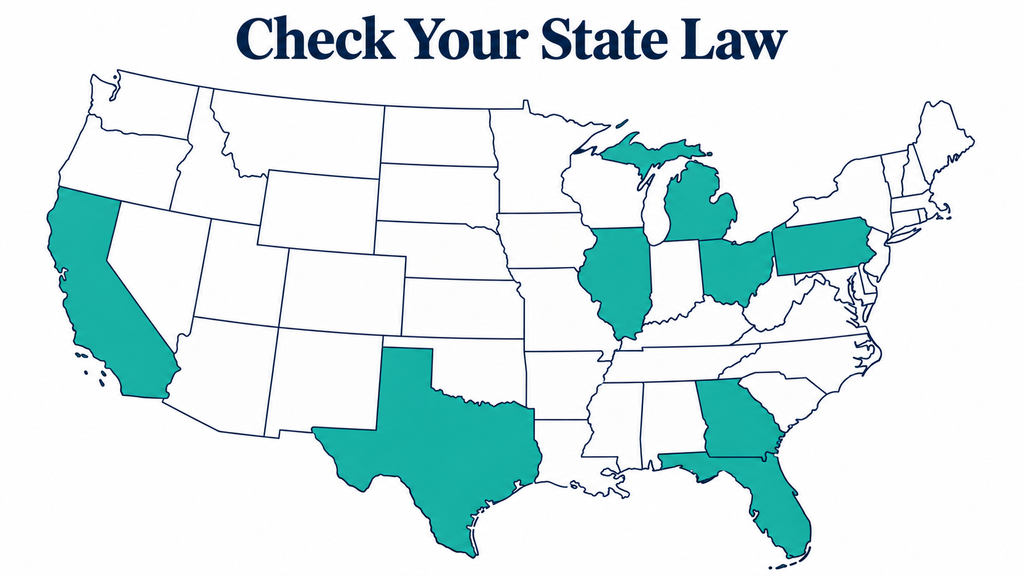
The following comparison addresses the states readers ask about most often. It identifies the primary legal theory that may apply, but it does not predict how an officer, prosecutor, insurer, or court will decide a particular case.
| State | Relevant rule | How it may apply |
|---|---|---|
| Texas | Reckless driving under Transportation Code § 545.401 | Willful or wanton disregard for safety can be charged as reckless driving. The trailing driver may separately violate the reasonable-following-distance rule in § 545.062. |
| California | Vehicle Code § 23103 | Driving with willful or wanton disregard for people or property is reckless driving. Other rules concerning unsafe slowing or signaling may also matter. |
| Florida | Florida Statutes § 316.192 | Willful or wanton disregard can support reckless-driving liability, with enhanced consequences when the conduct causes damage or serious injury. |
| Michigan | Michigan Compiled Laws § 257.626 | Operating in willful or wanton disregard for safety may qualify as reckless driving. Careless-driving and following-distance provisions can apply to less severe or accompanying conduct. |
| Ohio | Ohio Revised Code § 4511.20 | Ohio prohibits operating a vehicle in willful or wanton disregard for the safety of people or property. A deliberate dangerous stop may be evaluated under that standard. |
| Pennsylvania | 75 Pa.C.S. § 3736 | Reckless driving requires willful or wanton disregard for safety. Following too closely can remain a separate issue for the rear driver. |
| Georgia | Georgia Code § 40-6-390 | Driving with reckless disregard for people or property is a misdemeanor. Intentional braking may fit when the evidence proves the required disregard. |
| Illinois | 625 ILCS 5/11-503 | Willful or wanton disregard for safety constitutes reckless driving, and serious injury can increase the offense’s severity. |
Is brake checking illegal in Texas?
Texas does not need a statute containing the words “brake checking” for the conduct to become chargeable. A purposeful maneuver that demonstrates willful or wanton disregard for safety may fall under the state’s reckless-driving provision. At the same time, the trailing driver can still be cited for following too closely.
Is brake checking illegal in California?
California Vehicle Code § 23103 defines reckless driving through willful or wanton disregard for safety. California also expects drivers to warn others when slowing or stopping when a signal is required, but a split-second emergency stop differs from deliberately creating danger.
The California Driver Handbook’s tailgating guidance recommends maintaining course and speed, then moving right when safe so a tailgater can pass. That is a safer response than tapping or slamming the brakes to send a message.
Is brake checking illegal in Florida?
Florida’s reckless-driving law covers driving in willful or wanton disregard for people or property. If the conduct causes property damage or bodily injury, the statute provides more serious consequences than the basic offense.
Is brake checking illegal in Michigan?
Michigan distinguishes reckless driving from careless driving. Deliberate conduct showing willful or wanton disregard may be treated more seriously, while negligent operation without that heightened mental state may be evaluated under the careless-driving provision.
Is brake checking illegal in Ohio?
Ohio prohibits operating a vehicle in willful or wanton disregard for safety. An unnecessary hard stop intended to intimidate another driver may support that theory, but the surrounding facts and proof of intent remain important.
Is brake checking illegal in PA?
Pennsylvania defines reckless driving as driving in willful or wanton disregard for the safety of people or property. A tailgater’s conduct can be relevant to fault, but it does not create a legal privilege for the lead driver to retaliate.
Is brake checking illegal in Georgia?
Georgia’s reckless-driving statute uses a reckless-disregard standard. Law enforcement can investigate brake checking under that provision, especially when video or witness evidence shows the braking served no traffic-safety purpose.
Traffic rules can turn on precise conduct rather than a driver’s informal understanding of what seems safe. The same principle appears in Georgia’s requirement to stop before turning right on red, where the statutory step matters even when the road looks clear.
Is brake checking illegal in Illinois?
Illinois defines reckless driving to include willful or wanton disregard for the safety of people or property. Serious bodily harm, permanent disability, or disfigurement can elevate the matter to aggravated reckless driving, making the outcome of the maneuver legally significant.ent disability, or disfigurement can elevate the matter to aggravated reckless driving, making the outcome of the maneuver legally significant.
What Penalties Can Follow a Brake Check?
The consequences depend on the offense charged and the harm caused. A case may begin as a traffic citation or misdemeanor, but a collision involving serious injury or death can expose a driver to much more severe criminal and civil consequences.
Possible outcomes include:
- A citation for careless, reckless, aggressive, or obstructive driving
- Fines and court costs
- Driver’s license points or suspension
- Increased insurance premiums or nonrenewal
- Liability for vehicle damage, medical expenses, lost income, and other losses
- Probation or incarceration when state law and the facts permit it
- More serious charges when the driving causes severe injury or death
Do not assume a quoted “typical fine” from another jurisdiction applies to your case. State statutes change, local charging decisions differ, and injuries or prior convictions can alter the available penalties.
A traffic event can also affect a driving history long after the roadside encounter ends. The Law Learner’s guide to how long a speeding ticket stays on your record explains why the state, the violation, and the insurer’s review period all matter. However, reckless-driving consequences may differ from an ordinary speeding citation.
What Evidence Proves or Disproves Brake Checking?
Intent is often the hardest issue. A driver may claim that an object, traffic slowdown, animal, or pedestrian required the stop, while the following driver may describe the same event as deliberate retaliation.
Useful evidence can include:
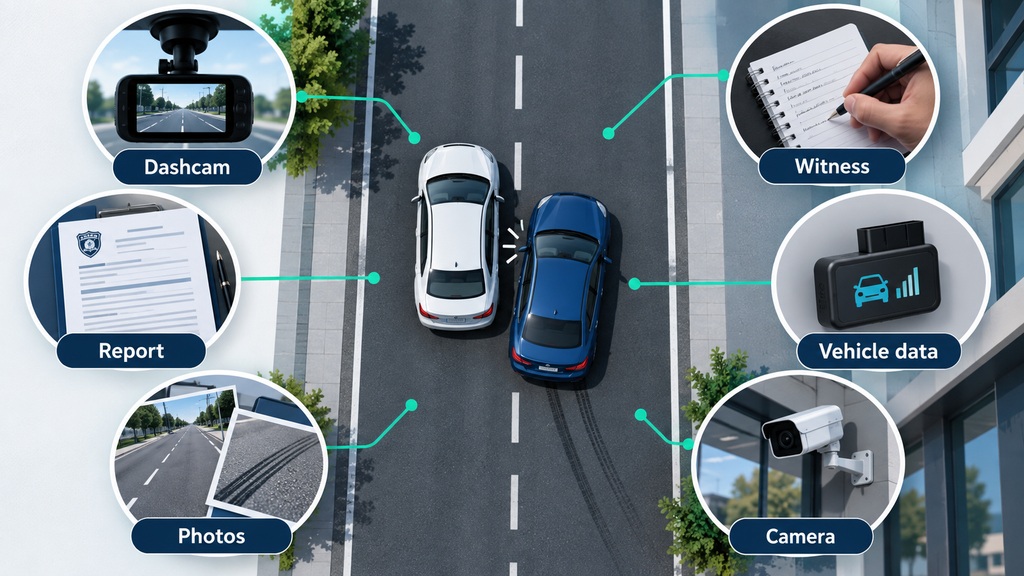
- Dashcam video: Footage may show the lane change, traffic ahead, following distance, repeated braking, and whether a visible hazard existed.
- Independent witnesses: Drivers, passengers, pedestrians, or nearby workers may have seen the events before the impact.
- Police observations and reports: A report may document statements, citations, road conditions, vehicle positions, and visible evidence, though it does not always make the final civil-fault decision.
- Vehicle data: Event data recorders and onboard systems may preserve limited information about speed, braking, and other inputs. Access and interpretation can require consent, legal process, or a qualified expert.
- Physical evidence: Vehicle damage, skid marks, debris, road design, and the final resting positions may help reconstruct the sequence.
- Nearby recordings: Traffic cameras, businesses, homes, and other vehicles may have relevant footage that is overwritten quickly.
Preserve the original file rather than only a compressed social-media copy. Do not edit the video, add captions over important frames, or delete footage that seems unfavorable because authenticity and completeness may later be disputed. important frames, or delete footage that seems unfavorable because authenticity and completeness may later be disputed.
What Should You Do If Someone Brake Checks You?
Your first goal is to avoid a collision and end the encounter. Do not retaliate, chase the other driver, make gestures, or attempt your own sudden maneuver.
- Create space gradually. Ease off the accelerator and increase the gap without making an abrupt move.
- Change lanes when safe. Let the aggressive driver move away rather than trying to pass immediately.
- Stay predictable. Signal normally, maintain control, and avoid eye contact or confrontation.
- Do not use your phone while moving. Ask a passenger to call for help or pull over safely before making the call yourself.
- Report an immediate danger. Contact emergency services if the conduct is ongoing and poses a serious threat. Provide location, direction of travel, vehicle description, and plate information only if you can observe them safely.
- Save dashcam footage. Lock or export the recording before the camera overwrites it.
If a crash occurs, move to a safe location when possible, check for injuries, call the appropriate authorities, exchange required information, photograph the scene, and obtain witness contact details. Report the collision to your insurer promptly, but keep your description factual and avoid guessing about facts you did not see.s. Report the collision to your insurer promptly, but keep your description factual and avoid guessing about facts you did not see.

Common Brake-Checking Mistakes
The biggest mistake is treating the roadway like a place to correct another driver’s behavior. Even if the other motorist is tailgating, retaliation adds a second hazard and may create evidence against you.
Avoid these errors:
- Tapping the brakes repeatedly to “warn” or annoy a tailgater
- Cutting in front of another vehicle and slowing abruptly
- Assuming the rear driver will always be legally responsible
- Chasing the other vehicle to photograph its plate
- Posting edited footage and accusations before preserving the original recording
- Admitting that you braked “to teach them a lesson”
- Leaving the collision scene without complying with applicable reporting and information-exchange duties
One detail I would not overlook is the difference between explaining what you observed and declaring what the other driver intended. Tell police and insurers that the vehicle slowed suddenly when no hazard was visible to you; let the available evidence support or undermine the allegation of brake checking.
Frequently Asked Questions
What is brake checking?
Brake checking is intentionally braking suddenly or unnecessarily to intimidate, punish, or force a following driver to react. It does not include reasonable braking for traffic, a pedestrian, an animal, debris, weather, or another genuine hazard.
What does brake check mean in a crash claim?
In a claim, the phrase usually alleges that the lead driver deliberately created an unnecessary risk of a collision. The allegation does not prove itself, so insurers and courts examine video, witnesses, road conditions, following distance, vehicle data, and the reason for braking.
If someone brake checks you, whose fault is it?
Fault may rest with the brake-checking driver, the following driver, or both. The trailing driver must maintain a reasonable distance, but convincing proof that the lead driver intentionally created the danger can shift or divide responsibility.
Is brake checking illegal in all states?
No single statute with that exact name applies everywhere. However, intentional and dangerous brake checking can fall under reckless driving, careless driving, aggressive driving, unsafe slowing, or obstruction rules, depending on the jurisdiction and facts.
Can you brake check someone who is tailgating?
You should not brake check a tailgater. Maintain a steady, lawful speed, create more space ahead, move to another lane when safe, and let the vehicle pass rather than escalating the encounter.
Can dashcam footage prove brake checking?
Dashcam video can be strong evidence because it may show the lead-up, traffic conditions, lane movements, brake lights, and absence of a visible hazard. It may also show that the trailing driver was following too closely, so preserve the complete original recording.
Is tapping your brakes always brake checking?
No. A driver may briefly tap the brakes to warn of slowing traffic or activate brake lights, depending on the circumstances. It becomes more concerning when the action is unnecessary, retaliatory, repeated, or designed to make the following driver brake or swerve abruptly.
Conclusion
So, is brake checking illegal? Deliberate brake checking can violate reckless, careless, aggressive, or other traffic laws even when the state code does not use that exact phrase. Tailgating may make the rear driver partly responsible, but it does not excuse the lead driver’s intentional creation of a new hazard.
If you were cited, injured, or blamed after a disputed rear-end collision, preserve the footage and documents, report the facts accurately, and obtain advice from a qualified attorney in the relevant state. Explore The Law Learner’s other plain-language traffic-law guides to understand how state rules can affect your license, insurance, and legal options.
