

How Long Has the Government Been Shut Down? Current 2026 Answer
Last fact-checked: September 16, 2026
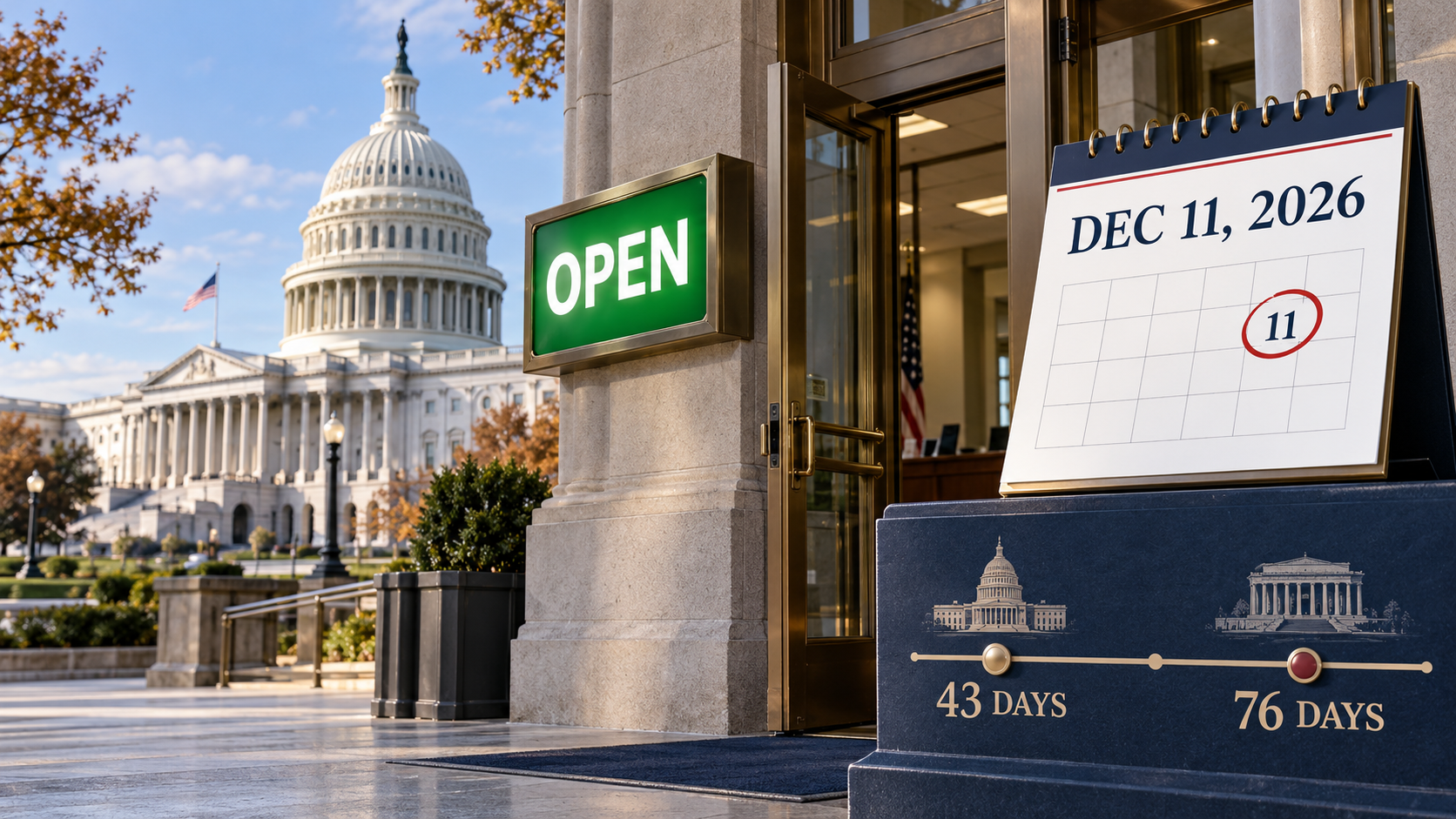
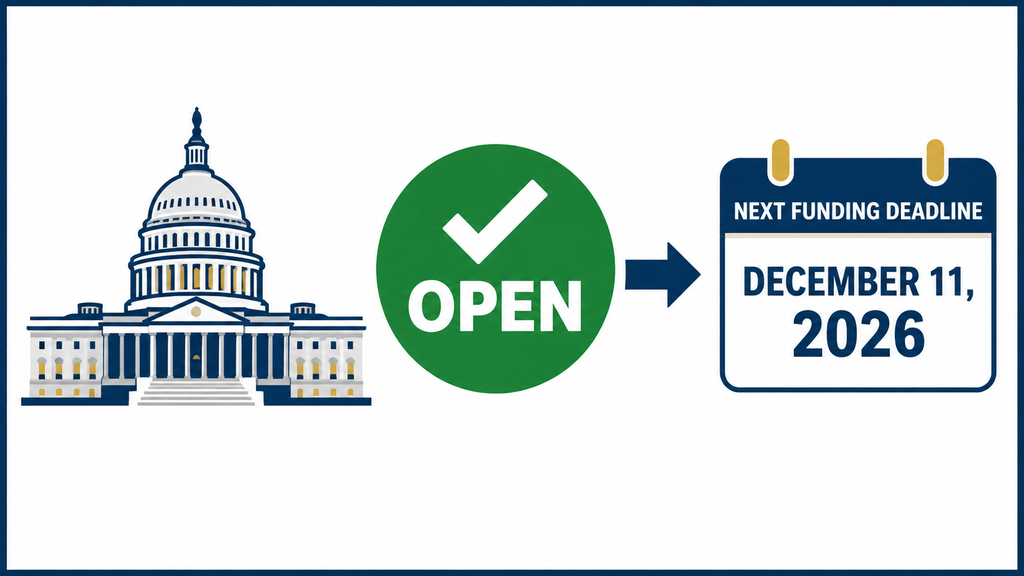
The federal government is not shut down right now. As of September 16, 2026, federal agencies are open and funded through December 11, 2026.
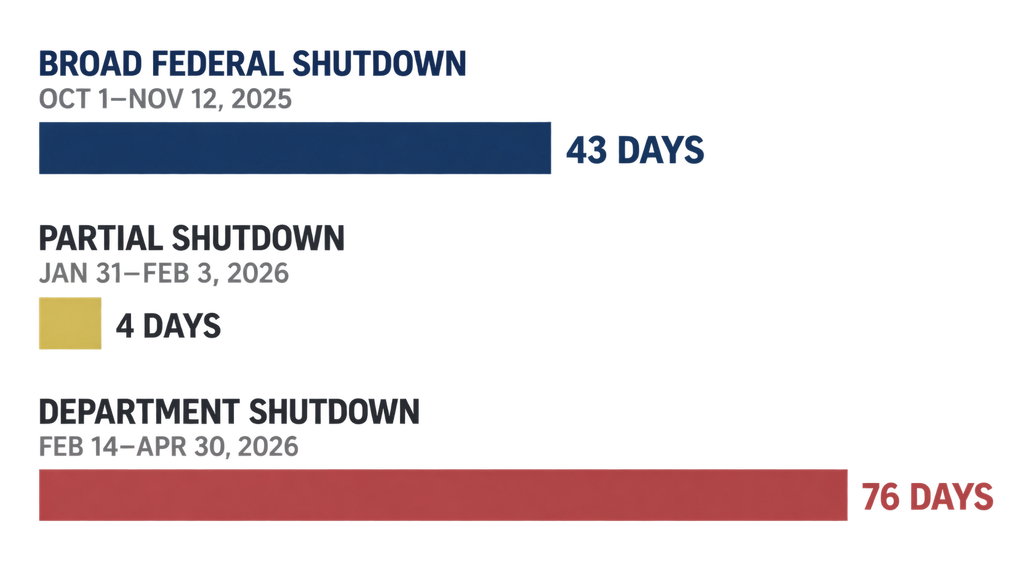
If you mean the broad shutdown that began in 2025, it lasted 43 days, from October 1 through November 12, 2025.
Two partial shutdowns also happened in 2026. The first lasted four days, from January 31 through February 3. The second affected most of the Department of Homeland Security and lasted 76 days, from February 14 through April 30.
The 76-day shutdown is the longest shutdown involving a single federal department. The 43-day shutdown remains the longest broad federal government shutdown.
Key Takeaways
- The U.S. federal government is open as of September 16, 2026.
- Current temporary funding lasts through December 11, 2026.
- The 2025 broad federal shutdown lasted 43 days.
- An early 2026 partial shutdown lasted four days.
- A later department-specific shutdown lasted 76 days.
- A future funding deadline does not mean the government is already closed.
- “Longest shutdown” can mean different things depending on how many agencies were affected.
Current Government Shutdown Status
| Question | Current answer |
|---|---|
| Is the government shut down now? | No |
| When did the last shutdown end? | April 30, 2026 |
| What was the last shutdown? | A department-specific shutdown |
| How long did it last? | 76 days |
| How long is the government currently funded? | Through December 11, 2026 |
| Is another shutdown certain? | No |
Congress signed a temporary spending measure on September 2, 2026. The current funding law provides federal funding through December 11.
Congress can prevent another shutdown by passing regular spending bills or another temporary extension before that date.
Is the Government Still Shut Down Right Now?
No. The broad federal government and the Department of Homeland Security have reopened.
Some old articles and social posts still say a shutdown is in progress because they were published during the 2025 or early 2026 funding disputes. Always check the publication date and whether the page has been updated.
You may also see warnings about an approaching shutdown deadline. These reports describe what could happen if Congress does not approve new funding. They do not mean a shutdown has already started.
The current law provides temporary funding through December 11, 2026. Until that funding expires, or unless another legal issue changes the situation, the government remains open.
How Long Was the Government Shut Down in 2025?
The 2025 federal government shutdown lasted 43 days.
It began at 12:01 a.m. on October 1, after Congress did not approve funding before the new fiscal year started. It ended on November 12 when a new spending measure was signed.
A later federal review confirmed that much of the federal workforce was affected from October 1 through November 12. Some agencies briefly continued normal work with money from other sources, but many operations were reduced or paused. The dates appear in the official shutdown review.
At the time, the 43-day lapse became the longest federal shutdown on record. It passed the previous 35-day record from 2018–2019.
That record needs careful wording today. The 2025 event is still the longest broad shutdown, but the 2026 shutdown involving most of one department lasted longer.
How Long Was the Government Shutdown in 2026?
There were two separate shutdowns in 2026. They differed in length and scope.
January 31 to February 3: Four days
The first shutdown started on January 31 because several funding measures had not completed the full lawmaking process before the existing money expired.
Congress signed a new spending package on February 3. That ended the four-day shutdown and provided full-year funding for most affected departments.
Homeland Security received only a short extension because lawmakers were still negotiating its annual funding.
February 14 to April 30: 76 days
The short extension for Homeland Security expired after February 13. Most of the department entered a partial shutdown on February 14.
The funding lapse continued until April 30. The department later described the shutdown as lasting 76 days in its official employee update.
Most other federal departments remained funded during this time. Therefore, it would be inaccurate to say the entire federal government was closed for 76 days.
Some Homeland Security operations also continued. Airport screening, emergency work, border functions, protective services, the Coast Guard and other legally protected or separately funded activities continued in some form. However, employees, travelers and agency services still faced serious effects.
What Is the Longest Government Shutdown in History?
The 76-day Homeland Security shutdown in 2026 is the longest shutdown affecting a single federal department.
The 43-day shutdown in 2025 is the longest broad federal shutdown, meaning that funding problems affected a much larger part of the federal government.
Before those two events, the 35-day partial shutdown from December 2018 to January 2019 held the overall record.
| Shutdown | Length | Scope |
|---|---|---|
| Homeland Security shutdown, 2026 | 76 days | Most of one department |
| Broad federal shutdown, 2025 | 43 days | Much of the federal government |
| Partial federal shutdown, 2018–2019 | 35 days | Several departments |
| Federal shutdown, 1995–1996 | 21 days | Several departments |
This difference explains why readers may find several answers online.
A page saying the longest shutdown was 35 days is outdated. A page saying it was 43 days may be discussing the longest broad shutdown. A page saying 76 days is counting the later shutdown involving one department.
The most accurate answer is:
The longest agency-specific shutdown lasted 76 days in 2026. The longest broad federal shutdown lasted 43 days in 2025.
What Does “Government Shutdown” Actually Mean?
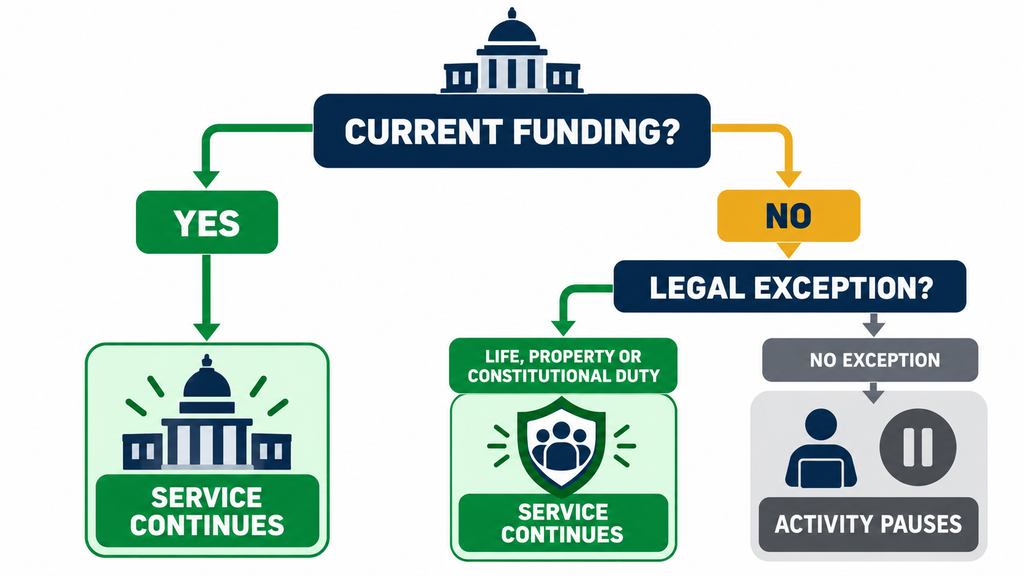
A shutdown is a lapse in legal funding authority. It does not mean the Constitution, Congress, courts or every federal program stops existing.
Congress normally funds federal agencies through annual appropriations laws. If that funding expires before Congress signs a new spending law, affected agencies must stop activities that lack another funding source or a legal reason to continue.
Congress can avoid a shutdown by passing:
- Regular annual appropriations
- A package containing several spending bills
- A temporary continuing resolution
A continuing resolution, or CR, keeps agencies operating for a limited time, usually near their existing funding levels. This temporary funding explanation describes why Congress uses continuing resolutions and how they affect agencies.
Why Does the Government Shut Down?
The Constitution gives Congress control over federal spending. Federal agencies cannot simply decide to spend money after their legal funding expires.
A shutdown usually follows this sequence:
- Congress and the President have not completed new funding legislation.
- The existing spending authority reaches its expiration date.
- An affected agency loses authority to spend money on ordinary operations.
- The agency begins its shutdown plan.
- Non-exempt work pauses until new funding becomes law.
The Antideficiency Act limits federal agencies from spending or creating financial obligations without legal authority. It includes exceptions for certain protected work, including activities needed to protect human life and property.
This process reflects the broader separation of government powers. Congress approves spending, while the executive branch operates federal programs using the funds provided by law. For additional background, read this constitutional law overview.
Does the Whole Federal Government Close?
No. This is one of the most common misunderstandings about a shutdown.
Programs can continue when they:
- Have money from a source that has not expired
- Are supported by fees or trust funds
- Are required to protect life or property
- Are needed for constitutional duties
- Have permanent or mandatory funding
- Are legally necessary to support another continuing activity
Each affected agency uses a shutdown plan to decide which operations will continue and which employees must work.
An agency that already has full-year funding may remain open even when another department shuts down. This is why news reports often use the phrase “partial government shutdown.”
What Happens to Federal Workers?
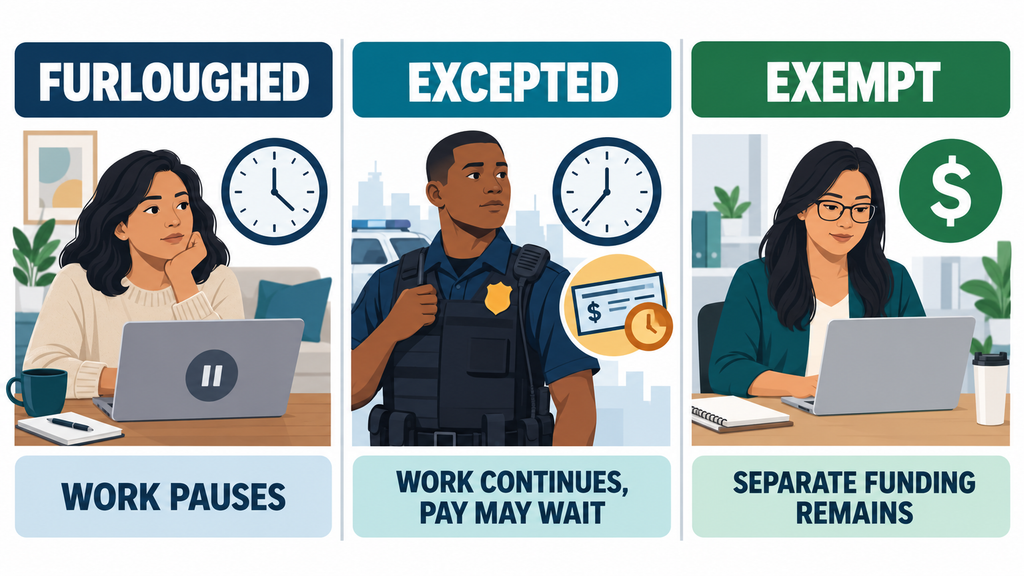
Federal workers affected by a shutdown generally fall into three groups.
Furloughed workers
Furloughed employees are temporarily placed in a non-duty status. They are normally told not to perform their regular work until funding returns.
Excepted workers
Excepted employees must continue working because their jobs support activities allowed to continue under law.
Their pay may be delayed even though they must report to work.
Exempt workers
Exempt employees work for programs with money that remains legally available. Their jobs and regular pay may continue because their funding has not lapsed.
Under current law, affected federal employees are entitled to retroactive pay after the shutdown ends. The federal furlough guidance explains the main pay, leave, insurance and employment rules.
Back pay does not prevent immediate hardship. Workers may still miss scheduled paychecks while the shutdown continues.
Federal contractors do not automatically receive the same protection. Their pay depends on the contract, available funds and whether the work continues.
What Services Continue During a Shutdown?
The exact answer depends on which agency lost funding and how long the lapse continues.
Social Security payments
Regular Social Security payments usually continue because benefit payments don’t rely solely on annual discretionary appropriations.
However, some customer service, card replacement, application review or administrative work may slow if staffing is reduced. This Social Security benefits guide explains how retirement, disability and survivor programs work.
Medicare and Medicaid
Benefit payments and covered health services generally continue. Some administrative tasks, reviews or support services may be delayed.
Mail delivery
Mail delivery normally continues because postal operations use a separate funding structure.
Airport security and air traffic control
Many workers in these areas must continue working for public safety. A long shutdown can still cause staffing pressure, missed paychecks, delays and reduced service.
Passports and visas
Some passport and visa services may continue, but fee income may be reduced. Operations can still slow or change depending on available funds, building access and staffing.
National parks and museums
Conditions vary. Some locations may close, offer limited services or remain accessible without normal staffing. Waste removal, visitor centers, restrooms, road access and emergency support may be affected.
Food assistance
Benefit availability depends on the program, existing funds, contingency plans and shutdown length. A long shutdown can create more risk than a short one.
The safest approach is to check the current notice from the agency responsible for the service you need.
Do Federal Courts Close During a Shutdown?
Federal courts do not automatically close when executive agencies lose funding.
Courts may initially continue using filing fees and other available money. If those funds run low, the judiciary can limit operations to work required for its constitutional duties.
During the 2025 shutdown, the federal judiciary first continued paid operations. It later announced that only limited operations would continue after its available funding ran out. The federal court notice explained how that change affected court staff and operations.
Never assume a hearing, filing deadline or court order has been canceled because of a shutdown. Check notices from the specific court handling the case.
Does a Shutdown Affect State Governments?
A federal shutdown does not directly close state or local governments.
State courts, public schools, police departments, city offices and state agencies generally operate under separate budgets. However, they can feel indirect effects if they depend on federal grants, federal workers, shared programs or delayed federal payments.
The effect may be limited during a short shutdown but become more serious if the funding lapse lasts for weeks.
How Can You Check the Current Shutdown Status?
Government funding news changes quickly. Use these checks before relying on a headline:
- Look for a newly signed funding law.
- Confirm the date through which funding lasts.
- Check the responsible agency’s operating notice.
- Review federal employee status announcements.
- Check the specific court, park, passport office or benefit program you need.
- Read the publication and update dates on news articles.
Search snippets can remain online long after a shutdown ends. A headline saying “government shuts down” may describe the 2025 shutdown, the four-day event in early 2026 or the later department shutdown.
Also watch for the word “could.” A headline saying the government “could shut down” reports a risk, not a current closure.
Conclusion
The federal government is open as of September 16, 2026. Current temporary funding continues through December 11, 2026.
The broad shutdown that began on October 1, 2025 lasted 43 days. An early 2026 partial shutdown lasted four days. A later shutdown involving most of the Department of Homeland Security lasted 76 days.
Therefore, the 76-day event is the longest agency-specific government shutdown, while the 43-day event remains the longest broad federal shutdown.
The December funding deadline may create another shutdown risk, but it does not mean the government is closed now.
Frequently Asked Questions
Is the government still shut down right now?
No. The federal government is open and currently funded through December 11, 2026.
How long has the U.S. government been shut down?
The broad 2025 shutdown lasted 43 days. A separate shutdown involving most of one department lasted 76 days in 2026.
How long was the government shutdown in 2025?
The 2025 federal government shutdown lasted 43 days, from October 1 through November 12.
How long was the government shutdown in 2026?
A partial shutdown lasted four days from January 31 through February 3. A separate Homeland Security shutdown lasted 76 days from February 14 through April 30.
What was the longest government shutdown in history?
The longest agency-specific shutdown was the 76-day Homeland Security shutdown in 2026. The longest broad federal shutdown was the 43-day shutdown in 2025.
When is the next government funding deadline?
The current temporary funding law expires after December 11, 2026. Another shutdown isn’t automatic because Congress can approve additional funding before the deadline.
Do federal employees get paid after a shutdown?
Yes. Current law provides retroactive pay for affected federal employees after a shutdown ends. Federal contractors do not automatically receive the same protection.
