

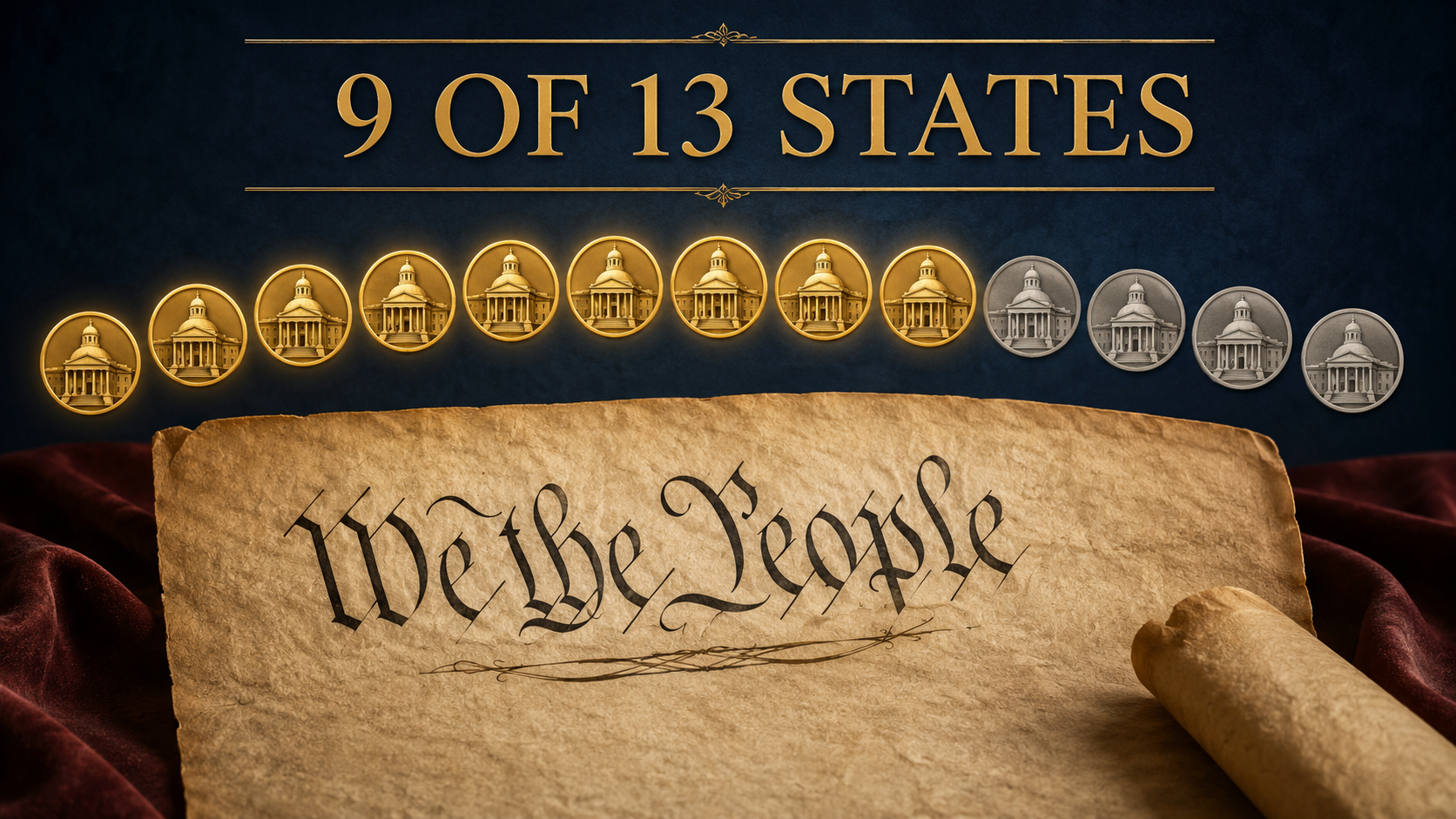
If you are wondering how many states had to vote for the constitution to approve it?, the direct answer is nine of the original thirteen states. Article VII required approval through state ratifying conventions, and New Hampshire supplied the decisive ninth ratification on June 21, 1788.
That short answer is correct, but it can create three misunderstandings. State conventions, not one nationwide popular vote, made the legal decisions. Nine ratifications established the Constitution only among the states that ratified it, and the new federal government did not actually begin operating that same day.
Quick answer: How Many States Had to Vote for the Constitution to Approve It?
Nine of the thirteen original states had to ratify the Constitution. New Hampshire became the ninth on June 21, 1788. The new government began operating under the Constitution on March 4, 1789.
Why Were Nine States Needed to Approve the Constitution?
The number came directly from Article VII, the final article of the proposed Constitution. The official text of Article VII says that ratification by conventions in nine states would be sufficient to establish the Constitution “between the States so ratifying the Same.”
Nine was therefore not an estimate, a later court interpretation, or a rule invented by Congress. It was the threshold written into the proposed document by the Constitutional Convention and accepted through the ratification process.
The rule also reveals an important limitation. Once nine states approved, the Constitution did not automatically bind a state that had refused or had not yet ratified. Its wording applied the new arrangement among the states that chose to join it.
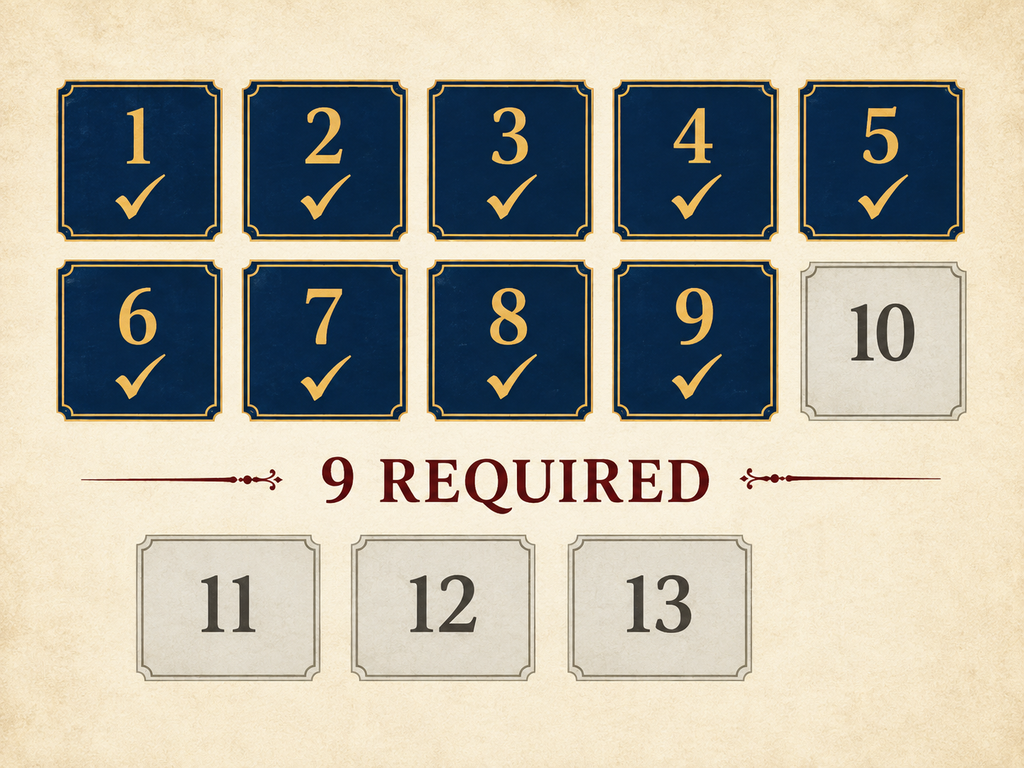
Why not all thirteen states?
Under Article XIII of the Articles of Confederation, changes to that governing compact required approval by every state legislature. That unanimity rule made fundamental reform exceptionally difficult, especially when states had different economic and political interests.
The Constitutional Convention proposed a different route: approval by special conventions in nine states. The Library of Congress overview of the constitutional transition notes the practical difficulty created by the Articles’ unanimous-vote requirement.
The choice was controversial because the convention had originally been called to revise the Articles, not simply replace them through a new nine-state process. Still, the proposed Constitution could gain authority only if the required state conventions accepted its own ratification terms.
Who Actually Voted to Ratify the Constitution?
The states did not cast thirteen votes in a single meeting. Each state arranged a ratifying convention, and elected delegates at that convention debated the proposed Constitution before voting for or against ratification.
This detail matters because the wording “how many states had to vote” can sound as if state legislatures approved the document directly. Article VII deliberately specified state conventions. The Library of Congress historical explanation of Article VII explains that this process allowed the Constitution to rest on authority derived from the people through specially elected convention delegates.
Ordinary citizens did not participate in one direct national referendum. Voting qualifications and the methods used to choose convention delegates differed by state, so the process was not a modern universal popular vote either.

Which Nine States Ratified the Constitution First?
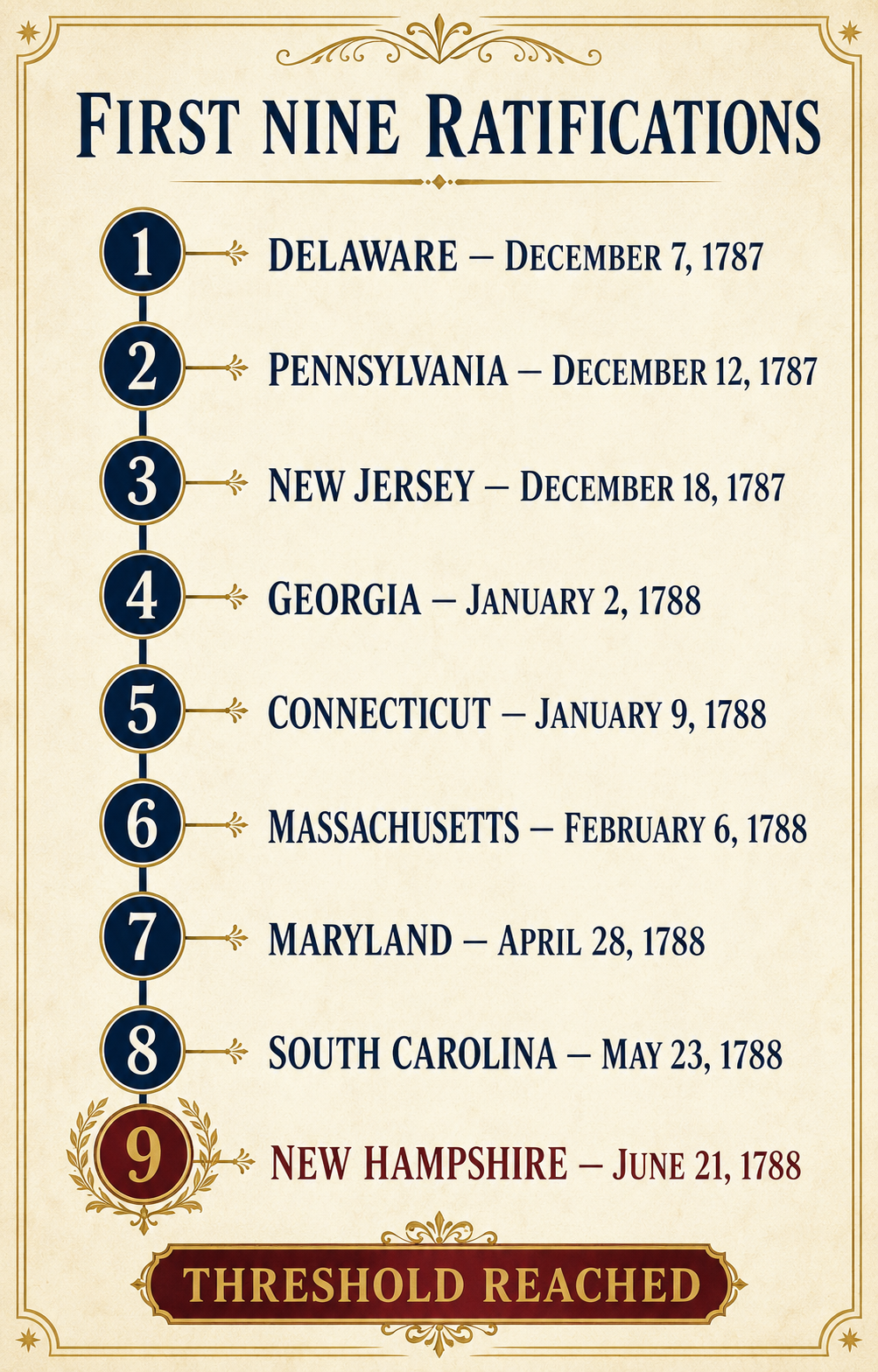
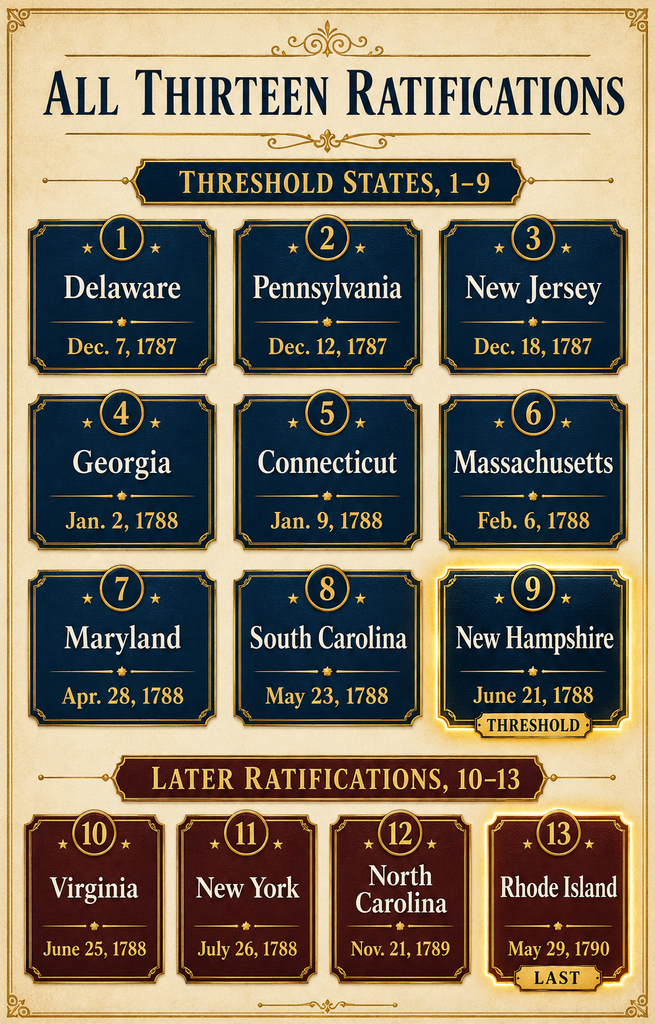
Delaware acted first on December 7, 1787. Over the next six months, seven more states approved before New Hampshire became the ninth and crossed the constitutional threshold on June 21, 1788.
The following chronology and convention totals are recorded in the National Archives ratification materials. Looking at the vote counts also shows that ratification was unanimous in some conventions but extremely close in others.
| Order | State | Ratification date | Convention vote |
|---|---|---|---|
| 1 | Delaware | December 7, 1787 | 30-0 |
| 2 | Pennsylvania | December 12, 1787 | 46-23 |
| 3 | New Jersey | December 18, 1787 | 38-0 |
| 4 | Georgia | January 2, 1788 | 26-0 |
| 5 | Connecticut | January 9, 1788 | 128-40 |
| 6 | Massachusetts | February 6, 1788 | 187-168 |
| 7 | Maryland | April 28, 1788 | 63-11 |
| 8 | South Carolina | May 23, 1788 | 149-73 |
| 9 | New Hampshire | June 21, 1788 | 57-47 |
New Hampshire is the answer to “Which state made the Constitution official?” in the threshold sense. Its approval produced the required ninth ratification, although the Confederation Congress did not receive official notice until July 2, 1788.
What Happened After the Ninth State Ratified?
Crossing the threshold did not instantly create a working presidency, Congress, and federal judiciary. The existing Confederation Congress still had to receive the result and arrange the transition, including dates for choosing presidential electors and beginning proceedings under the new framework.
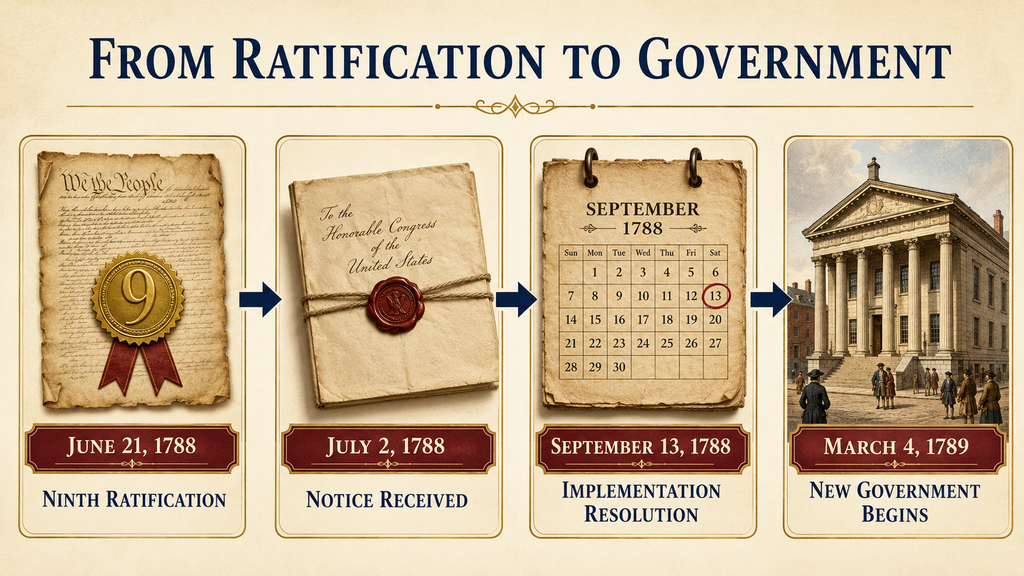
The National Archives explanation of when the Constitution became binding separates these stages clearly. New Hampshire supplied the ninth ratification on June 21, 1788; Congress received notice on July 2; Congress adopted the implementation resolution on September 13; and proceedings under the Constitution were set to begin on March 4, 1789.
The first Congress was scheduled to convene on March 4, but it did not immediately have enough members present to conduct normal business. The Senate reached its first quorum on April 6, and George Washington was inaugurated on April 30, 1789.
| Event | Date | Why it matters |
| Ninth state ratified | June 21, 1788 | Article VII threshold was met |
| Congress received notice | July 2, 1788 | Formal transition work proceeded |
| Implementation resolution adopted | September 13, 1788 | Election and government-start dates were set |
| New constitutional government began | March 4, 1789 | Proceedings started under the new framework |
| Washington inaugurated | April 30, 1789 | The first president took office |
This is why “ratified in 1788” and “in operation since 1789” can both be correct. The Constitution became binding among nine ratifying states in 1788, while the government it created began operating the following year.
Did All Thirteen States Eventually Ratify?
Yes, but not before the nine-state requirement had already been met. Virginia ratified four days after New Hampshire, and New York followed on July 26, 1788, bringing the participating total to eleven before the new government began.
North Carolina did not ratify until November 21, 1789. Rhode Island was last on May 29, 1790, so all thirteen original states were finally within the new constitutional union almost two years after the ninth-state threshold was crossed.
| Order | State | Ratification date | Convention vote |
| 10 | Virginia | June 25, 1788 | 89-79 |
| 11 | New York | July 26, 1788 | 30-27 |
| 12 | North Carolina | November 21, 1789 | 194-77 |
| 13 | Rhode Island | May 29, 1790 | 34-32 |
The close results in Virginia, New York, and Rhode Island show why the ninth-state threshold did not end the political struggle. The new system might have been legally established without every state, but leaving major or geographically important states outside it would have weakened the union.
Why Was Ratification So Controversial?
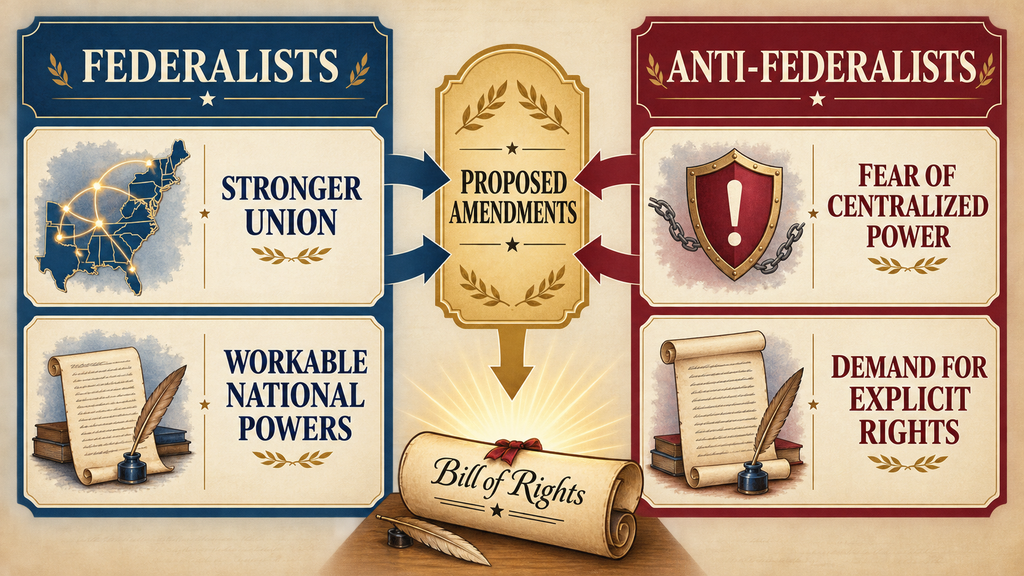
Supporters known as Federalists argued that the government under the Articles of Confederation was too weak to address national problems effectively. They believed the Constitution offered a workable union with divided powers, representative institutions, and authority to act on matters such as taxation and interstate commerce.
Opponents, commonly called Anti-Federalists, feared that the proposed national government would become too powerful. They also objected to the absence of an express bill of rights protecting freedoms such as speech, religion, and the press.
Promises to consider amendments helped move the debate forward in closely divided states. Ten amendments were ultimately ratified in 1791 as the Bill of Rights, but those amendments were not part of the document when the first nine states approved it.
For related constitutional context, what “insure domestic tranquility” means explains one problem the new framework was designed to address. You can also review why the Constitution is the supreme law of the land to understand the legal status the ratified document holds today.
Do Not Confuse Ratifying the Constitution With Amending It
The original Constitution’s Article VII rule required nine of thirteen states. The amendment process created by Article V uses different numbers: an amendment is generally proposed by two-thirds of both houses of Congress and must then be ratified by three-fourths of the states, unless the alternative constitutional methods are used.
With fifty states, three-fourths currently means thirty-eight states. That modern number does not answer the historical question about approval of the original Constitution, and “two-thirds” describes a common proposal threshold rather than the final state-ratification threshold for amendments.
| Question | Governing rule | Required approval |
| Ratifying the original Constitution | Article VII | 9 of 13 state conventions |
| Proposing an amendment through Congress | Article V | Two-thirds of both houses |
| Ratifying a proposed amendment today | Article V | Three-fourths of states, currently 38 of 50 |
One detail I would not overlook is the decision-making body. Article VII used state conventions for the original Constitution. Under Article V, Congress chooses whether proposed amendments go to state legislatures or state conventions for ratification, although the legislature method has been used for all but the Twenty-First Amendment.
Frequently Asked Questions
How many states had to vote for the constitution to approve it?
Nine of the original thirteen states had to ratify the Constitution. Article VII required approval by state ratifying conventions, and New Hampshire became the ninth state on June 21, 1788.
Which state was the first to ratify the Constitution?
Delaware was first, ratifying on December 7, 1787, by a 30-0 convention vote. That history is the reason Delaware is widely known as “The First State.”
Which state was the ninth to ratify the Constitution?
New Hampshire was ninth. Its convention voted 57-47 for ratification on June 21, 1788, satisfying Article VII’s threshold.
Which state was the last to ratify the Constitution?
Rhode Island was the last of the original thirteen states to ratify. Its convention approved the Constitution 34-32 on May 29, 1790.
Did the Constitution need a unanimous vote?
No. The proposed Constitution required nine state conventions, even though changes under the Articles of Confederation had required approval by every state legislature.
Did citizens vote directly on the Constitution?
There was no single nationwide direct vote on the document. States selected delegates for special ratifying conventions, and those convention delegates cast the formal votes; eligibility to participate in choosing delegates was governed by the more limited voting rules of the period.
When did the Constitution officially take effect?
The answer depends on what “take effect” means. It became binding among the nine ratifying states when New Hampshire ratified on June 21, 1788, but proceedings under the new federal government began on March 4, 1789.
Why did New York and Virginia still matter after nine states ratified?
They were large, economically important states, and their absence would have made the new union less stable and geographically awkward. Virginia ratified on June 25, 1788, and New York followed on July 26, 1788.
Is nine states still the rule for constitutional amendments?
No. Article V generally requires ratification by three-fourths of the states for an amendment to become part of the Constitution, which currently means thirty-eight states.
Conclusion
So, how many states had to vote for the constitution to approve it? The precise answer is nine of the original thirteen, acting through state ratifying conventions. New Hampshire supplied the ninth approval on June 21, 1788, while the new government began operations on March 4, 1789, and the final original state joined in 1790.
Remember the simple formula: nine to establish, thirteen eventually, and three-fourths for later amendments. If you are studying constitutional history, explore The Law Learner’s related guides next and use the linked primary sources to check the exact text, dates, and legal distinctions for yourself.
This article provides general educational information about constitutional history. It is not legal advice for a specific situation.
