


How to Get Full Custody of a Child as a Mother
If you have typed how to get full custody of a child as a mother into a search bar at midnight, I already know roughly where your head is at. You are tired, you are scared for your kid, and you are sick of reading articles that say “it depends” without ever telling you what it actually depends on.
So let me be straight with you from the start. Getting full custody is not about being the mother. Judges are not handing out custody based on gender anymore, and any article that tells you otherwise is setting you up for a rough surprise in court. What actually moves a judge is evidence, consistency, and your ability to show that your home is the safer place for your child to grow up in.
I have spent a lot of time around custody cases over the years, sitting in on hearings, going through paperwork with mothers at their kitchen tables, and watching what judges actually respond to versus what parents assume they respond to. Those two things are often very different, and that gap is exactly where cases get won or lost. This guide will explain what full custody really means, how courts decide it, the exact steps to file, and the state-specific quirks in places like Texas, Georgia, and Connecticut that most generic articles skip entirely.
One more thing before we dive in. Nothing here replaces a conversation with a licensed family law attorney in your state, because custody law shifts from courthouse to courthouse in ways a blog post can never fully capture. Think of this as the map that helps you ask your lawyer the right questions, not a replacement for one.
What Does Full Custody Actually Mean?
Let’s clear up what is full custody actually means first, because half the confusion in custody cases starts right here.
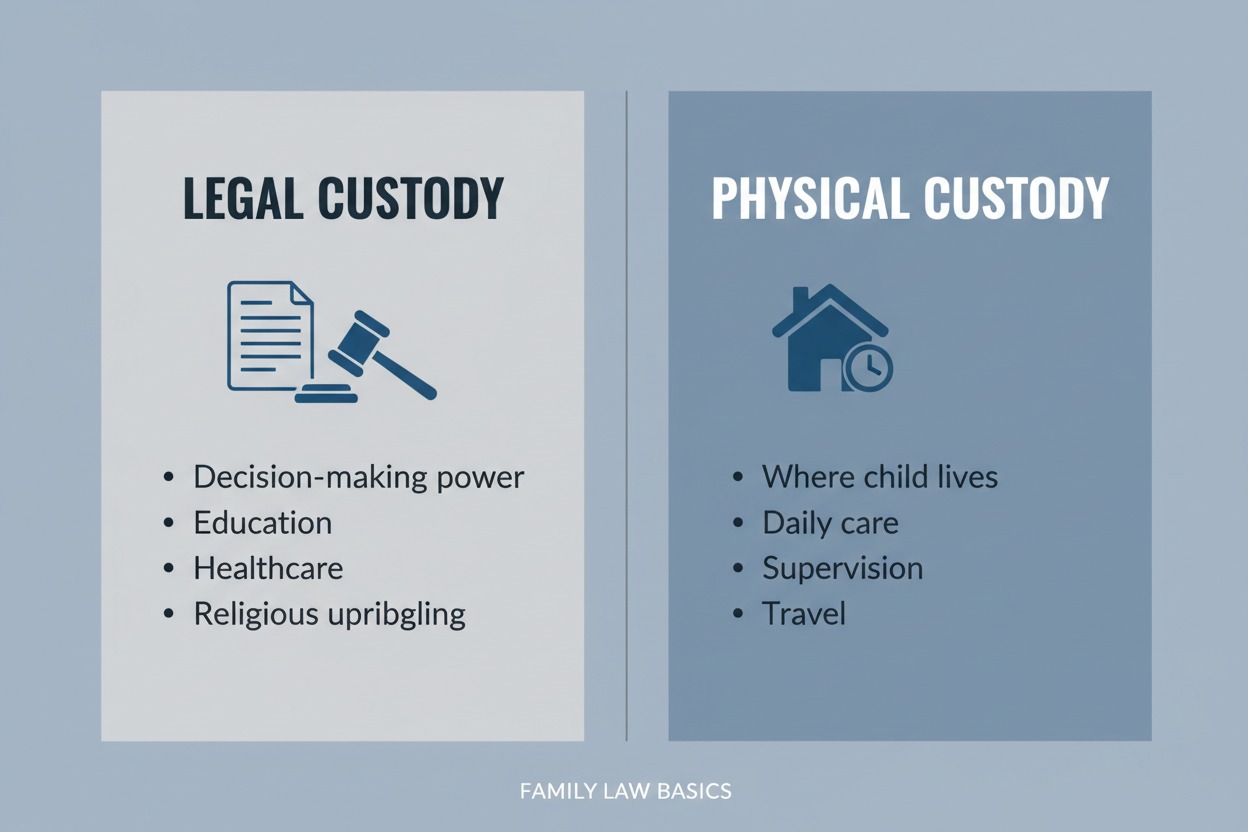
Custody is split into two separate pieces almost everywhere in the country, and mixing them up is one of the most common mistakes I see mothers make when they first start researching their case.
- Legal custody is your right to make the big decisions in your child’s life. That covers school choice, medical treatment, religious upbringing, and things like whether your child gets a passport.
- Physical custody is about where your child actually lives day to day and who handles the daily routine of school runs, meals, and bedtime.
“Full custody” almost always means you are asking for both sole legal custody and sole physical custody. In practice, that means you make the major decisions alone, and your child lives with you the majority of the time, while the other parent typically still keeps some form of visitation unless the court has real safety concerns about them.
It rarely means the other parent disappears from the paperwork entirely. Courts are cautious about cutting a parent out completely, and they usually reserve that outcome for cases involving documented abuse, abandonment, or a serious ongoing danger to the child. If you are the custodial parent, you carry more day-to-day responsibility, but the legal system still tends to want the other parent involved in some capacity unless there is a strong reason not to.
Why Courts Don’t Just Hand Mothers Full Custody Anymore
This part surprises a lot of the mothers I talk to, and it is worth sitting with for a second.
There used to be something called the tender years doctrine, an old legal assumption that young children were automatically better off with their mother. That idea has been phased out across the country, and most states now require judges to apply a gender-neutral standard when deciding custody. Texas law, for example, explicitly says a parent’s sex cannot be used as a factor in a custody decision.
That does not mean mothers are at a disadvantage. It means the playing field is more level than it was a generation ago, and your case has to be built on facts rather than assumptions.
Here is what the numbers actually show. According to the most recent U.S. Census Bureau report on custodial parents, mothers still make up the large majority of custodial parents nationwide, and families headed by a custodial mother had a noticeably higher poverty rate than families headed by a custodial father in 2022. An earlier Census Bureau report found that roughly five out of every six custodial parents were mothers as of 2014, a share that has been slowly declining as more fathers seek and win primary custody.
I bring this up not to discourage you, but because it changes how you should think about your case. Mothers already tend to become the primary parent in practice long before a judge ever gets involved, which means your job is usually to formalize and protect an arrangement that already reflects your child’s daily life, not to invent one from scratch. That is a very different, and generally stronger, starting position.
The Best Interest of the Child Standard: What Judges Really Look At
Every state uses some version of the same core test, usually called the best interest of the child standard. It is the single most important concept in this entire guide, so read this section twice if you need to.
Judges are not scoring a popularity contest between you and the other parent. They are trying to answer one practical question: which arrangement gives this specific child the safest, most stable, most emotionally healthy life going forward.
Courts commonly weigh factors like these:
- The child’s physical and emotional safety, including any history of abuse, neglect, or domestic violence.
- Each parent’s history of actual involvement, not just intentions, in schooling, medical care, and daily routine.
- The stability of each parent’s home, including housing, employment, and any planned relocation.
- Each parent’s willingness to support the child’s relationship with the other parent, unless safety concerns override that.
- The child’s own preference, once they are old enough for a court to consider it, which varies by state.
- Mental health, substance use, or criminal history that could affect parenting capacity.
Texas courts apply what is known as the Holley factors, a list drawn from a landmark state Supreme Court case that judges still use today to weigh the best interest of the child in conservatorship disputes, a framework explained in detail through Texas’s official legal aid resource. Connecticut takes a similarly structured approach under its own statute, listing specific factors like the child’s temperament, each parent’s capacity to meet the child’s needs, and the child’s relationship with siblings, all of which are laid out directly in the Connecticut Judicial Branch’s own custody law research guide.
The takeaway here matters. You are not trying to prove the other parent is a villain. You are trying to build a documented, credible picture of your home as the more stable, more consistent environment for your child right now and going forward.

How to File for Full Custody, Step by Step
If you are wondering how to file for full custody, the process looks fairly similar across most states, even though the exact forms and filing fees differ by county.
- Figure out where to file. Custody cases are almost always filed in the county where your child currently lives, usually in family court. If you are also getting divorced, custody is often decided as part of that same case instead of a separate one, a distinction the New York court system explains clearly for self-represented parents.
- Gather your documentation early. School records, medical records, a rough log of parenting time, and any communication showing the other parent’s involvement (or lack of it) all matter later, so start collecting this before you file, not after.
- File your petition or complaint. This formally opens your case and states what you are asking for, in this case sole legal and physical custody.
- Serve the other parent. They have to be formally notified and given a chance to respond, which is a legal requirement, not just a courtesy.
- Attend temporary orders hearings if needed. Many courts will set temporary custody and support arrangements while the full case is pending, so your child is not left in limbo for months.
- Go through mediation if your state requires it. Many jurisdictions require parents to attempt mediation before a judge will hear a contested custody trial.
- Prepare for trial if you cannot agree. If mediation fails, your case goes in front of a judge, who will apply the best interest standard using the evidence both sides present.
If your goal is specifically how to file for sole custody rather than a shared arrangement, the process is identical on paper. The difference shows up in what you are asking the court to order, and in how much evidence you will need to justify limiting the other parent’s decision-making authority or parenting time.
How to Win Full Custody as a Mother
This is the section most people actually came here for, so let’s get practical about how to win full custody as a mother.
Winning is really about reducing uncertainty for the judge. Every piece of evidence you bring should answer the same underlying question: why is my home the more stable, more child-centered choice right now?
- Document everything, starting today. Keep a simple log of parenting time, missed pickups, school events you attended, and doctor’s appointments. Courts respond to paper trails far more than they respond to verbal accounts.
- Show consistent involvement, not just intentions. Attendance records, report cards, and even a pediatrician’s notes can quietly demonstrate who has actually been showing up.
- Keep your home stable on paper. A steady address, steady income, and a consistent routine matter more than a bigger house or a fancier neighborhood.
- Never coach your child or ask them to pick a side. Judges and evaluators are trained to spot this, and it can badly damage your credibility even when your underlying case is strong.
- Stay off social media about the case. Venting online about the other parent has ended up as evidence in more custody cases than most people realize.
- Be ready for cross-examination. If your case goes to trial, expect the other side’s attorney to question your parenting decisions directly. Staying calm and factual under pressure matters more than sounding emotional or defensive.
- Show, don’t just claim, a willingness to co-parent. Even if you are asking for full custody, demonstrating that you support the child’s relationship with the other parent (when it is safe to do so) tends to strengthen your credibility rather than weaken your case.
If your case involves a history of abuse, substance misuse, or neglect on the other parent’s part, document it as specifically as possible: dates, witnesses, police reports, and medical records if relevant. Vague accusations rarely move a judge. Specific, corroborated patterns often do.
Do You Need an Attorney for Child Custody?
Technically, you can represent yourself in most custody cases, and some parents do, especially when both sides already agree on the basics. But an attorney for child custody becomes far more important the moment your case turns contested, involves allegations of abuse, or crosses state lines.
A child custody & visitation attorney does more than fill out forms. They know your specific judge’s tendencies, they understand which evidence actually carries weight in your county, and they can spot procedural mistakes before they cost you the case. If the other parent has a lawyer and you do not, you are often at a structural disadvantage, not because you are wrong on the facts, but because family court procedure can be genuinely unforgiving of small missteps.
If cost is a concern, look into your state’s legal aid programs or family court self-help centers before assuming a private attorney is out of reach. Many courts also offer limited-scope representation, where a lawyer helps with specific parts of your case (like drafting your petition or preparing you for a hearing) rather than charging for full representation.
If your case involves back child support alongside custody, it helps to understand how that side of the system works too. our guide on how far behind in child support before a warrant is issued breaks down how enforcement actually escalates state by state, which is useful context if support and custody are tangled together in your case, as they often are.
The Child Custody Investigation Process: What to Expect
If your case is contested, do not be surprised if the court orders some form of child custody investigation. This is more common than most first-time parents expect, and knowing what it involves ahead of time takes a lot of the fear out of it.
Courts generally use one of two tools, sometimes both:
- A guardian ad litem (GAL), an independent person, often an attorney or trained volunteer, appointed specifically to represent your child’s interests and report back to the judge, a role explained well by this breakdown of what GALs actually investigate.
- A custody evaluation, a more clinical process usually run by a licensed mental health professional, involving interviews, home visits, and sometimes psychological testing, to produce a written recommendation for the judge based on the child’s needs.
During either process, expect home visits, one-on-one interviews with you and the other parent, and sometimes interviews with teachers, doctors, or other people close to your child. Investigators often ask for school records and may want to observe you interacting with your child directly.
Here is the honest advice I give every mother going into this process: be consistent, be truthful, and do not try to perform for the evaluator. These professionals do this for a living, and inconsistencies between what you say and what they observe tend to stand out far more than an honest, slightly messy answer.

What Not to Say in Child Custody Mediation
Mediation trips up more parents than almost any other stage of the process, mostly because it feels informal even though it genuinely shapes the outcome of your case. Knowing what not to say in child custody mediation can be the difference between a workable agreement and months of extra litigation.
Avoid these, even when you feel completely justified saying them:
- Blame-loaded statements, like accusing the other parent of never understanding your child’s needs. Mediators are trained to notice when a parent is focused on winning an argument instead of solving a scheduling or decision-making problem.
- Threats or ultimatums, which almost always read as a red flag about your ability to co-parent calmly.
- Promises you cannot actually keep, since an unrealistic offer made just to end the session usually causes bigger problems down the line.
- Financially motivated language, such as suggesting you want more time specifically to affect child support, which can seriously undercut your credibility.
- Anything that sounds like you are trying to cut the other parent out entirely, unless there is a documented safety reason, since mediators and later judges tend to view that as a warning sign about parental alienation.
Instead, stick to child-focused language. Talk about schedules, routines, and specific, documented concerns rather than general character attacks. A mediator’s notes and impressions can quietly influence how a judge views your case later, even in states where the mediation itself stays confidential.
How to Get Joint Custody (If Full Custody Isn’t the Right Fit)
Not every case actually needs to end in full custody, and it is worth being honest with yourself about that early on. If both parents are safe, involved, and reasonably able to communicate, many courts will lean toward some form of shared arrangement anyway.
If you are exploring how to get joint custody instead of, or as a fallback from, full custody, the process usually involves:
- Proposing a detailed parenting plan that covers holidays, school breaks, decision-making authority, and a clear weekly schedule.
- Showing a track record of cooperative communication, even if the relationship with the other parent is strained.
- Being flexible on the physical custody schedule while still protecting the legal custody rights that matter most to you, such as medical or educational decisions.
Joint custody is not an all-or-nothing outcome either. It is entirely possible to have joint legal custody, where you both weigh in on major decisions, while you hold primary physical custody, meaning your child mainly lives with you. That middle ground resolves more custody disputes than people realize, and it is often less expensive and less emotionally draining than a full trial.
State Spotlight: How Custody Rules Shift by State
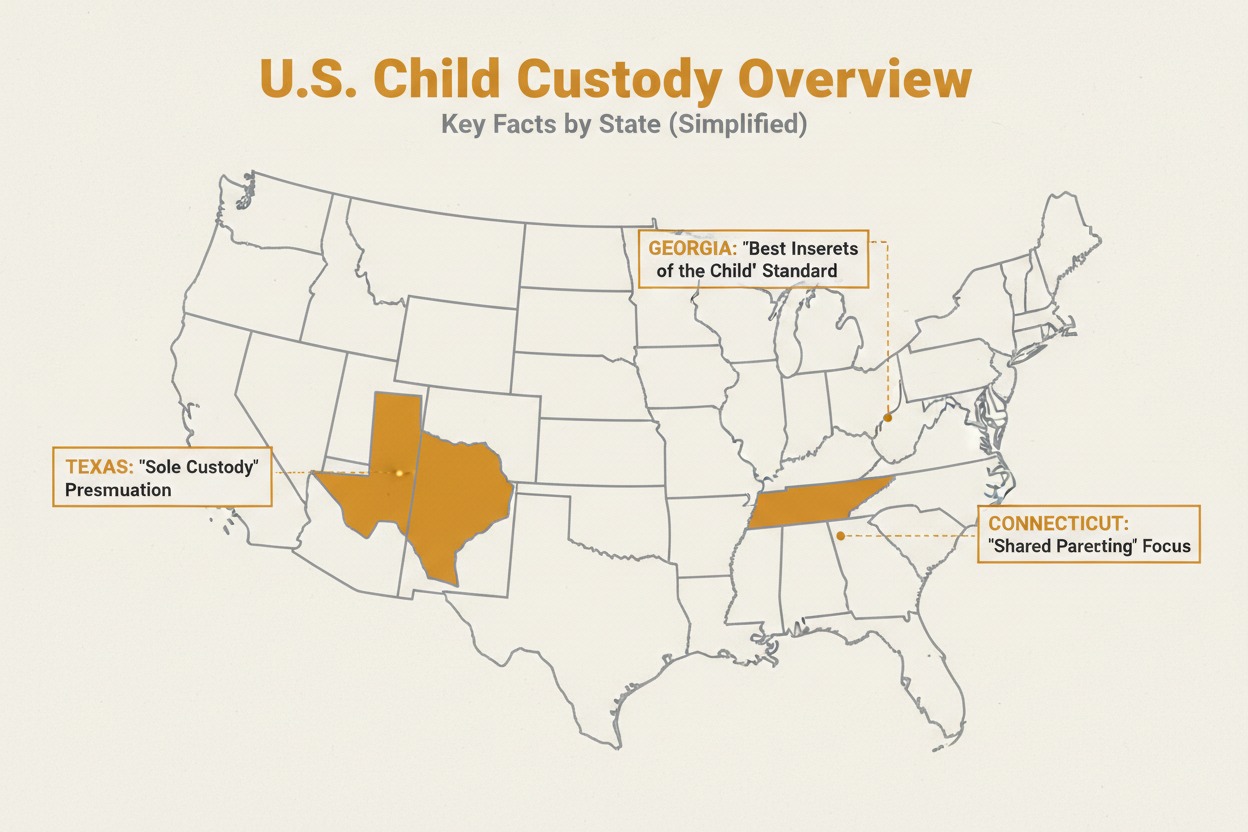
Custody law is state law, which means the exact standard applied to your case depends heavily on where you live. Here is a closer look at three states with especially distinct rules.
How to Get Full Custody in Texas
Texas does not technically use the word “custody” in its statutes. Instead, it uses “conservatorship” for decision-making authority and “possession and access” for parenting time, a distinction that trips up a lot of parents researching how to get full custody in Texas for the first time.
Texas courts start from a presumption that both parents should be named joint managing conservators, but a judge can award one parent sole managing conservatorship when the evidence supports it, particularly in cases involving family violence, neglect, or a documented pattern of poor decision-making by the other parent. The Texas Family Code makes clear that this determination has to rest on the child’s best interest, with the well-known Holley factors guiding how judges evaluate the evidence in these cases.
Georgia Custody Laws for Unmarried Parents
Georgia custody laws for unmarried parents work very differently from most other states, and this one genuinely surprises a lot of mothers.
When a child is born to unmarried parents in Georgia, the mother automatically holds sole custody by default. The father has no legal custody or visitation rights until he completes a separate legal process called legitimation, which establishes his legal relationship to the child beyond simple biological paternity, a distinction laid out clearly by Georgia’s own custody framework for unmarried parents.
If you are an unmarried mother in Georgia, this default status is genuinely protective, but it is not permanent or automatic forever. Once the father legitimates the child, either through agreement or a court order, he can petition for custody or visitation just like any married father, and the case then moves to the standard best interest analysis.
Sole Custody in CT and How to File for Sole Custody There
Connecticut law leans toward encouraging both parents’ involvement, but it absolutely allows for sole custody in CT when the evidence supports it. Connecticut General Statutes Section 46b-56 directs courts to weigh factors like the child’s physical and emotional safety, each parent’s capacity to meet the child’s needs, and the child’s existing relationship with each parent when deciding between joint and sole arrangements.
If you are working through how to file for sole custody in Connecticut specifically, your petition typically goes through the Superior Court’s family division, and you should expect the court to specifically require you to explain why joint custody, which carries something close to a soft preference in Connecticut, would not serve your child’s best interest in your particular situation.
What Does Full Custody Mean for the Other Parent?
A lot of mothers ask this question quietly, almost like they feel guilty asking it. So let’s answer it plainly.
What does full custody mean for the other parent depends heavily on why the court awarded it. In most cases, the other parent keeps some form of visitation or parenting time, along with the right to stay informed about the child’s life, even without decision-making authority.
Even a parent who loses legal custody typically keeps meaningful rights unless the court has specifically restricted them:
- The right to reasonable parenting time or visitation, unless there is a documented safety concern.
- The right to request records, including school and medical information, in many states even without formal legal custody.
- The right to petition for a modification later if their circumstances genuinely change.
- The right to due process, meaning custody can rarely be permanently changed without notice and a chance to respond.
This matters for your own case too, because judges tend to respond well to a parent, even one asking for full custody, who acknowledges the other parent’s ongoing role rather than trying to erase it from the picture entirely.
What Rights Does a Parent Without Legal Custody Have?
This question comes up constantly, both from mothers pursuing full custody and from the other parent worried about what they stand to lose. What rights does a parent without legal custody have is actually more nuanced than most people assume.
Losing legal custody means losing the authority to make major decisions alone. It does not automatically erase a parent’s right to stay informed. In many states, a parent without legal custody can still request school records, attendance information, and medical updates unless a court order specifically restricts that access, a point explained clearly in discussions of how courts typically separate legal custody from ongoing parental involvement. Visitation and the right to petition for a future modification generally survive as well, unless the court has found a specific reason to limit them.
Expert Tips for Strengthening Your Custody Case
A few practical habits consistently separate the mothers who walk into court prepared from the ones who are scrambling.
- Start a parenting journal now, even a simple one. Dates, times, and short factual notes add up to powerful evidence months later.
- Keep communication with the other parent in writing whenever possible, using text or a co-parenting app rather than phone calls you cannot document.
- Never violate an existing custody order, even informally, even when you think it is in your child’s best interest. Courts take self-help violations seriously, and it can undercut an otherwise strong case.
- Line up your witnesses early. Teachers, coaches, doctors, or family members who can speak to your involvement should know well before your hearing date, not the week of.
- Budget realistically. Contested custody cases can run into thousands of dollars in legal fees depending on complexity, so understanding the likely cost upfront helps you plan rather than panic mid-case.
Pros and Cons of Pursuing Full Custody
| Pros | Cons |
|---|---|
| Full decision-making authority over school, medical, and religious choices | Often the most expensive and emotionally demanding custody outcome to pursue |
| More day-to-day stability and routine for your child | Requires strong, well-documented evidence, not just a stated preference |
| Reduces ongoing conflict over major decisions | Can strain co-parenting communication if not handled carefully |
| May be necessary for genuine safety reasons | Courts may still order visitation for the other parent, so it rarely means complete separation |
Frequently Asked Questions
What is full custody, exactly?
Full custody generally means one parent holds both sole legal custody, the right to make major decisions, and sole physical custody, meaning the child primarily lives with them. The other parent typically keeps some visitation unless the court has restricted it for safety reasons.
How to get full custody of a child as a mother if the father is not involved?
Document the lack of involvement specifically, including missed visitation, unpaid support, or long gaps in contact. Courts respond to patterns backed by dates and records far more than to a general claim that the other parent “was never around.”
Does full custody mean the other parent pays no child support?
No. Child support and custody are handled separately in almost every state. A noncustodial parent typically still owes support based on state guidelines regardless of how much parenting time they have, and losing custody does not eliminate that financial obligation.
Can a father get full custody instead of the mother?
Yes. Since most states apply a gender-neutral best interest standard, a father can absolutely win full custody if the evidence supports it. Texas law, for example, specifically prohibits considering a parent’s sex as a factor in the decision.
How long does it take to get full custody?
Uncontested cases where both parents agree can resolve in a few months. Contested cases involving evaluations, mediation, and trial can take a year or longer, particularly in counties with backlogged family court dockets.
What is a custodial parent versus a noncustodial parent?
A custodial parent is the parent the child primarily lives with, and often the one holding sole or primary legal custody. A noncustodial parent typically has visitation rights and, in many states, retains some access to records and decision-making input depending on the specific custody order.
Final Thoughts
If you take one thing away from everything above, let it be this. Courts are not looking for the parent who argues the loudest or the one who simply happens to be the mother. They are looking for the parent who can show, consistently and with real documentation, that their home is the steadier, safer place for a child to grow up.
That is genuinely good news, because it means the work is within your control. Start documenting today, stay calm and child-focused in mediation, and get a licensed family law attorney in your corner as early as you realistically can, especially if your case is contested or involves safety concerns. For more on how family courts handle related situations, including enforcement and support issues that often overlap with custody cases, take a look at our family law coverage.
You are allowed to be scared and prepared at the same time. Most mothers I have seen go through this are exactly that, and it does not stop them from getting where they need to go.
