

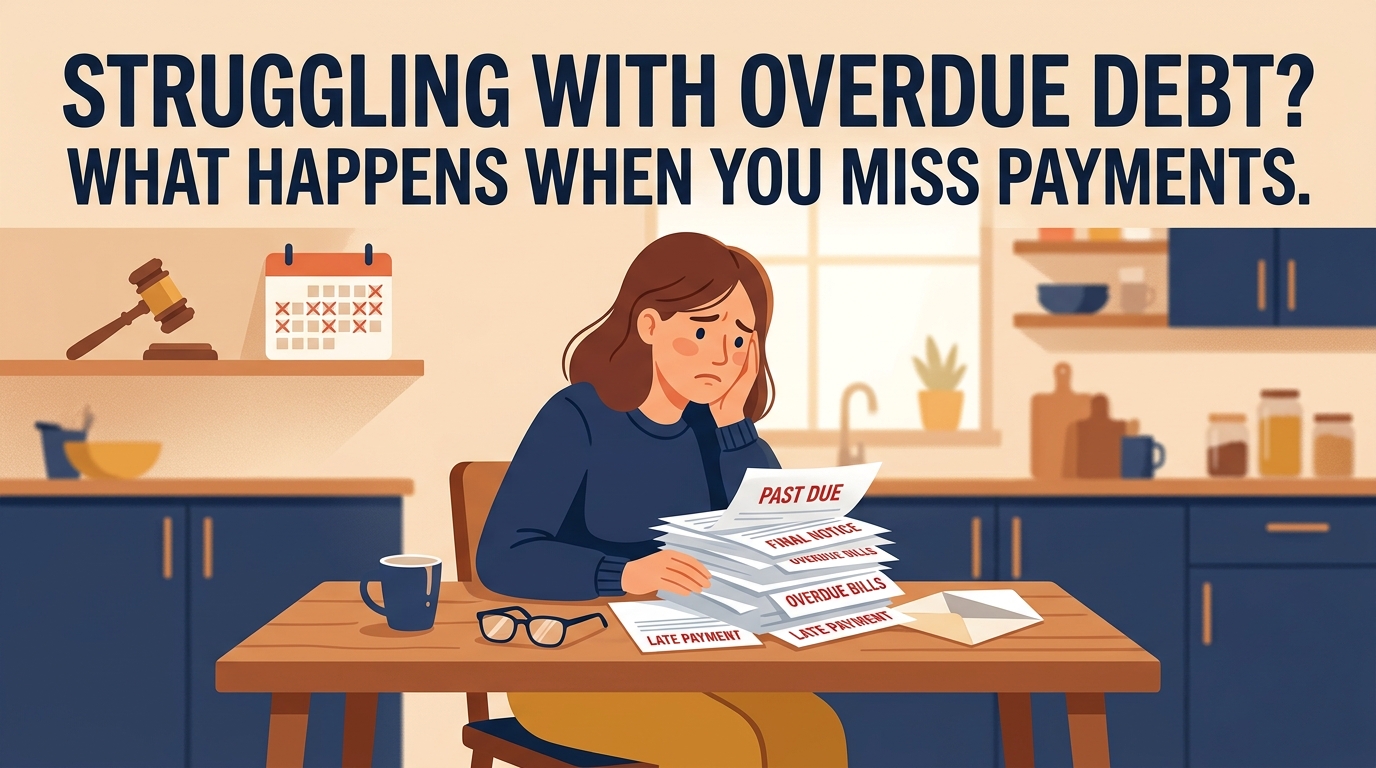
If you have ever typed “how far behind in child support before a warrant is issued custodial parent” into a search bar at 1 a.m., you already know the feeling. Your stomach is in a knot. You are not sure if you are the parent falling behind, or the parent waiting on money that never shows up.
Here is the short answer before we go deep. There is no single national number of missed months or dollars owed that triggers a warrant everywhere. It depends on your state, your court, and one specific thing judges care about more than anything else: whether you are refusing to pay, or genuinely unable to.
I have sat with parents on both sides of this exact question. So let me walk you through the whole picture properly, in the order it actually happens in real cases, not as a pile of disconnected facts.
Why There Is No Single Number
Every state runs its own child support enforcement program. Some publish rough guidelines. Most do not.
What they all share is the same underlying logic. A warrant is the last tool in the box, not the first. Courts would much rather see you paying, even partially, than sitting in a jail cell where you cannot earn anything at all.
That is why a parent who is three months behind but actively communicating with the court often faces nothing more than a stern letter. Meanwhile, a parent who is also three months behind but has ignored every notice and skipped a hearing can find a warrant waiting for them far sooner. The dollar amount matters less than your behavior around it.
The Enforcement Ladder: What Happens Before Anyone Talks About a Warrant
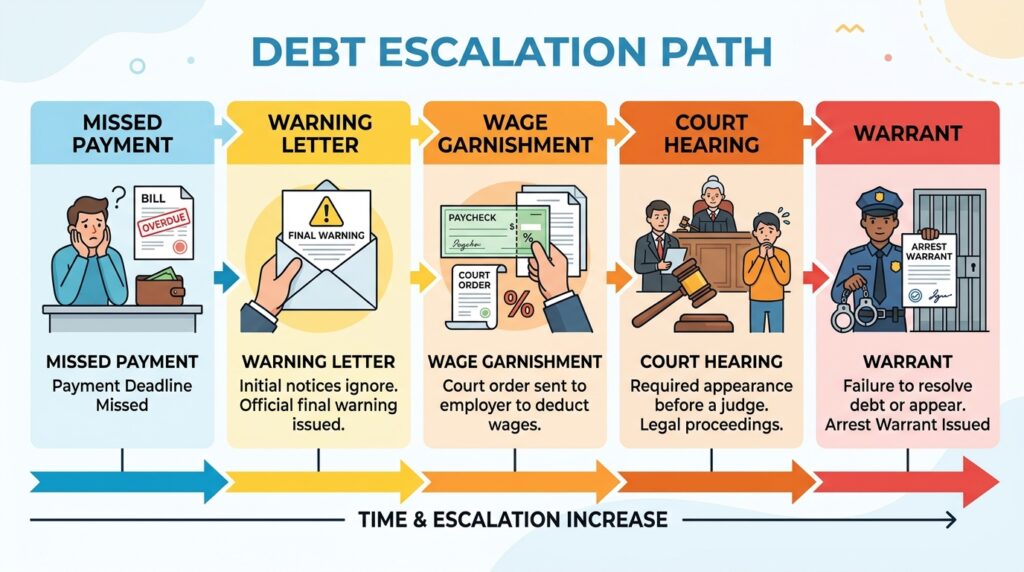
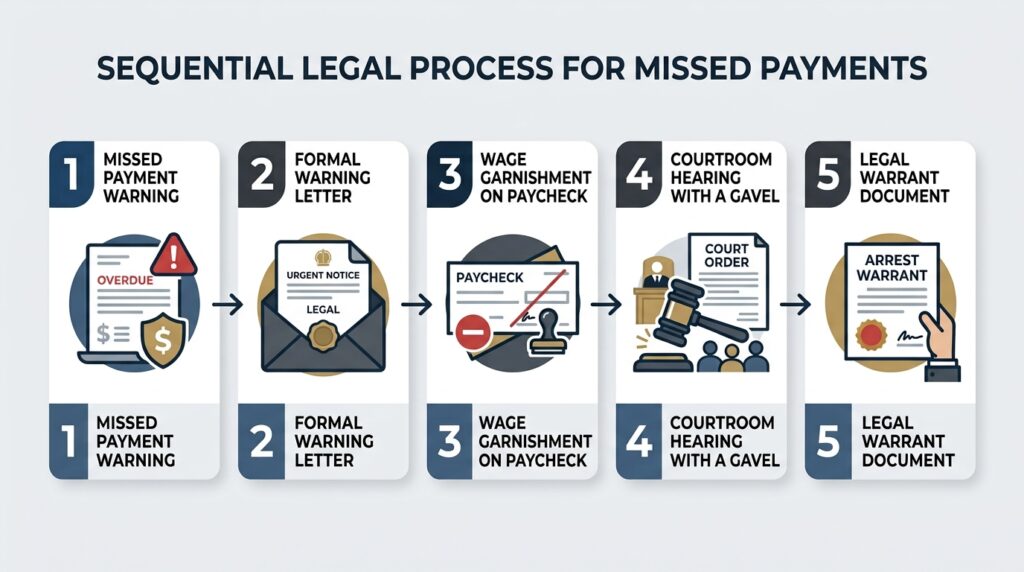
Nonpayment does not jump straight to handcuffs. It climbs a ladder, and each rung gives you a chance to fix things before the next one kicks in.
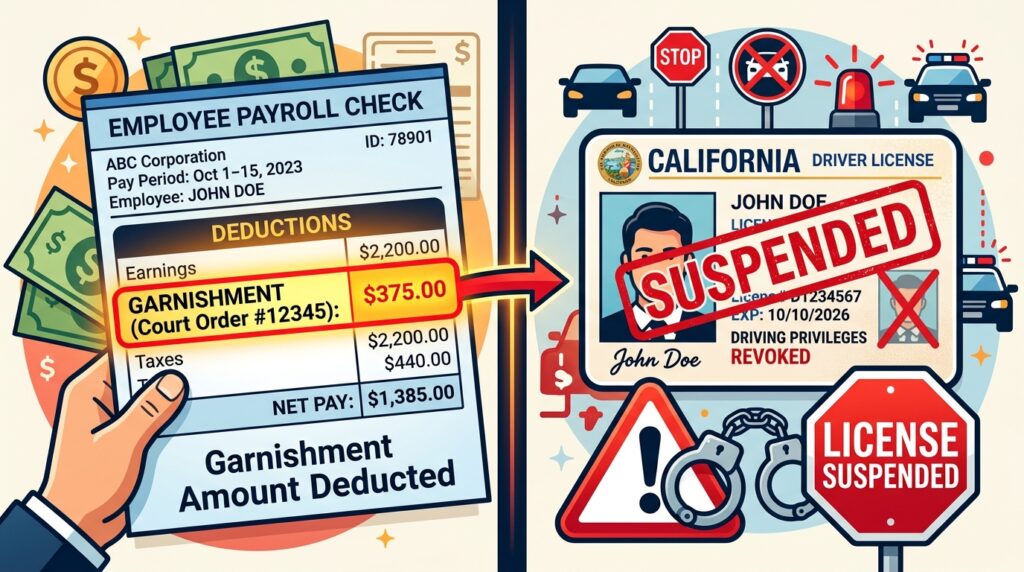
- Wage garnishment usually comes first. Your employer gets a court order to withhold a portion of your paycheck automatically. This is often the very first consequence, and in many cases it happens quietly, without a hearing at all.
- Tax refund interception follows close behind. Both your federal and state refunds can be seized and applied straight to your arrears balance. You typically get a notice first, but the money is gone before you can do much about it.
- License suspension is next on the ladder. Your driver’s license can be suspended, and in a growing number of states, so can professional licenses tied to your job. Nurses, contractors, and even attorneys have lost the ability to continue working due to unpaid support.
- Credit reporting quietly follows you around. Arrears get reported to credit bureaus, and that can tank your score for years, long after the original dispute is settled.
- Property liens can lock up your assets. In many states, unpaid support creates a lien against your house or a lump-sum settlement. You cannot sell or cash out until the arrears are cleared.
- Passport consequences have gotten a lot more serious lately. For decades, owing more than $2,500 meant your passport application or renewal could be denied under the Personal Responsibility and Work Opportunity Reconciliation Act, a threshold set back in 1996. That rule sat mostly dormant for years.
Then 2026 changed things. The State Department started actually revoking already-issued, valid passports instead of just blocking renewals. It began with parents owing $100,000 or more, then dropped to $75,000, with a stated goal of eventually reaching every parent above that original $2,500 threshold, according to reporting on the expanded enforcement program. If you travel for work, or your family lives abroad, this single detail matters more than almost anything else on this list.
Only after several of these steps have failed does a court typically turn to contempt proceedings, and only after contempt has failed or been ignored does an actual warrant usually enter the picture.
What Judges Actually Look At: Willful Nonpayment vs. Genuine Hardship
This is the single most important idea in this entire article, so I want to slow down here.
Judges are not looking for a number on a calendar. They are looking for willfulness. That means they want to know whether you had the ability to pay and simply chose not to, or whether something real, a layoff, an injury, a business collapse, actually stopped you.
If you can show documentation of a genuine hardship- pay stubs, a termination letter, medical records- courts generally treat that very differently than silent nonpayment with no explanation at all. The parent who calls the child support office the week they lose their job is in a completely different position than the parent who simply stops paying and hopes nobody notices for six months.
I have watched this play out more times than I can count. The paperwork trail is what separates a sympathetic outcome from a warrant.
What the Custodial Parent Can Actually Do to Push Enforcement
Most articles on this topic focus entirely on the paying parent. But if you are the custodial parent waiting on money that never arrives, you are not powerless, and you do not need to hire a lawyer just to get the process moving.
- Open an IV-D case with your state’s child support agency. This is the free, government-run enforcement service, and it is usually the fastest path to wage garnishment, tax refund interception, and license actions without you personally filing anything in court yourself.
- Report missed payments promptly. Agencies generally cannot act on arrears they do not know about. Calling or updating your case online the moment a payment is missed keeps the enforcement timeline moving, instead of losing months to silence on your end.
- Request a Rule to Show Cause hearing if the agency’s standard tools are not working. This is the formal step that can lead to a contempt finding and, eventually, a bench warrant if the other parent still does not show up or pay.
- Keep your own contact information current with the court. If the agency or the other parent cannot reach you, cases sometimes stall entirely, which can quietly delay enforcement action you are actually counting on.
It is worth knowing that an IV-D case is a service, not an obligation. Custodial parents who are not receiving public assistance can generally request in writing to close it at any time, though any existing income withholding order usually continues regardless.
What Actually Happens If You Are Arrested on a Child Support Warrant
Knowing the theory is one thing. Knowing what the next 24 hours actually look like is another, and almost nobody explains this part clearly.
- Bond gets set first. Many bench warrants for child support carry a bond amount attached at the time they are issued, sometimes calculated as a percentage of your total arrears, sometimes a flat minimum amount, whichever is higher. Paying that bond is often what gets you released while the underlying case continues.
- A purge payment can end things faster. If your case is civil contempt rather than criminal, showing up with even a partial payment toward your arrears can sometimes resolve the matter on the spot, or at least significantly shorten your time in custody.
- You still get a hearing. Being arrested on a warrant does not skip the actual contempt hearing. It just means you are now guaranteed to attend it, one way or another.
- Bring your documentation with you. If you know an arrest is likely, gathering pay stubs, medical records, or a termination letter beforehand and keeping copies with someone you trust means that evidence still reaches the judge even if you are picked up unexpectedly.
- Turning yourself in is often the better option. Courts and enforcement offices frequently view a voluntary surrender far more favorably than an unexpected arrest during a traffic stop. It also lets you choose the timing and show up with your paperwork already organized.
Bench Warrant or Arrest Warrant? The Difference Actually Matters
Most people say “warrant” like it is a single thing. In child support cases, it usually is not, and knowing which kind you are dealing with changes what happens next.
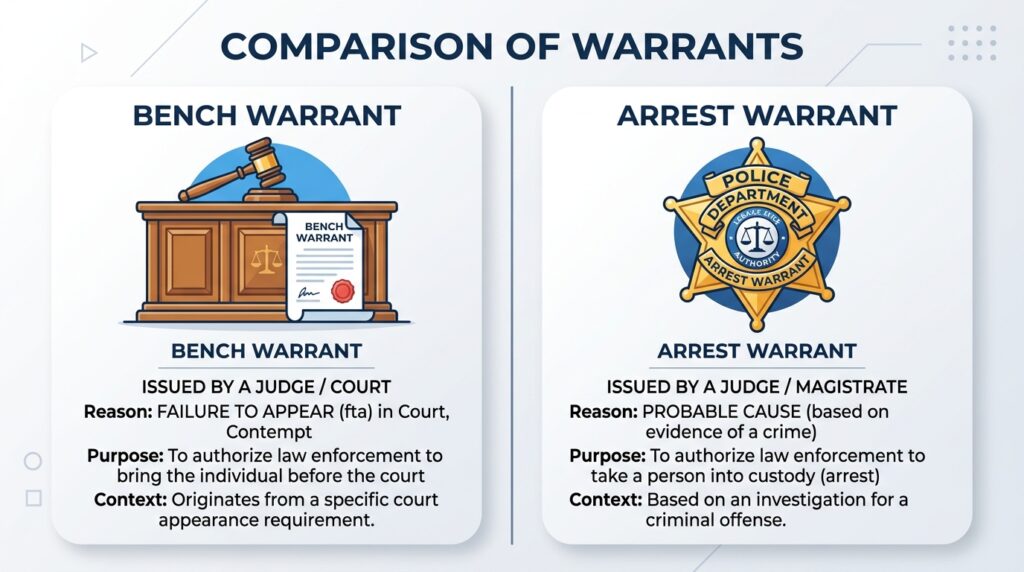
A bench warrant is the far more common type in child support cases. A judge issues it directly from the bench, almost always because you missed a scheduled hearing after being properly notified. It comes with a bond amount attached, and in some places that bond is set at a percentage of your arrears balance, or a flat minimum, whichever is higher.
An arrest warrant is a step up in seriousness. It usually requires an officer or investigator to submit an affidavit showing probable cause, often because the court could not locate or serve you in the first place. This is less common in ordinary child support cases and more likely once criminal nonsupport charges are brought.
Once either type is active, you are technically subject to arrest at any time, including during something as ordinary as a routine traffic stop. Officers can see an active warrant the moment they run your name, and child support enforcement offices in states like Michigan are known to actively investigate and pursue payers once a bench warrant is issued.
If you suspect there might already be a warrant out for you, do not wait to find out the hard way. Calling the clerk of the court handling your case or contacting your state’s child support enforcement office directly is generally the safest way to check. Some parents choose to turn themselves in voluntarily once they know a warrant exists, which courts often view far more favorably than being picked up unexpectedly.
How Far Behind in Child Support Before a Warrant Is Issued, State by State
Even without one national rule, patterns show up clearly once you look at real cases across a few states.
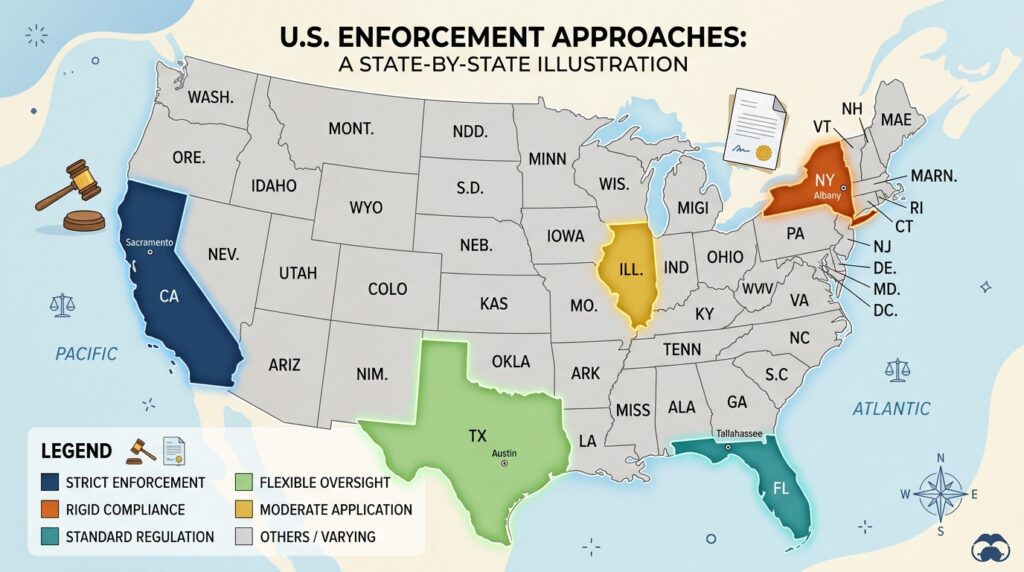
- In Florida, delinquency is technically flagged after just 15 days, though an actual arrest warrant usually follows only once arrears become substantial and the state’s enforcement office has already tried other tools, according to attorneys who regularly handle Florida delinquency cases.
- In Texas, there is no fixed number of missed payments written into law. A judge can issue what is called a capias warrant once a parent repeatedly ignores a court-ordered child support enforcement hearing.
- In California, civil warrants tend to follow several months of nonpayment plus a meaningful arrears balance. Amounts above $10,000 can even cross into felony territory, carrying up to two years in prison, based on how California courts handle repeat contempt.
- In Maryland, there is no automatic timeline at all. Willful nonpayment, missed court dates, and a documented history of ignored enforcement steps matter far more than the calendar.
- In New Jersey, a prior court order can authorize a bench warrant after just two weeks of missed support, though driver’s license suspension now generally requires a separate hearing rather than happening automatically. Occupational and recreational licenses, like an electrician’s license or a hunting permit, can still be denied once arrears cross six months.
- In Michigan, once a bench warrant is issued for missing a show-cause hearing, the county’s enforcement office does not stop there. It can pursue other collection tools at the same time, including tax refund attachments and even insurance settlement proceeds, according to how one Michigan court describes its enforcement process.
Here is a simple table that pulls it all together, so you are not scrolling through five different sites to piece it together yourself.
| State | Typical Trigger Point | What Usually Happens First |
|---|---|---|
| Florida | Delinquency flagged after 15 days, warrant later | Wage garnishment, then license suspension |
| Texas | No fixed number, based on ignored court orders | Capias warrant after missed hearing |
| California | Several months plus large arrears balance | Civil contempt filing, then possible warrant |
| Maryland | No fixed timeline, based on willfulness | Wage withholding, then contempt hearing |
| New Jersey | Bench warrant possible after two weeks missed, per prior order | License review after six months of arrears |
| Michigan | Bench warrant after missed show-cause hearing | Tax refund and asset attachment alongside warrant |
A single missed payment almost never leads straight to a warrant, no matter which state you are in. What actually gets people into serious trouble is silence: ignored letters, skipped hearings, and no explanation offered when income genuinely changes.
The Contempt Hearing That Usually Comes Right Before a Warrant
Before a warrant is issued, most cases pass through a contempt hearing. Understanding this step by step takes a lot of the fear out of it.
- First comes the filing. The custodial parent, or more often the state child support agency on their behalf, files a motion for contempt, sometimes called an Order to Show Cause.
- Then you get served notice. The paperwork tells you when to appear and exactly what you are accused of owing.
- The hearing itself is where it matters most. A judge reviews your payment history, your income, and whether your nonpayment looks willful or genuinely unavoidable.
- A finding follows. If the judge finds willful nonpayment, sanctions come next, ranging from a new payment schedule to jail time in serious or repeat cases.
- A purge payment can often help. In civil contempt cases specifically, paying some or all of the arrears right there at the hearing can shorten or avoid jail time entirely.
Missing this hearing is one of the fastest, most direct routes to an actual bench warrant, according to attorneys who track how these cases typically escalate. I sat in on a hearing like this once as a support person for a friend, and what struck me most was how much the judge cared about paperwork, not excuses. Parents who showed up with pay stubs or a layoff letter were treated completely differently from parents who showed up with nothing but a verbal explanation.
If You Are Behind and Worried About a Warrant, Do This
You do not need to panic. You need a plan, and it is simpler than it feels right now.
- Do not go silent. Courts and enforcement agencies punish silence far more harshly than they punish honesty about a genuine hardship.
- File for a modification immediately after any real change in income, not months later, once arrears have already piled up.
- Show up to every hearing, even if you cannot pay in full and even if you are scared. Missing one is the fastest route to a warrant.
- Keep records of everything. Pay stubs, layoff notices, medical bills, and any communication with the child support office all matter later.
- Ask the local child support office about options before your case ever reaches a judge. Many offices can help set up a manageable plan without further escalation.
- Consider a consent order if you are both willing to renegotiate. If your income has genuinely changed and the other parent is open to a new arrangement, getting a judge to approve an updated agreement is far safer than an informal handshake deal that leaves both of you exposed later.
- Talk to a family law attorney early if the case is already escalating. Once a contempt motion is filed, having someone who knows your specific court’s tendencies can change the outcome of the hearing significantly, especially if jail time is genuinely on the table.
None of this erases arrears that have already built up. But it does mean the difference between a case that resolves with a payment plan and one that ends with a warrant is often decided by how quickly and openly you respond, not by how much you already owe.
For more on how family courts generally handle these situations, take a look at our full family law section.
Frequently Asked Questions
What happens if you don’t pay child support?
It rarely starts with anything dramatic. Wage garnishment is usually the first step, followed by tax refund interception, license suspension, credit reporting, and property liens if arrears continue to grow. Passport consequences have become far more serious since 2026, when the State Department began revoking already-issued passports for large arrears rather than just blocking renewals or applications.
Can you go to jail for not paying child support?
Yes, in some situations, but the type of contempt matters enormously. Civil contempt exists to compel compliance, and you can often shorten or avoid jail by paying what is owed, sometimes called a purge payment. Criminal contempt is punitive instead, meant to punish past defiance, and paying afterward does not automatically erase it.
There is also a federal track worth knowing about. Under 18 U.S.C. § 228, willfully failing to pay support for a child in another state can be a federal misdemeanor, and the Deadbeat Parents Punishment Act of 1998 upgrades it to a felony above $10,000 in unpaid support or after two years of nonpayment. Generally, a parent cannot be held in both civil and criminal contempt for the exact same missed payments at the same time, so knowing which track your case falls into matters for your defense.
What is contempt of court for child support, exactly?
It is the legal process courts use before jumping to a warrant. A parent, or the state agency on their behalf, files a motion showing a pattern of nonpayment. The judge then decides whether the nonpayment was willful and, if so, orders a remedy ranging from a new payment plan to jail time, depending on how serious and repeated the violations are.
What is the difference between child support and child maintenance?
In everyday U.S. legal use, they mean the same thing: ongoing financial support from a parent for a child’s living expenses, education, and healthcare. Some older statutes and documents lean toward “maintenance” language, but the enforcement mechanisms- warrants, contempt, wage garnishment- work exactly the same way no matter which word your paperwork uses.
Does child support end at 18?
Almost never automatically. Most states extend support until the child turns 18 or graduates high school, whichever happens later, not simply whichever comes first. New York provides support to age 21 as a matter of law; Alabama and Colorado commonly extend support to age 19; and California requires that both the birthday and graduation occur before support ends.
Do you have to pay child support after 18?
Sometimes, yes. If a child has a qualifying disability, support can continue indefinitely in many states. Some states also allow courts to order continued support for college expenses, depending on the original agreement and state law. If an order covers multiple children as a lump sum, support generally does not shrink automatically when one child ages out either a formal modification is usually required.
Can you make a child support agreement without going to court?
You can agree on numbers between yourselves, but that agreement is not enforceable until a judge signs off on it and turns it into an order. If you agree informally and one parent later stops paying, the other has no real legal recourse, because that side agreement is essentially invisible to the court. Writing down the exact terms and submitting them for a judge’s review is what actually protects both parents and the child.
Can a mother cancel child support in Florida?
No, not on her own, and this applies whether the custodial parent is the mother or the father. Florida law treats child support as belonging to the child, not to either parent, so one parent cannot privately waive or suspend it. Ending or changing an order requires a formal petition and a judge’s approval, confirming the change actually serves the child’s best interests.
Final Thoughts
The system is built around patterns of behavior, not single missed payments. Whether you are worried about a warrant, wondering if support will ever end, or trying to figure out if an informal agreement actually protects you, the safest move is almost always the same: put it in front of a court instead of guessing.
Neither silence nor guesswork ever works in your favor here, whether you are the parent who is behind or the parent waiting for money that has not shown up. Courts and the agencies that support them respond to documentation and communication far better than they do to hope.
For more on how family courts handle these situations, browse our family law coverage. If you are dealing with a specific case, talking to a licensed family law attorney in your state is always worth the conversation before things escalate further.
Also Read: How Much Does It Cost to Change Your Name in 2026?
How to Get Out of Jury Duty (Legally) in 2026
How Old Do You Have to Be to Get a Tattoo? (2026 Guide)
