
How to Start a Cleaning Business: The Practical Guide
If you are searching for how to start a cleaning business, you probably do not need another list that says “buy supplies, make a logo, and find clients.” You need to know what to sell, what to charge, which rules apply, and how to avoid building a busy job that never produces a real profit.
I saw that gap when I compared the leading startup guides for this article. Most covered registration and marketing, but few connected travel, safety, scope, tax, quality, and profit. Those links are where a promising business can quietly fail.
This guide takes you from idea to first recurring client. You will get a price-floor formula, a contract checklist, location notes, a 30-day launch plan, and a simple way to assess growth.
The Short Answer: How Do You Start Correctly?
Start with one customer type, a small service area, and a defined package. Validate demand, find your price floor, complete legal checks, insure against risk, buy only the tools you need, and sell a paid trial.
The order matters. A logo cannot rescue weak pricing, and a full supply room cannot create demand. My recommendation is to prove one offer with a few paid jobs before you add staff, vehicles, specialty machines, or a large menu.
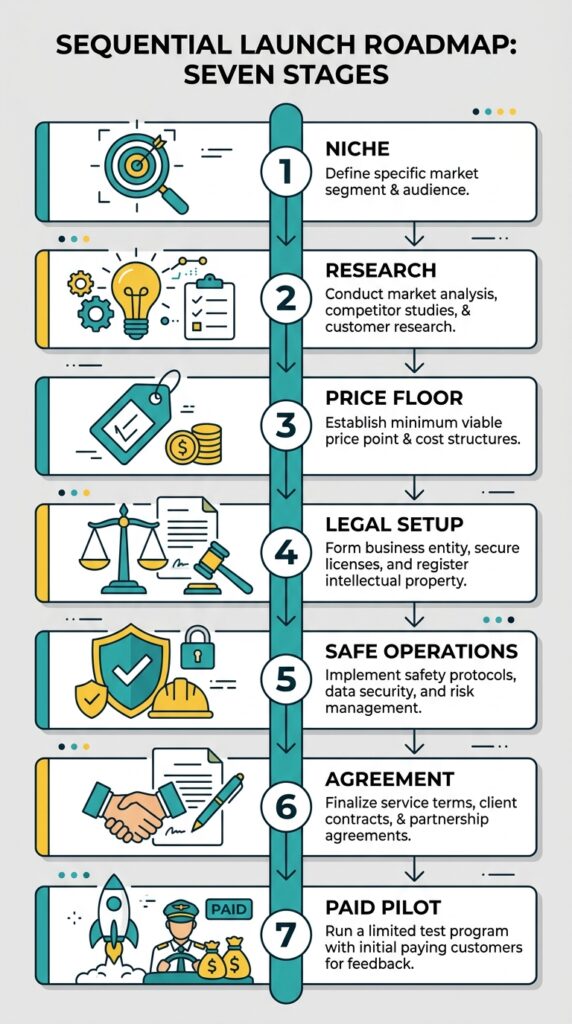
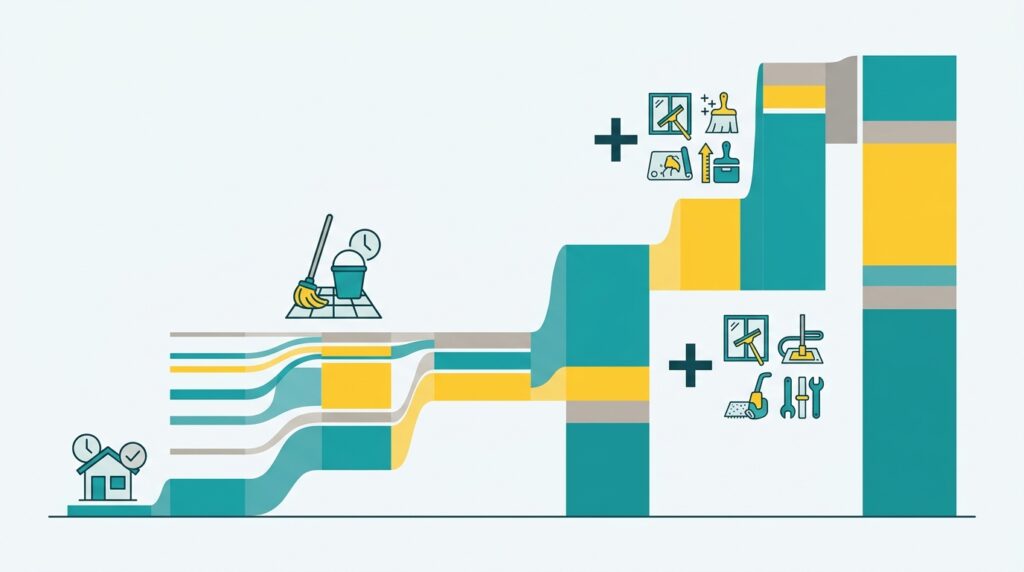
Your launch sequence has seven stages. Follow the order below.
- Choose one narrow market. Define inclusions and exclusions before quoting.
- Interview possible customers and inspect real properties. Shape one starter package from the evidence.
- Calculate labor, travel, supplies, overhead, tax, and profit. Set minimum job and cleaner-hour prices.
- Choose a structure and name. Complete the registrations, permits, tax accounts, and local checks.
- Buy suitable tools and create safe chemical procedures. Write checklists before anyone works alone.
- Put scope, access, payment, and damage rules in writing. Do not rely on a text-message price.
- Sell a paid pilot and record actual time and materials. Improve the package before expanding.
1. Choose a Cleaning Model That Fits Your Life
“Cleaning business” covers several different models. Your customer, equipment, risk, schedule, and sales process change with the one you choose.
| Model | Main advantage | Main challenge | Good first offer |
|---|---|---|---|
| Residential recurring | Faster buying decisions and frequent referrals | Cancellations, pets, access, and emotional expectations | Kitchen, bathrooms, floors, dusting, and bins on a set schedule |
| Small-office recurring | Predictable contracts and route planning | Slower sales and more paperwork | After-hours cleaning for one office size range |
| Short-term rental turnover | Clear deadlines and repeat work | Demand swings, laundry, keys, and same-day pressure | Turnover clean with a photo checklist |
| Move-in or move-out | Higher-value one-time work | Heavy soil and hard-to-predict labor | Empty-property clean with priced add-ons |
| Post-construction | Strong project value | Dust control, safety, and contractor payment terms | Final clean only, not hazardous remediation |
| Specialty cleaning | Less direct price competition | Training, insurance, permits, and equipment | Add only after checking every technical rule |
Residential work is often simpler to test because you speak directly with the buyer. Commercial work can be predictable, but a manager may require insurance, tax forms, references, checks, a safety plan, or a bond.
Do not offer mold, asbestos, crime-scene, medical-waste, or high-rise work merely because it sounds like cleaning. Those jobs can require separate laws, training, disposal, and insurance. Start with low-risk work and verify every specialty.
Write a one-page service definition
A useful offer names the customer, result, frequency, and exclusions. “Weekly cleaning for occupied homes within 20 minutes of downtown” is easier to price than “we clean everything.”
List the rooms, tasks, normal conditions, sizes, frequencies, and add-ons. Exclude hazards, heavy lifting, exterior heights, permanent stains, dangerous clutter, and licensed-trade work.
2. Validate Demand Before Buying Equipment
Market research does not require a large report. Speak with real buyers, inspect competing offers, and ask why they switch cleaners. Listen for repeated problems such as unreliable arrivals, vague checklists, missed work, or surprise invoices.
Ask practical questions instead of “Would you hire me?” Learn what they buy, what fails, who approves it, when access is available, and what vendor proof they require. A polite answer is not a demand, but a paid pilot is.
Test every proposed service before you advertise it. Use the five questions below.
- Can I estimate it? The space, soil level, access, and task list should be measurable. If they are not, require an inspection or a discovery clean.
- Can I perform it safely? You need the right product, protective equipment, training, and time. A profitable job is not profitable after an injury or damaged surface.
- Can I repeat the result? Another trained cleaner should be able to follow the same checklist. If quality depends only on your memory, you do not yet have a system.
- Can I reach enough buyers nearby? A dense route can protect more profit than a higher headline price. Unpaid driving is still labor and vehicle cost.
- Will the buyer accept the real price? Test the full price, not a launch discount that hides the economics. A discount may change timing, but it should not erase your price floor.
3. Build the Numbers Before You Set a Price
Cleaning looks inexpensive because the tools are familiar. The trap is counting chemicals while ignoring labor, travel, insurance, rework, fees, laundry, replacement, administration, and tax. The official break-even formula is a useful base, but you also need a job-level price floor.
Use a loaded labor rate
Your wage is not the whole labor cost. A loaded rate can include wages, employer payroll costs, workers’ compensation, paid non-cleaning time, training, uniforms, and benefits. If you work alone, include a fair owner wage, or “profit” may simply be unpaid labor.
For context, official occupational data reported a $17.27 median hourly wage for janitors and building cleaners in May 2024. Local wages vary, and your loaded employee cost will be higher than the cash wage.
Use the following formula for a minimum quote. Treat every term as a real cost.
Minimum job price = loaded labor + travel + consumables + equipment allowance + allocated overhead + payment costs + tax allowance + target operating profit
Estimate labor using cleaner-hours, not clock hours. Two cleaners working for two hours use four cleaner-hours. Then compare your estimate with the actual time after every early job, including loading, driving, access delays, setup, laundry, restocking, reporting, and rework.
Create a startup budget in layers
Ignore universal “start for $X” claims. Costs depend on supplies, vehicle needs, coverage, filing fees, permits, staff, and property type. Build three budget layers instead.
| Budget layer | Include | Decision rule |
| Required before first job | Registration, required licenses, insurance, safe core tools, chemicals, PPE, payment method | Buy or complete before accepting work |
| Required after validation | Backup equipment, scheduling tools, uniforms, better storage, branded materials | Add when paid pilots prove demand |
| Growth purchase | Vehicle, floor machine, office, warehouse, full software suite | Add only when capacity or contract terms justify it |
Keep a cash reserve for refunds, repairs, deductibles, late commercial invoices, and tax. Revenue collected for sales tax is not your income, and money in the bank is not automatically profit.
Set three pricing guardrails
Use a minimum visit charge, a price floor per cleaner-hour, and a written add-on menu. The minimum protects short jobs from travel and setup costs, while the cleaner-hour floor protects unusually slow or difficult properties.
Flat-rate pricing is friendly for repeat clients once you have reliable timing data. Hourly or capped discovery pricing is safer when the condition is unknown, but the agreement should explain the cap, what happens when time runs out, and which outcomes are not guaranteed.
4. Make the Business Legal and Insurable
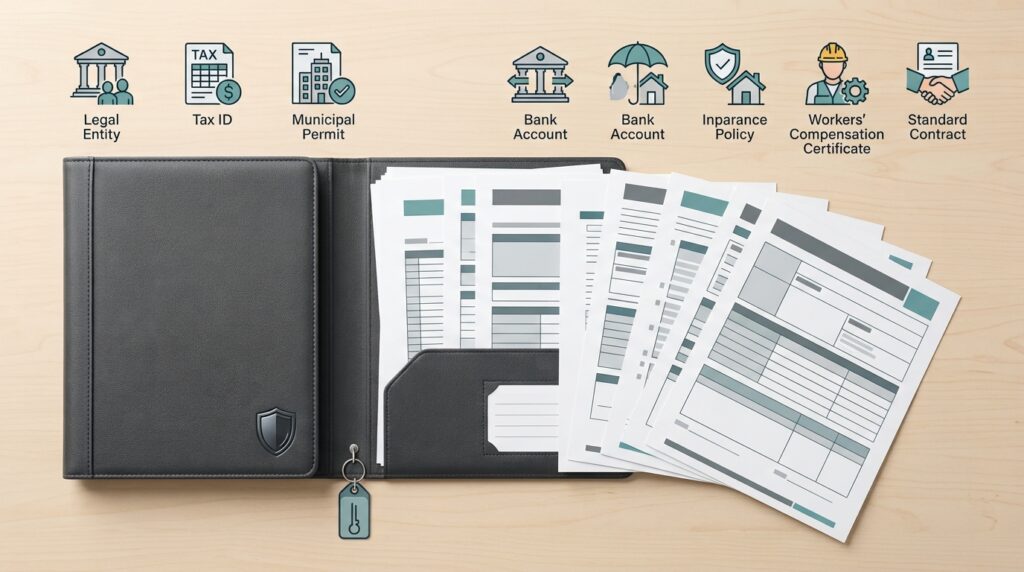
Legal setup is not one form. It covers structure, name, registration, tax, licenses, banking, insurance, contracts, and employment. The official business launch checklist confirms these are separate steps.
Choose a structure with your real risk in mind
A sole proprietorship may be simple, while an LLC can separate the entity from its owner under state law. An entity is not a force field. It does not replace insurance, records, safe work, contracts, tax compliance, or personal responsibility.
Discuss tax treatment and liability with qualified local advisers if you are unsure. You can also use plain-language business law explainers as a starting point, but apply the rules of the place where your business is formed and where it works.
Complete the setup checklist
- Name and entity: Search the official registry and trademark database, then file the entity or assumed name that applies. A name filing does not automatically grant trademark rights.
- Tax identification: Use the free federal EIN application when an EIN is required or useful. The official service does not charge an application fee.
- Licenses and zoning: Check the state or province, county, city, and home-occupation rules. A general cleaning license may not exist, but a local business license, tax account, waste registration, or specialty permit may still apply.
- Banking and records: Open a separate business account and connect every receipt to a job or expense category. Do not mix collected tax, payroll money, and spendable operating cash.
- Insurance: Ask about general liability, commercial auto, tools and equipment, workers’ compensation, and any umbrella or specialty coverage your work needs. Read exclusions for mold, heights, keys, chemicals, subcontractors, and property in your care.
- Bonding: A bond and an insurance policy do different jobs. Some clients use surety bonds as a performance guarantee, while liability insurance responds to covered claims under its own terms.
Ask the broker to explain realistic claims, not just limits. Know what may happen after damaged stone, a lost key, a crash, or alleged theft, including deductibles and exclusions. Our insurance guides can help you learn the terms before comparing policies.
The legal hierarchy matters when national, state, and local rules overlap. This explanation of how higher and lower rules interact provides useful context, but always verify the current agency rule governing your exact service and address.
5. Build a Safe, Repeatable Cleaning System
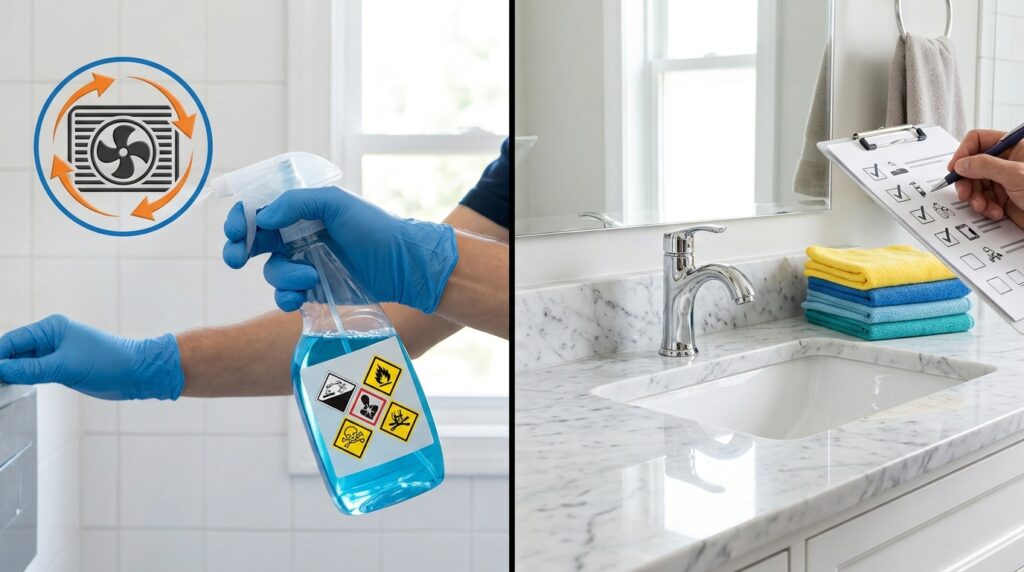
Ordinary-looking products can harm people and surfaces when used incorrectly. Employers using hazardous chemicals generally need labels, safety data sheets, and training under the hazard communication standard. Follow label directions for ventilation, dilution, protective equipment, and contact time.
Never mix chemicals unless the manufacturer specifically directs you to do so. Keep products in properly labeled containers, separate incompatible chemicals, and carry safety data where workers can access it. When you claim to disinfect, use a suitable registered product and follow the label rather than promising a result the process cannot support.
Start with a controlled tool kit
Choose products by surface and task, not fragrance. A basic kit may include a suitable vacuum, flat mop, color-coded microfiber, non-scratch tools, labeled bottles, required protection, warning signs, bags, a caddy, and first aid.
Use color coding to reduce cross-contamination, and replace or launder cloths through a documented process. If you market a service as “green,” make specific, supportable claims; the environmental marketing guidance warns against broad claims that can mislead buyers.
Turn quality into evidence
Create a room-by-room checklist with three levels: required every visit, rotated detail work, and paid add-ons. Add a final inspection route, timestamped completion record, damage-report process, and client feedback question.
Measure first-pass quality, not just speed. Track jobs completed without a return visit, checklist misses per inspection, complaints per 100 jobs, actual cleaner-hours versus estimate, and supply cost per job. A faster team that creates rework may be less productive than a slower team that finishes correctly the first time.
6. Quote, Contract, and Get Paid Without Confusion
The quote should state the property, frequency, scope, assumptions, price, tax, and validity period. If conditions affect the work, use permitted photos or a signed checklist. A price without a scope invites disagreement.
Your service agreement should remove predictable uncertainty. Address the points below.
- Included tasks, rotation tasks, and exclusions. State whether dishes, laundry, inside appliances, high areas, exterior windows, clutter, or biohazards are outside the base service.
- Access, alarms, keys, pets, parking, utilities, and cancellation. Explain charges for lockouts, unsafe conditions, or late cancellations.
- Price, due date, deposit, card authorization, late payment, tax, and price-review timing. Commercial clients may also require purchase orders and longer invoice cycles.
- Breakage, pre-existing damage, reporting deadlines, and claim handling. Do not promise compensation beyond your agreement or policy without advice.
- Photos, privacy, confidentiality, and data retention. Never use a client’s home, documents, family images, or security details in marketing without clear permission.
- Term, termination, change orders, and dispute process. A new task should trigger written approval before work begins.
Do not copy a random contract and assume it fits your location. Have a qualified local professional review the document, especially for recurring commercial work, staff, auto-renewal, consumer cancellation rights, or access to sensitive sites.
Use a paid discovery clean
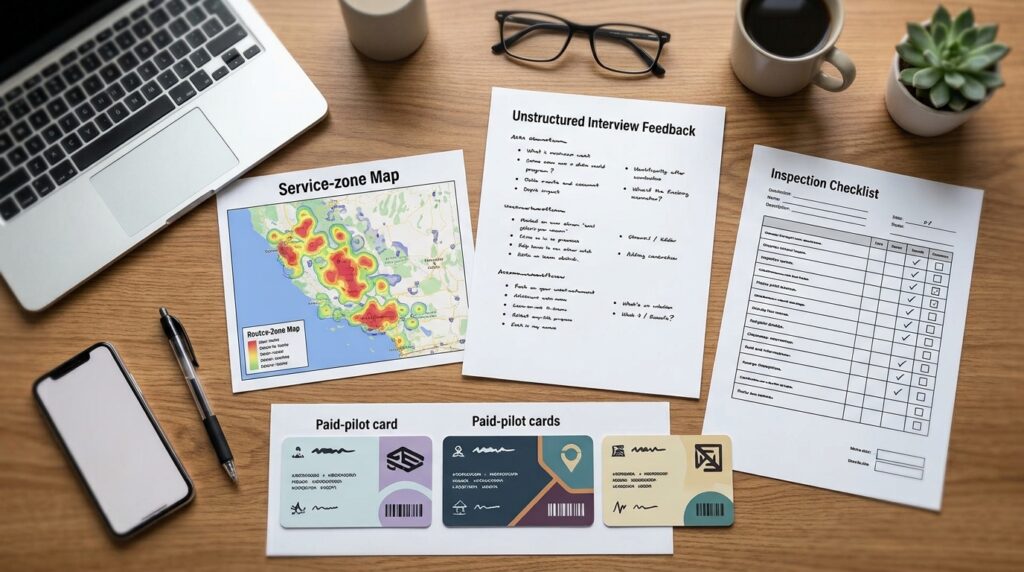
For an occupied home or unfamiliar facility, price the first visit separately. Record cleaner-hours, soil level, access delays, consumables, special surfaces, and tasks the client adds during the visit. Then base the recurring proposal on evidence rather than hope.
When I worked through a sample quote for this guide, travel and setup changed the price more than the chemical cost. That is why I recommend measuring door-to-door time during pilot jobs, even if your customer sees only the cleaning hours.
7. Find the First Clients Without Wasting Money
Your first marketing asset is a clear offer, not a large budget. State the customer, area, package, exclusions, proof, insurance status, and next step. Use photos only with permission, and never fake reviews or results.
Set up a verified service-area profile and hide a home address if customers do not visit it. The service-area rules allow specific cities or postal codes and advise accurate coverage rather than an unrealistic radius. Complete the profile, add genuine work images, respond to inquiries promptly, and request an honest review after a successful job.
Use several low-cost channels together. Track each one separately.
- Ask people who already trust you for introductions, not vague social shares. Give them one sentence that describes the exact customer you want.
- Contact property managers, real-estate agents, small offices, and rental operators with a narrow offer. Show the checklist, response time, proof of insurance, and the pilot process.
- Leave a service card only where permission allows it. Track each card or partner with a simple source code so you know what creates booked work.
- Follow up on quotes with useful detail, not pressure. Confirm scope, answer one likely concern, and give a clear expiry date.
- Build referral partnerships carefully. Put referral fees or mutual promises in writing and check disclosure rules that apply to the industry.
Track leads through five stages: inquiry, qualified, inspection, quote, and won or lost. Record the source, expected value, reason lost, and days to decision. If many inquiries never qualify, fix the message; if inspections rarely become sales, review the offer, proof, and price presentation.

8. Location Rules You Must Check Before Launch
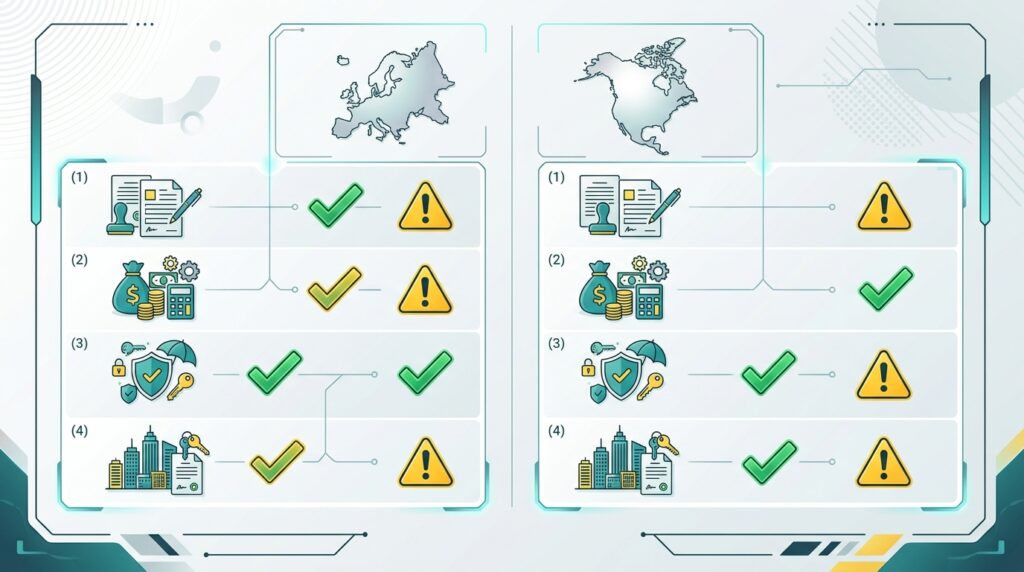
There is no universal license or tax answer. Registration, service tax, assumed names, workers’ compensation, and permits change by location. Use this as a map, then verify your exact address and service.
| Location | Registration starting point | Cleaning-specific issue to verify |
| Florida | Entity or fictitious-name filing, plus county or city checks | Tax treatment differs for nonresidential cleaning |
| Texas | Entity or assumed-name filing, plus local permits | Janitorial and custodial services are generally taxable |
| North Carolina | Entity filing or county assumed-name process | No single generic state business license |
| Ohio | State registration and tax setup | Janitorial services can cross a taxable-sales threshold |
| Ontario | Provincial registry and federal tax accounts | GST/HST and workplace insurance thresholds |
| Pennsylvania | State registration and tax account | Residential and commercial building cleaning are taxable |
| United Kingdom | Sole trader or company route | VAT, COSHH, and employer liability rules |
| Australia | ABN, business name, tax, and local checks | GST threshold and state-based workplace rules |
How to start a cleaning business USA?
For how to start a cleaning business in the USA, begin with the entity and assumed-name rules in your formation state, then check every city or county where you have a fixed location or where local licensing applies. Use the free EIN portal, confirm service-tax treatment with the relevant revenue department, and ask an insurance professional about general liability, commercial auto, equipment, and workers’ compensation.
If you hire, complete required payroll registrations and employment records rather than calling every worker a contractor. Worker status depends on the real relationship, and the classification guidance explains why a label in an agreement is not enough.
How to start a cleaning business in Florida?
For how to start a cleaning business in Florida, use the official business-start page for entity or fictitious-name steps, then check county and city requirements. The state’s own guidance says businesses may also need county registration, so do not treat a state filing as the final license check.
Tax deserves special attention. The cleaning-services tax guide states that charges for nonresidential cleaning are subject to the state rate plus any applicable local surtax, while classifications and exemptions can be fact-specific.
How to start a cleaning business in Texas?
To start a cleaning business in Texas, choose an entity or file the proper assumed name, then follow the official startup sequence and check city requirements. There is no shortcut around tax setup for an ordinary maid or janitorial company.
The official cleaning-services tax page says maid, janitorial, custodial, and pool-maintenance services should collect state and applicable local sales tax. Confirm sourcing, exemptions, and resale documentation before sending invoices.
How to start a cleaning business in NC?
For how to start a cleaning business in NC, register an LLC or corporation through the state process, or check with the county Register of Deeds to see if an assumed business name applies. The official startup portal points business owners to the proper name and registration steps.
The state does not issue one generic license that covers every business. Use the license and permit advisory service to check the activity, county, city, home occupation, tax, and employer rules that match your operation.
How to start a cleaning business in Ohio?
For how to start a cleaning business in Ohio, follow the official business roadmap for registration, EIN, banking, tax accounts, and workers’ compensation checks. Add any local zoning or permit requirement that applies to your base.
Building maintenance and janitorial work has a specific sales-tax rule. The current service-tax summary states that the service is taxable when the provider reaches $5,000 or more in a calendar year, so monitor revenue before the threshold catches you by surprise.
How to start a cleaning business in Ontario?
For how to start a cleaning business in Ontario, search and register through the provincial business registry, then determine whether you need federal business, payroll, and GST/HST accounts. A sole proprietor using a business name may have different filings from a corporation.
The GST/HST registration rules use a $30,000 small-supplier test with timing rules for a single quarter or consecutive quarters. Most businesses with employees must also register for workplace insurance within 10 calendar days of the first hire under the current registration guidance.
How to start a cleaning business in PA
For how to start a cleaning business in PA, use the business registration hub to identify entity, tax, reporting, and local steps. The location also provides a cleaning-business guide, which is more useful than a generic licensing article.
That official cleaning-business reference says there is no specific cleaning-business license, but residential and commercial building cleaning are subject to sales tax and require a sales-tax license. Separate cleaning from repair charges clearly because the tax treatment can differ.
How to start a cleaning business UK
For how to start a cleaning business in the UK, choose the sole trader or company route and keep records from the first paid job. A sole trader generally must register for Self Assessment when trading income is more than £1,000 in a tax year under the current registration rule.
Monitor the £90,000 VAT threshold, complete chemical risk controls under COSHH, and obtain required employer cover when you hire. The employer liability rule generally requires cover of at least £5 million as soon as you become an employer, subject to stated exceptions.
How to start a cleaning business in Australia?
To start a cleaning business in Australia, choose a business structure, apply for a free ABN, register a business name if required, and use the official licensing tool for state, territory, and local checks. The business registration service can combine several starting registrations.
Register for GST when turnover meets the A$75,000 threshold, unless another rule applies sooner. Check workers’ compensation, payroll, chemical safety, and waste obligations in the state or territory where the work occurs.
9. Follow This 30-Day Launch Plan
The first-month goal is not to look large. It is to prove one service can be sold, delivered safely, measured, and repeated profitably. Move forward when the evidence supports it.
Days 1 to 7: Define and test
Choose the customer, service area, package, and exclusions. Interview possible buyers, inspect a few representative spaces, research competitors, and write your loaded-cost worksheet.
Days 8 to 14: Register and protect
Choose the structure and name, complete required registrations, open the bank account, confirm tax treatment, and arrange insurance. Draft the quote, service agreement, safety data file, and incident process.
Days 15 to 21: Build and rehearse
Buy the controlled starter kit and write the room checklist. Rehearse the process in a suitable space, time every stage, photograph only with permission, and adjust the sequence to reduce wasted movement.
Days 22 to 30: Sell paid pilots
Publish the clear offer, contact warm referrals and local partners, qualify inquiries, and complete paid trial cleans. Compare estimated and actual cleaner hours, assess quality, collect feedback, and convert suitable pilots into recurring agreements.
10. Common Mistakes, Pros, Cons, and Expert Tips
The biggest mistake is underpricing to win work. Other errors include offering too much, buying too early, treating tax as revenue, using unlabeled bottles, skipping contracts, and accepting poor routes.
Pros and cons of starting a cleaning business
| Pros | Cons |
| You can validate a narrow service without a storefront | The work is physical and quality is closely judged |
| Recurring clients can make scheduling more predictable | Travel, cancellations, access, and rework reduce margin |
| Results are visible, and referrals can be powerful | Damage, injury, key, privacy, and chemical risks are real |
| Processes can be taught and measured | Hiring adds payroll, training, supervision, and compliance |
Expert tips I would use from day one
- Protect route density. Set zones and service days, then charge for distant work or decline it. Revenue per route-hour is more useful than revenue per cleaning hour.
- Sell a standard, not “help.” A checklist and inspection promise are easier to train, price, and defend than unlimited effort. Kind service still needs a boundary.
- Keep a surface exception log. Record delicate stone, damaged finishes, loose fixtures, specialty coatings, and client instructions before work. Get approval before using an unfamiliar product.
- Review clients as well as jobs. Track payment speed, cancellation rate, access delays, complaint history, travel, and actual margin. High revenue can hide a poor account.
- Hire only after the process works. Write the checklist, training steps, pay policy, safety system, and quality review before the first employee starts. Do not use contractor labels to avoid duties that the real relationship creates.
- Know your capacity trigger. Add a worker or machine because qualified demand exceeds safe capacity, not because growth feels exciting. Require evidence such as a stable waiting list or signed recurring work.
Frequently Asked Questions
How much money do I need to start a cleaning business?
There is no honest universal amount. Your required cash depends on registration fees, local licenses, insurance, vehicle access, equipment, chemicals, staffing, and the service you choose. Build a local quote-based budget and separate required launch costs from purchases that can wait until validation.
Do I need an LLC to start a cleaning business?
An LLC is not mandatory in every location or situation, and other structures may fit your tax, ownership, and risk profile. It can provide a legal separation under state law, but it does not replace insurance, contracts, records, safe practices, or professional advice.
Can I start a cleaning business with no experience?
You can start without owning a prior company, but you should not sell work you cannot perform safely and consistently. Learn product labels and surfaces, practice a written process, time-test cleans, understand infection-control claims, and begin with ordinary low-risk services rather than specialist remediation.
How should I price my first cleaning jobs?
Inspect the property or use a paid discovery clean when the condition is uncertain. Estimate cleaner-hours and add travel, consumables, equipment allowance, overhead, payment costs, tax allowance, and target profit, then compare the estimate with actual door-to-door time after the job.
When should I hire my first cleaner?
Hire when repeatable demand exceeds your safe capacity and the price covers full-loaded labor costs, supervision, training, payroll, insurance, and rework. Before the start date, correctly classify the worker, complete the required registrations and employment verification, and have a documented safety and quality system ready.
Conclusion: Start Small, but Build It Properly
Knowing how to start a cleaning business is about controlling scope, time, risk, quality, and cash. One narrow package, a dense route, a safe process, and profitable recurring clients beat a large menu with weak numbers.
Use the 30-day plan, verify local rules, and book a paid pilot. Write your one-sentence offer, calculate its price floor, and speak with five qualified buyers today.
