

Is It Illegal To Talk To Dolphins? The Real Legal Test
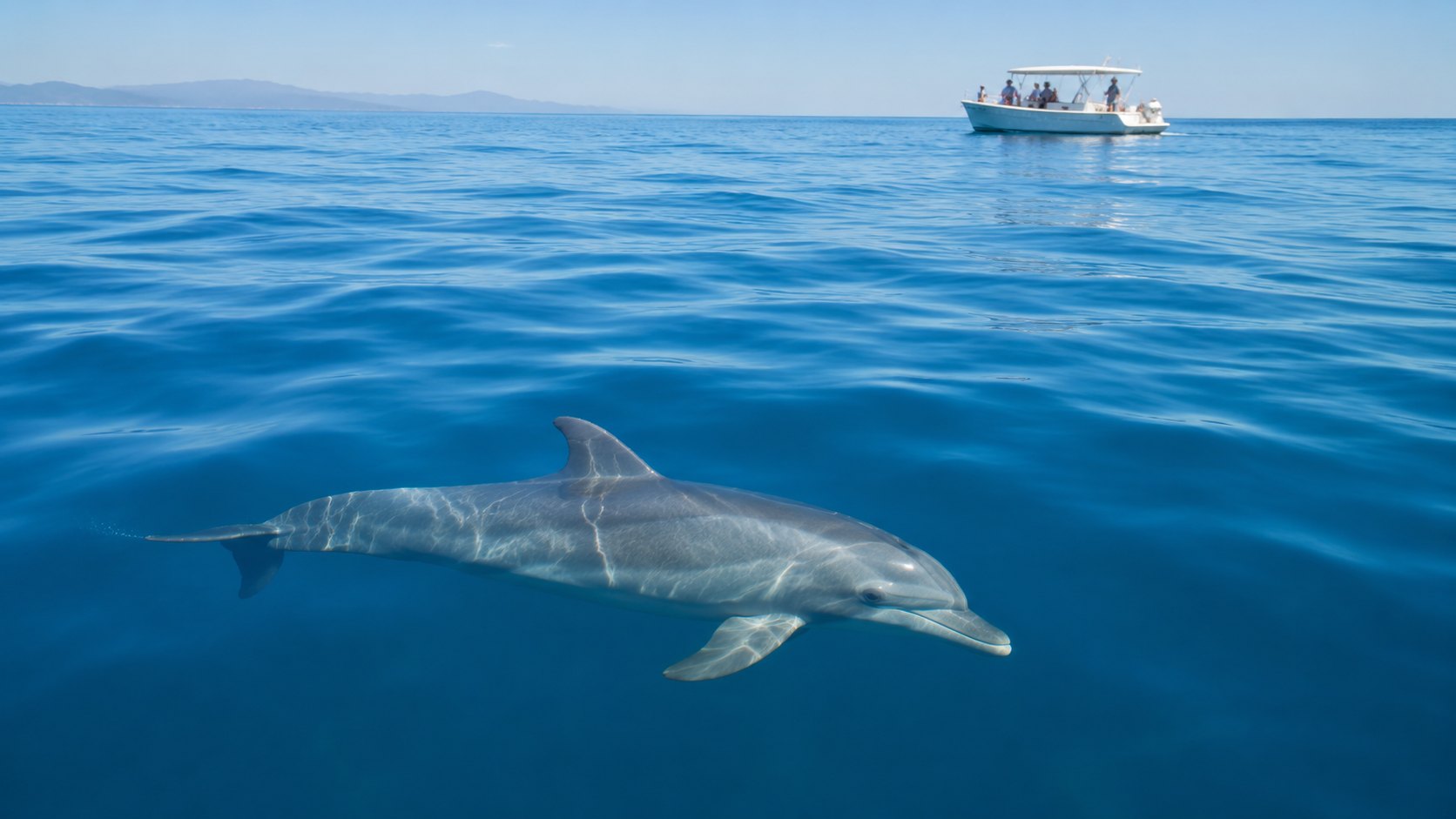
You see a dolphin surface near the boat, and the first instinct is almost automatic: say hello, whistle, wave, or try to make it look your way. Then a strange question appears online: is it illegal to talk to dolphins? The short answer is that ordinary words are not usually the legal issue, but what you do around those words can be.
That difference matters. Wildlife rules tend to focus on disturbance, harassment, pursuit, feeding, close approach, and attempts to make an animal react. A cheerful call can become part of a problem if it is used to lure a dolphin closer, keep it near a vessel, interrupt its normal behavior, or set up a swim, touch, or feeding encounter.
Most quick answers online stop at either “yes, it is illegal” or “no, it is fine.” Neither is a useful way to make a real decision on the water. I would rather give you the practical legal test: keep your distance, do not try to turn a wild animal into a participant, and check the rules that apply where you are viewing it.
This is general legal information, not advice for a specific incident or citation. Regulations, protected-area rules, and local conditions can change, so a skipper, park officer, or qualified local lawyer is the right person to ask when your trip, business, fine, or permit is on the line.
Quick answer: speech is not the legal test
Talking quietly to a dolphin from a responsible distance is not the same thing as harassing it. I could not find a general rule that makes words alone a standalone offense. The legal concern is whether your conduct has the potential to injure, disturb, pursue, feed, touch, trap, or deliberately draw a reaction from the animal.
That is why the safest answer is more precise than a viral post. You can enjoy the sighting, speak normally with the people around you, and take a photo from a respectful distance. You should not call, whistle, broadcast sound, or maneuver closer with the goal of getting the dolphin to respond, especially if that effort changes its path, feeding, resting, nursing, or travel.
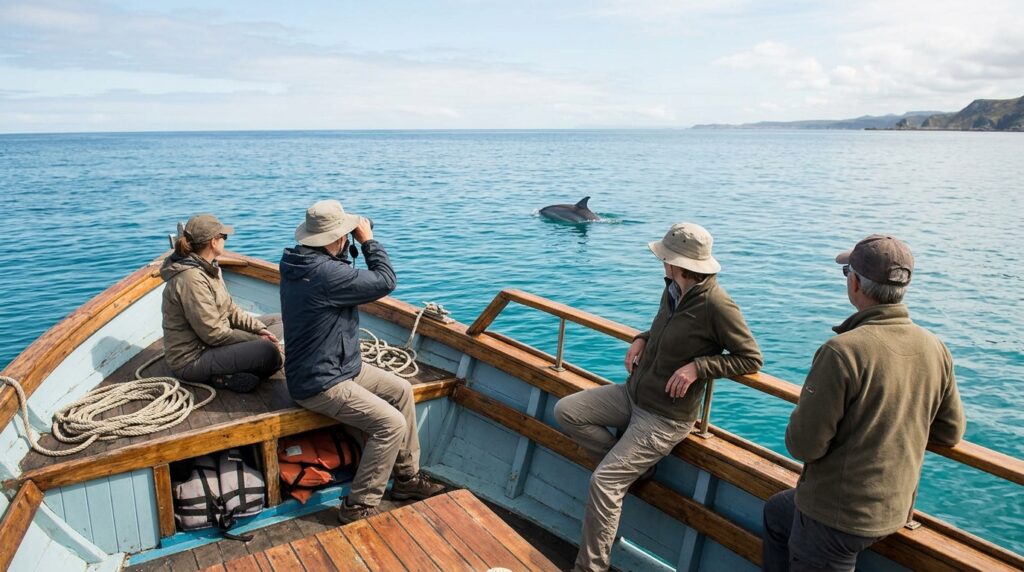
The most useful rule of thumb is this: let the dolphin control the encounter. If it comes near a vessel on its own, slow down, avoid sudden movement, and do not reward or prolong the contact. If it moves away, take that as the complete answer and leave more space.
Why the question gets the law backward
The question sounds simple because human conversation feels harmless. In wildlife law, the relevant question is usually not “Did you speak?” It is “What did the animal experience because of your conduct?”
The current federal definition of harassment describes two important levels.
- One covers conduct that has the potential to injure a marine mammal,
- while the other covers conduct that could disturb behavioral patterns, such as migration, breathing, nursing, breeding, feeding, or sheltering.
That language explains why a calm observation can be lawful while a seemingly playful interaction is risky. A person can be far enough away to talk to a friend, yet still be in trouble if they use a boat, food, a drone, or repeated sounds to make the dolphin change what it was doing. The action is judged in context, not by whether you called the animal by a friendly name.
I use a simple two-part check whenever I read a wildlife rule. First, ask whether I am changing my behavior to get closer or get a response. Second, ask whether the animal is changing its behavior because of me. A “yes” to either question is a strong signal to back off before a fun moment becomes a legal or safety problem.
The interaction ladder: where risk rises
The table below is not a permit guide, and it does not replace site-specific rules. It helps you separate passive viewing from conduct that can trigger a harassment, disturbance, or safety concern.
| What you do | Why it matters | Safer choice |
|---|---|---|
| Speak normally to people beside you while observing from a distance | Words by themselves are not the usual legal test, but your overall conduct still matters. | Keep the boat, shore position, and camera still and give the animal room. |
| Call, whistle, clap, or use sound to attract a dolphin | The goal is to elicit a reaction, which official viewing policy specifically discourages. | Stop trying to engage the animal and return to passive observation. |
| Steer toward, follow, box in, or leapfrog a dolphin | Vessel movement can disturb travel, feeding, nursing, or escape routes. | Slow down, stay clear, and move away if the animal changes course. |
| Get into the water, reach out, touch, or take a close selfie | Contact and close interaction can harm both people and wildlife, and may be prohibited. | Stay aboard or on shore, and use a zoom lens rather than your body. |
| Offer fish, bait, or any food | Feeding is expressly prohibited in many places and conditions dolphins to seek people. | Keep food secured and never toss anything to create an encounter. |
The key lesson is that intent is visible through action. If you are trying to create a “conversation” with a wild dolphin, the effort itself can look very different from simply hearing dolphins surface while you speak with your family. My recommendation is to save the story, not chase the interaction.
Is it illegal to talk to dolphins in the US?
For this exact question, the most accurate answer is usually no. Not because speech gets a special exception, but because the core rules regulate harmful or disruptive conduct. Dolphins are protected marine mammals, and official wildlife-viewing guidance advises the public not to harass, harm, pursue, wound, capture, collect, feed, swim with, touch, or otherwise interact with them in the wild.
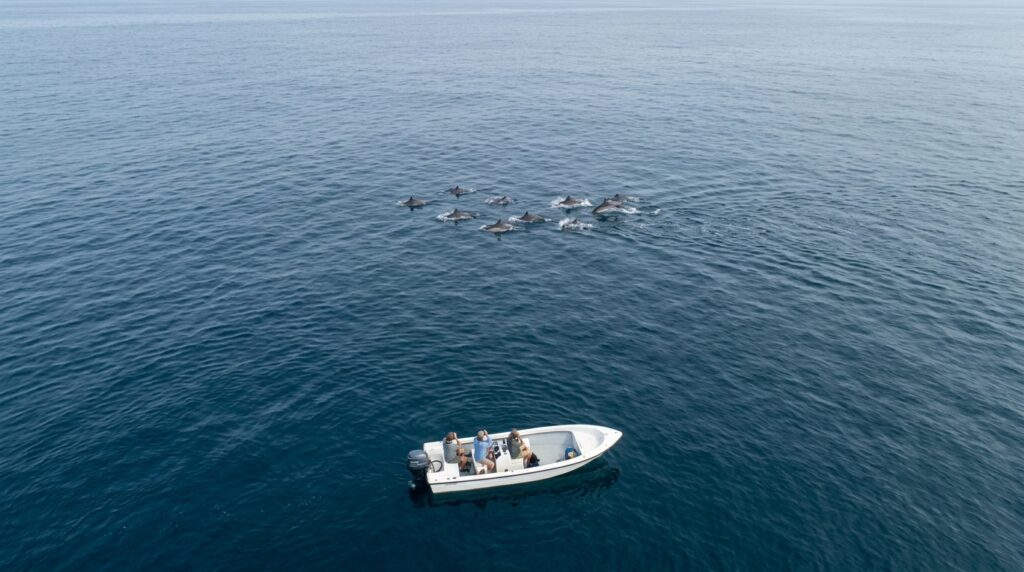
That guidance uses a practical distance baseline of at least 50 yards from dolphins and porpoises, roughly half a football field. It also warns that the required or recommended space can be greater in particular locations, so treat 50 yards as a sensible starting point, not a universal permission slip.
The law protects behavior, not the magic of silence
The important phrase is “attempting to interact.” Official policy does not support close approach, interaction, or an attempt to elicit a reaction from a wild marine mammal. That is why whistling repeatedly until a dolphin turns toward you is a worse choice than quietly narrating a sighting to a child at a respectful distance.
Do not turn this nuance into a loophole. A court or officer would look at the whole situation: distance, vessel speed, repeated approach, food, equipment, the animal’s response, nearby calves, and the rules for that water. The fact that you also spoke politely does not make disruptive conduct harmless.
Distance rules have two layers
One layer is the broad wildlife-protection law against taking or harassing marine mammals. The second layer is the location-specific rule or guideline that may prescribe an exact buffer, route, speed, operating practice, or closure. How federal and local rules work together is the legal idea behind this: a general national protection can sit alongside a stricter regional rule.
For example, the spinner-dolphin buffer in Hawai‘i is a legally enforceable 50-yard rule. It prohibits swimming with, approaching, or remaining within that distance of spinner dolphins in the designated waters, so a friendly attempt to talk while closing in is not a harmless technicality.
Before a boating, paddleboarding, drone, or photo trip, use this order of research. Read the protected-species rule, then the local marine-park or coastal guidance, then the operator’s own safety policy. If those answers differ, follow the more protective distance until an official source confirms otherwise.
What changes in other waters?
The short online answer becomes less reliable when you cross a border. Some systems expressly regulate interaction, some emphasize intentional or reckless disturbance, and some set a distance that changes with the animal’s activity. Why a legal answer can change by location is worth remembering here, even though wildlife law is a very different subject.
The comparison below provides a careful starting point rather than assuming that every shoreline follows a single rule. It focuses on official public guidance, but you should still check the current rule for the exact coast, protected area, species, and type of craft before you go.
| Place | Practical answer about talking | Rule you should not miss |
| Australia | I did not find a standalone nationwide ban on ordinary words. The legal focus is the manner of interaction, and coastal rules may differ from rules farther offshore. | In Commonwealth waters, official cetacean-watching rules prohibit touching or feeding dolphins and explain that states and territories set their own coastal-water rules. |
| Canada | Quiet speech at a proper distance is not the same as a permitted invitation to interact. The official wording is broad enough that trying to attract or engage a dolphin is a poor legal bet. | Marine-mammal viewing rules say it is illegal to disturb, feed, swim with, or interact with marine mammals and generally require 100 meters, or 200 meters when an animal is resting or with a calf. |
| The UK | I didn’t find any special “speech offense.” Intentional approach or reckless disturbance can still create liability, so treating a dolphin as a performer is the wrong mindset. | Official disturbance guidance warns that intentional approach or reckless disturbance may be an offense, while the visitor code advises keeping at least 100 metres away where possible. |
Is it illegal to talk to dolphins in Australia?
No general rule I found makes respectful, ordinary speech illegal simply because a dolphin is present. But the official framework governs how people, vessels, and aircraft interact with cetaceans and clearly prohibits touching or feeding in Commonwealth waters. Coastal waters can be governed by different state or territory rules, so local confirmation is not optional if you plan to approach by boat or enter the water.
If I were planning a tour there, I would ask the operator a direct question before paying: “What distance and behavior rules apply on this route today?” A credible operator should answer without selling you a loophole, a feeding encounter, or a promise that you will get to communicate with a wild animal.
Is it illegal to talk to dolphins in Canada?
The safer answer is to make observations silently on purpose, even if you speak normally to companions. The official rule forbids disturbing or interacting with marine mammals, and its 100-meter general minimum distance increases to 200 meters for animals that are resting or with a calf. A person trying to get a reaction is moving toward the kind of interaction the rule is designed to prevent.
The practical point is not that you must hold your breath when a dolphin appears. It is that your group should stop calling, splashing, feeding, swimming toward, or positioning the boat to create a personal encounter. If you cannot confidently maintain the required space, leave rather than argue about whether a whistle counts as speech.
Is it illegal to talk to dolphins in the UK?
Ordinary speech is not the rule’s headline. The legal danger arises from intentionally approaching or recklessly disturbing a protected animal, and official visitor guidance advises watching for signs such as moving away, diving, or less frequent surfacing. Those are not invitations to move closer for a better look.
Keep at least 100 meters away where possible, and add distance at the first sign that your presence is changing the animal’s behavior. That approach protects you from the common mistake of treating a dolphin’s tolerance as consent to keep pushing the encounter.
Is it illegal to talk to dolphins in the ocean?
Being offshore does not make the rules disappear. The ocean can involve national waters, coastal regulations, marine protected areas, vessel rules, species-specific protections, and rules that change as you cross a boundary. A dolphin does not need to be near a beach for feeding, pursuit, harassment, or a close approach to become a problem.
The biggest practical error is assuming that open water means nobody is watching. In reality, a captain’s wake, track, video, passenger posts, or another vessel can show exactly how an encounter happened. More importantly, the animal’s safety matters even if nobody else is present.
If dolphins approach your boat on their own, do not use that as permission to maintain their pace or make a game of it. Slow to a safe no-wake speed, avoid steering toward them, and allow them a clear path to leave. If you are in the water, do not swim toward them or try to stay with the group; calmly create distance and follow the site’s local instructions.
The same logic applies to drones and cameras. A long lens lets you observe without closing the gap, while a drone flown low or nearby may itself be the disturbance. Viewing guidance for aircraft and drones specifically warns that noise and close proximity can stress or harass marine wildlife.
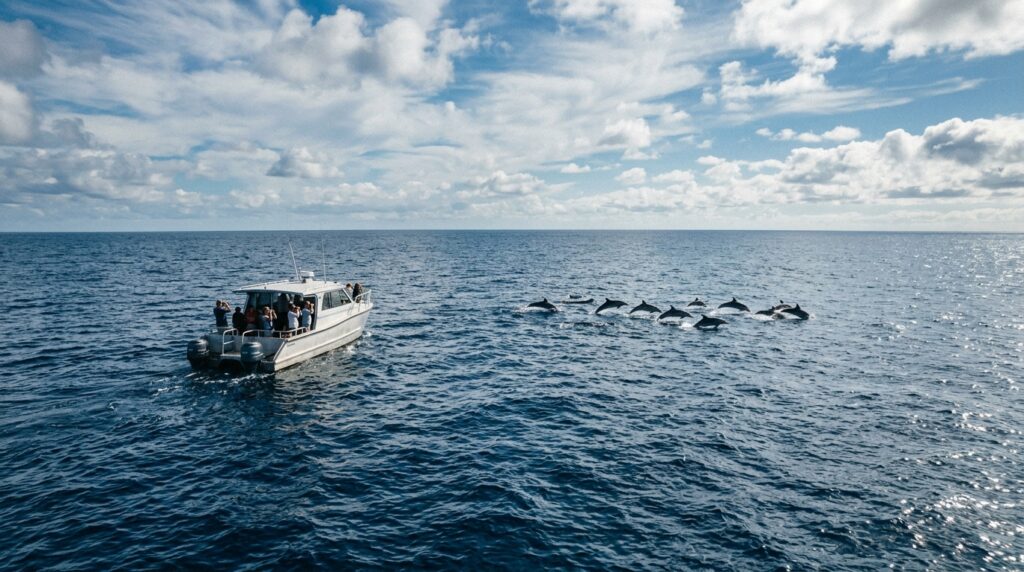
The 60-second decision procedure when dolphins appear
You do not need a law degree to make the first safe decision. The following sequence turns the legal principles into actions you can use before excitement takes over. Read it before a trip, because it is easier to follow a plan than invent one with a dolphin at the bow.
- Stop trying to create a moment. Do not call, whistle, splash, point a speaker, throw food, or ask someone to jump in. A dolphin sighting is already the moment; your job is to avoid turning it into an experiment.
- Check your position and speed. If you are on a craft, slow down smoothly and keep a generous buffer. Never aim the vessel at the animal, cut across its path, box it against shore, or use wake to encourage it to ride beside you.
- Look for calves and signs of disturbance. A mother-calf pair, repeated dives, sharp course changes, tail slaps, or attempts to move away are reasons to increase the distance immediately. The fact that a dolphin surfaces nearby does not negate those warning signs.
- Let the animal leave. Do not follow after it, even if passengers are disappointed. A short observation is better than a long encounter that interferes with feeding, resting, nursing, or travel.
- Use your camera, not your body. Photograph from where you are, with the zoom you already have. Do not lean over, reach, touch, or stage a selfie, and do not send a drone to replace the close-up you did not get.
- Check the exact local rule afterward if you are unsure. Write down the location, species if known, and what occurred while it is fresh. That is far more useful than relying on a social media claim when you need to report an incident or choose a future operator.
This approach feels modest, but that is exactly why it works. It avoids the conduct that most often creates legal exposure while still letting you enjoy a remarkable wildlife encounter. I would call that a better outcome than a ten-second video with a much larger consequence.
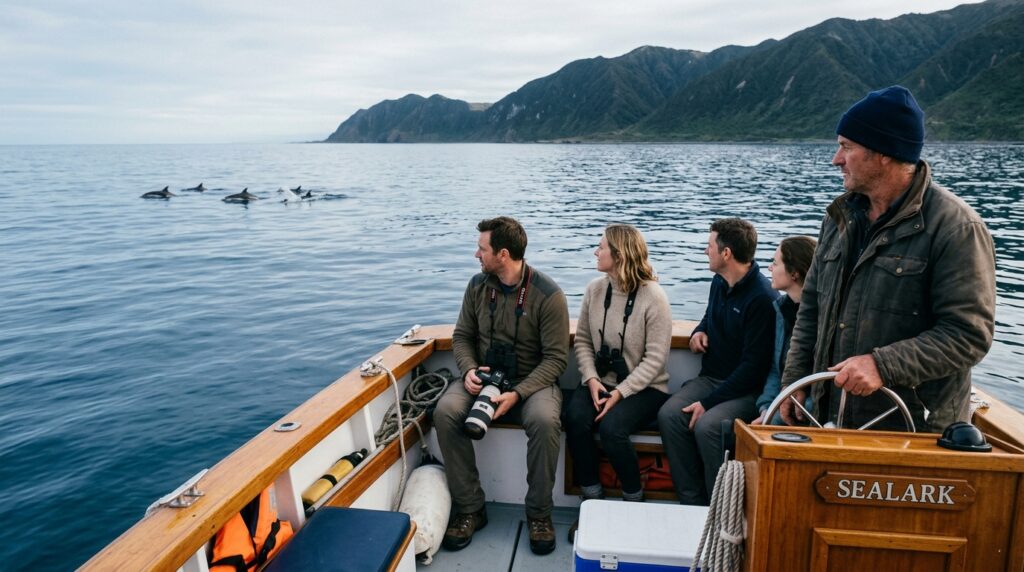
How to choose a dolphin-watching trip without buying a problem
Commercial language can tell you a lot before you book. A responsible wildlife trip involves viewing, observation, conservation, maintaining distance, and following local rules. A risky one sells a “guaranteed interaction,” asks guests to bring food, promises swimming with wild dolphins, or treats contact as the product.
I would ask the following questions in writing before I pay a deposit. The point is not to interrogate a captain; it is to see whether the operator has a policy that protects animals even when passengers want a closer photo.
- What is your minimum viewing distance for dolphins on this route? A clear answer should name the applicable rule or describe a conservative procedure. “We get as close as possible” is not a safety policy.
- What do you do if dolphins approach the boat? Look for an answer about slowing down, holding course safely, and letting the animals choose whether to pass. Be wary of anyone who talks about circling, matching speed, or creating a wake for them.
- Do guests ever feed, touch, swim with, or call to wild dolphins? The answer should be no. A lawful operator does not need a loophole to make a sighting worthwhile.
- How long do you stay with one group? Short, measured viewing windows reduce repeated pressure on the same animals. A good operator should be comfortable moving on when the animals show avoidance or when other boats are already nearby.
- What happens in a protected area or when calves are present? Ask for the stricter procedure, not the most exciting one. The right answer may be to leave with no close footage at all.
There is also a consumer benefit to choosing this way. A careful operator is more likely to have a calm crew, safer vessel handling, clear passenger expectations, and a plan when wildlife appears unexpectedly. That is not a legal guarantee, but it is a much better signal than an ad built around an animal’s reaction.
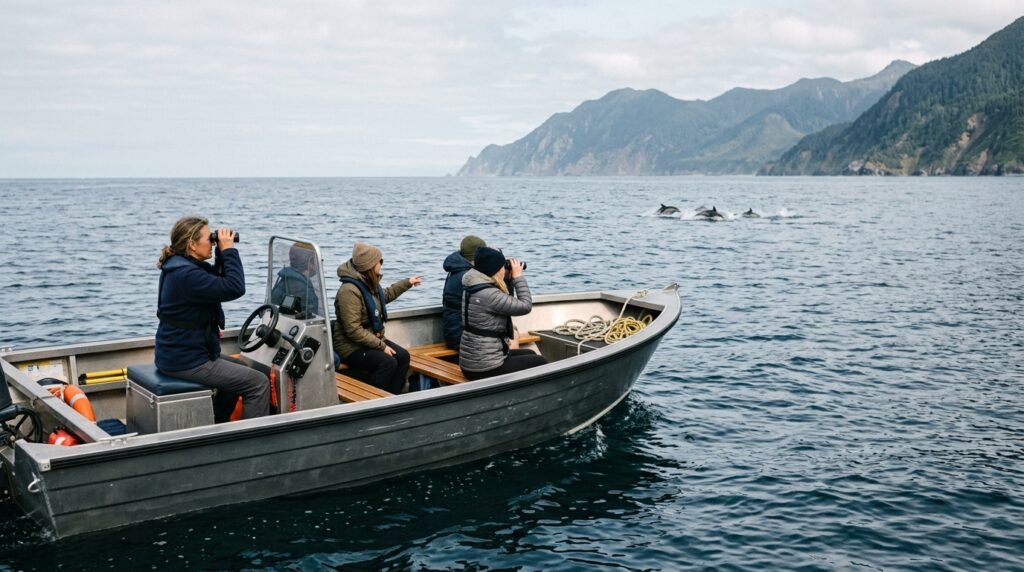
Pros and cons of different ways to see dolphins
There is no perfect method, but some choices pose much lower legal and wildlife risks than others. The comparison below gives you a practical way to choose a trip without mistaking access for permission.
| Viewing option | Main advantage | Main limitation | My legal-safety view |
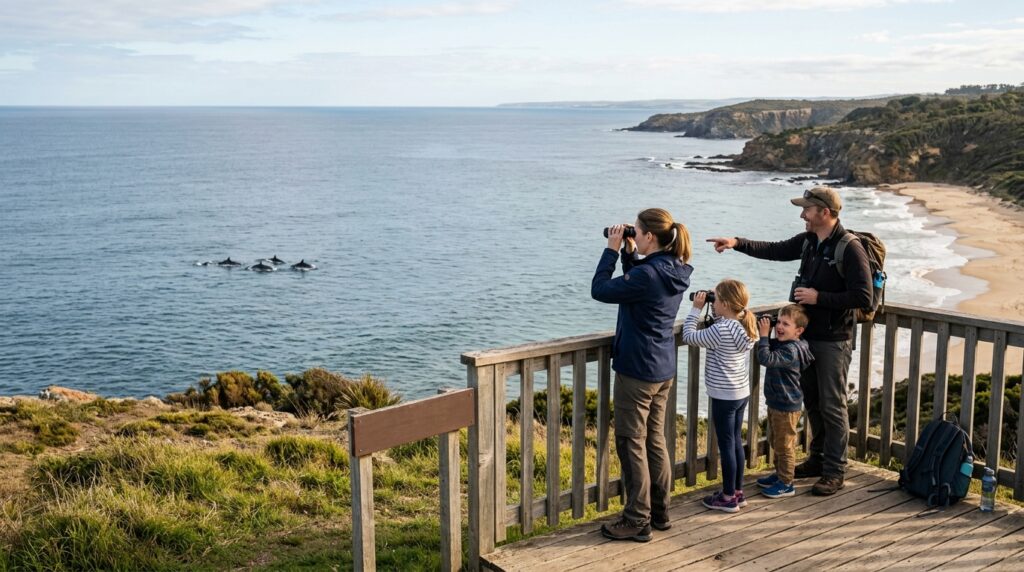
| Shore or lookout point | No vessel pressure and easy room to stay back. It is often the least intrusive option. | You may see less detail and sightings are less predictable. | Best starting point for beginners and families. |
| Licensed viewing boat | A knowledgeable captain can manage distance, speed, and wildlife behavior. It can provide access without entering the animals’ space. | The quality depends heavily on the operator’s actual policy. | Good choice only when the operator clearly rejects feeding, chasing, touching, and swim-with encounters. |
| Private boat or paddle craft | You control your own route and schedule. It can be a quiet way to see a passing animal. | It is easy to misjudge distance, speed, and local rules. | Choose only if you know the local requirements and will leave early rather than pursue. |
| Swimming or “interaction” activity | It may sound unforgettable in an advertisement. That feeling is exactly why it can invite risky decisions. | It can be unlawful, dangerous, or disruptive, depending on the species and location. | Avoid it unless it occurs in a clearly lawful, permitted setting with rules you have independently verified. |
The commercial takeaway is simple: pay for skilled observation, not access to a reaction. A real wildlife experience should still be satisfying if the dolphins never come close enough for a phone photo. That is the standard I would use when comparing two tours with similar prices.
Common misunderstandings that can get you too close
The most common bad advice begins with a true fact and stretches it too far. Yes, dolphins can be curious. No, curiosity does not give people a legal right to approach, touch, feed, follow, or keep trying until an animal responds.
“The dolphin came to me, so I can stay with it.”
An animal’s approach does not erase your duty to avoid disturbing it. The safest response is to hold position or move away slowly when safe, not to match its speed, to extend the encounter, or to treat the moment as consent for contact.
“I did not touch it, so nothing I did matters.”
Touching is only one form of interference. Chasing, crowding, repeated calling, a low drone, food, or steering a boat into an animal’s route can matter even when there is no physical contact. The law’s concern is often the disruption of natural behavior, not a hand on a dorsal fin.
“A 50-yard guideline means I can be 49 yards away if the dolphin looks happy.”
No. A recommended distance is a buffer meant to reduce pressure, and a local legally enforceable distance can be greater. If you cannot confidently estimate the space, make the conservative choice and leave more room rather than negotiating with yourself.
“Talking is illegal because dolphins understand us.”
That is the wrong legal theory. The legal issue is not whether a dolphin understands a word, but whether a person’s conduct harasses, disturbs, or attempts to draw an animal into an interaction. Keeping the analysis grounded in behavior protects you from both myths and loopholes.
Expert tips for staying on the right side of the law
These are the habits I would use to turn a confusing rule into a safe routine. They are deliberately conservative because wildlife rules are easier to follow before the encounter becomes close or emotional.
- Treat distance as your first defense. Do not wait for a dolphin to show distress before giving space. A generous buffer is easier to defend and kinder to the animal than a last-second retreat.
- Separate legal minimums from best practice. A rule may set a floor, while a responsible guide uses more room because a calf, another vessel, poor visibility, or shallow water makes the situation sensitive. Following the more protective approach is usually the smart choice.
- Do not use food, sound, or motion as a shortcut to content. Those tactics are designed to change the encounter. If your plan relies on changing what the dolphin does, the plan needs to change.
- Read the site-specific rule before launching. Marine parks, harbors, reserves, and regional agencies may have requirements that are not obvious from a general article. Save the official page or ask the harbor authority before you leave the dock.
- Build a “leave early” policy for your group. Decide in advance that calves, avoidance behavior, crowding, or uncertainty mean you move on. It removes the pressure to take one more pass after someone has already started filming.
The purpose of these tips is not to make dolphin sightings feel stressful. It is to help you enjoy them without adding yourself to the animal’s list of problems. Respectful distance gives you both a better story and a safer legal position at the same time.
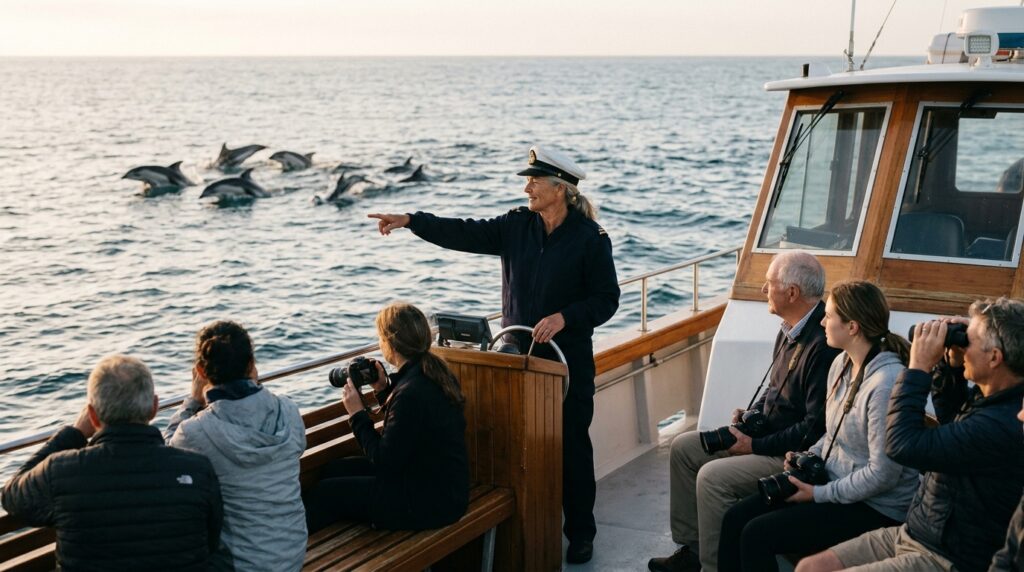
Frequently asked questions
Is it illegal to talk to dolphins at a safe distance?
Ordinary speech at a safe distance is generally not what wildlife rules prohibit. The danger starts when “talking” becomes an effort to attract, approach, prolong, or shape the dolphin’s behavior. Stay passive, keep your distance, and follow any local rule that is stricter than the general guidance.
Can I whistle or use a speaker to get a dolphin’s attention?
That is a poor idea because the purpose is to get a response from a wild animal. Official policy specifically warns against attempts to elicit a reaction, and loud or close equipment can compound the problem. Enjoy the sighting without using sound as bait.
Can I feed dolphins from a dock, beach, or boat?
No. Feeding wild dolphins is prohibited and can condition them to seek people, vessels, and handouts. Secure bait and food, never toss anything toward them, and report a dangerous or injured-animal situation through the appropriate local wildlife channel rather than trying to help by hand.
What should I do if dolphins follow my boat?
Slow down safely, avoid sudden turns, and do not intentionally steer or accelerate to create a wake for them. Allow the animals to pass and leave them an open route. If you are unsure about the local distance rule, moving away slowly is safer than trying to maintain the encounter.
Is it illegal to talk to dolphins in the UK, Canada, or Australia?
The legal focus in each place is on disturbance and interaction, not on a standalone ban on ordinary words. In the UK, intentional approach or reckless disturbance can be an offense; in Canada, rules prohibit disturbing and interacting with marine mammals and set minimum distances; in Australia, interaction rules apply, and coastal requirements can vary. Check the official guidance for the exact location before your trip.
Final answer: admire the dolphin, do not try to recruit it
So, is it illegal to talk to dolphins? A quiet comment from a respectful distance is not normally what the law targets. But a “conversation” that means calling, whistling, approaching, following, feeding, swimming, touching, filming too closely, or trying to get a response can cross into conduct the rules are designed to stop.
My recommendation is simple: observe, give space, and leave the encounter on the dolphin’s terms. Before you book a tour or launch a boat, check the current site-specific rule and choose an operator whose idea of a great sighting does not depend on interfering with wildlife.
