

How Old Do You Have to Be to Get a Tattoo?
So you want to know how old do you have to be to get a tattoo, and you want a straight answer, not a wall of legal jargon. I get it. I spent a whole weekend once trying to figure out the rule for a family member who was turning 17 and dead set on a small tattoo for her birthday. What I found was messy. Every state website used different wording; some blogs were years out of date, and two “official-sounding” pages flat-out disagreed with each other. So I went back to the actual state statutes, the ones written by lawmakers, not by tattoo shops trying to rank on Google, and pulled the real answer together in one place.
Here is the short version. In every single state, you can get a tattoo without asking anyone once you turn 18. Below that age, it depends entirely on where you live. Some states will not tattoo a minor no matter what your parents say. Others will, but only if a parent shows up in person with ID and signs paperwork in front of the artist. A few use notarized forms instead. There is no single national rule, which is exactly why this trips up so many families.
I will walk you through the general rule, the exact requirements in the states people search for most, what “parental consent” actually looks like in practice, and the mistakes I have seen people make that get an appointment canceled on the spot.
The Quick Answer: 18 Is the Baseline Everywhere
Before getting into state-by-state detail, here is the one fact that holds true across the entire country: no state allows a tattoo shop to ink someone under 18 without some form of parental involvement, and a handful of states will not do it at all, even with a parent standing right there. This comes down to basic contract law, since a minor generally cannot give legally binding consent for a permanent procedure the same way an adult can.
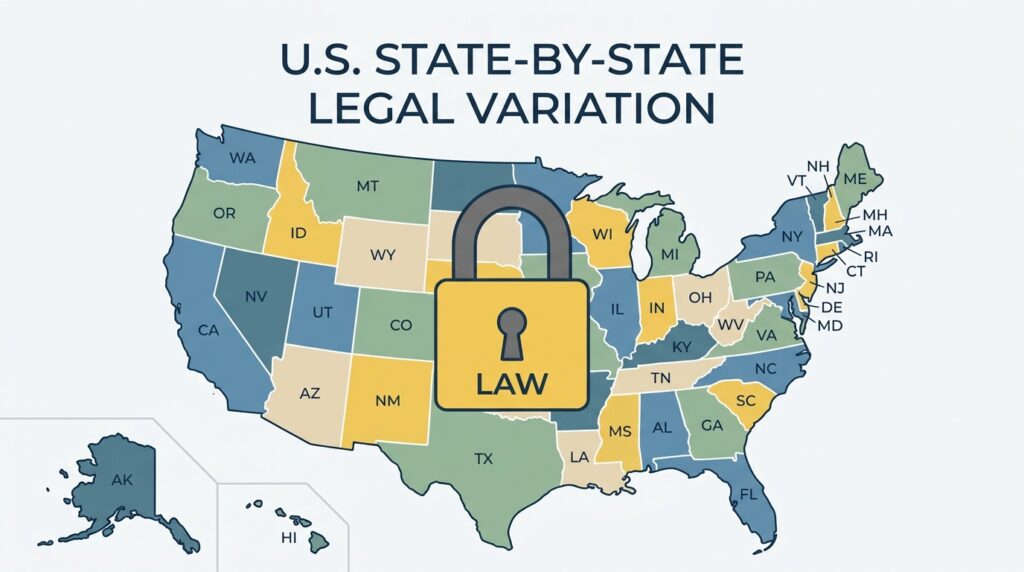
There is no federal tattoo law. The Legal status of tattooing in the United States page on Wikipedia is a useful jumping-off point here, and it confirms what I found while digging through statutes myself: every state sets its own minimum age and consent process, which is why the answer changes the second you cross a state line.
If your situation involves a divorce, a custody arrangement, or a parent who will not sign off, that is a genuinely different question, and I would point you toward The Law Learner’s family law coverage for a broader look at how parental consent works across other decisions involving minors, not just tattoos.
Why the Age Requirement Exists in the First Place
I used to think 18 was just a random number lawmakers picked because it lines up with voting age. It is not. Tattoos are permanent (or at least extremely difficult and expensive to remove), and lawmakers in nearly every state have decided that a minor’s brain, still developing impulse control and long-term judgment, should not be the final word on a decision that follows them for life. That reasoning appears almost word-for-word in state health department rulemaking whenever these laws are revised.
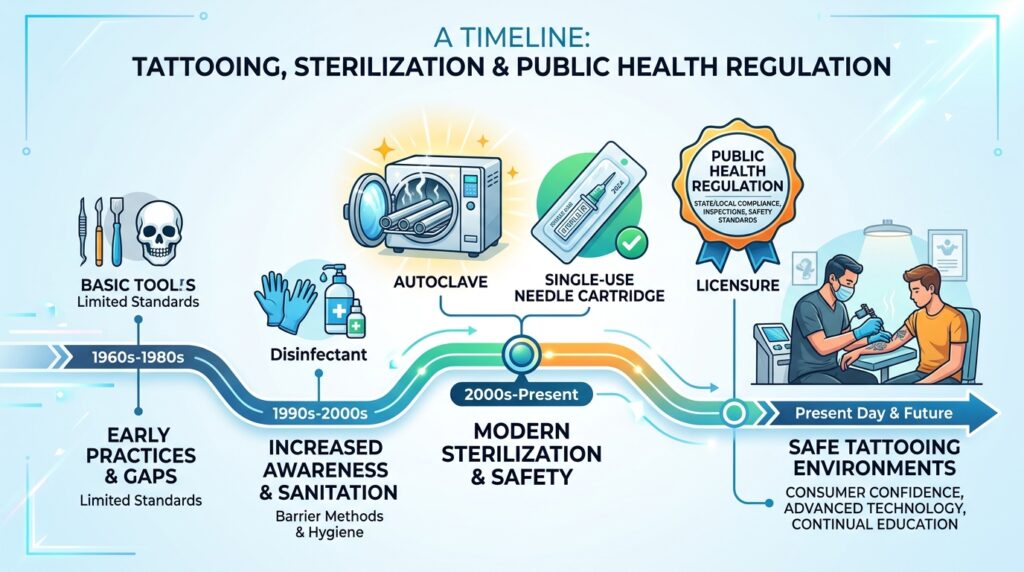
There is also a public health angle. Tattooing broke skin with a needle, and early 20th-century outbreaks of hepatitis linked to poorly sterilized tattoo equipment pushed states to regulate the entire industry, not just the age question. That is why almost every state tattoo law falls under the same chapter of the statute as licensing rules, sterilization standards, and record-keeping requirements for the shop itself.
State-by-State: How Old Do You Have to Be to Get a Tattoo?
I pulled the following straight from state statutes and official code sites wherever I could find them, rather than relying on a single aggregator. Laws get amended, sometimes quietly, so treat this as your starting point and always call the shop or check your state health department page before you book anything.
| State | Minimum Age Without Consent | Can a Minor Get One With Parental Consent? | What the Parent Must Do |
|---|---|---|---|
| Texas | 18 | No, no exceptions | N/A, straight 18+ rule under Texas tattoo licensure code |
| New York | 18 | No, no exceptions | N/A |
| South Carolina | 18 | No, no exceptions | Illegal even with consent under S.C. Code § 44-34-100 |
| Pennsylvania | 18 | Yes | Parent or guardian must consent and be physically present, per 18 Pa. C.S. § 6311 |
| Ohio | 18 | Yes | Parent, guardian, or custodian must appear in person and sign a consent document, per Ohio Rev. Code § 3730.06 |
| New Jersey | 18 | Yes | Written permission from a parent or legal guardian, per N.J. Stat. § 2C:40-21 |
| Connecticut | 18 | Yes, narrowly | Prior written permission required under Connecticut’s tattooing statute before a shop can work on an unemancipated minor |
| Georgia | 18 | Limited | Georgia law places extra restrictions on tattooing minors; several sources note added supervision requirements beyond a simple signed form |
| Iowa | 18 | Generally no | Iowa is commonly listed among states that do not permit tattooing minors, regardless of parental consent |
| North Carolina | 18 | Varies by source | Reports conflict here, so confirm directly with your local shop and county health department |
| Utah | 18 | Very limited | Sources point to a narrow exception rather than a straightforward parental consent process |
A quick note on that last row for Iowa, North Carolina, Utah, and Georgia: unlike Texas, New York, South Carolina, Pennsylvania, Ohio, and New Jersey, I could not fully confirm the fine print for these four from a single clean, current statute, and secondary sources genuinely disagree with each other on the details. Rather than hand you a number that might be wrong, I am being upfront: call two or three licensed shops in your county and ask them directly, since they deal with this weekly and know their local health department’s current interpretation.
Texas: 18, No Exceptions
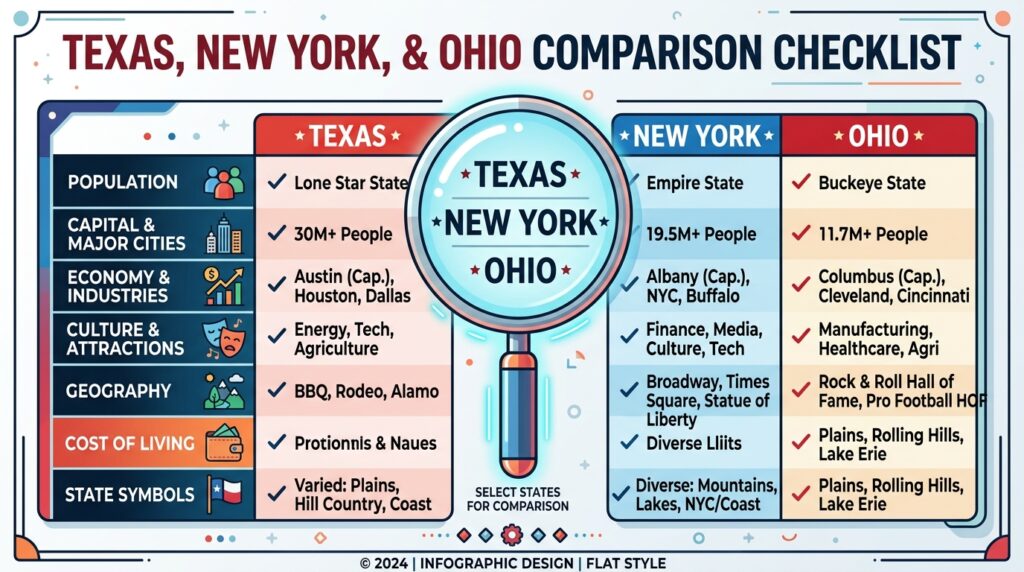
Texas keeps this simple. A client must be 18 or older and must show valid, government-issued photo ID with a printed date of birth before a tattoo artist can legally touch a needle to skin. There is no parental-consent workaround for standard decorative tattoos in Texas, which surprises many people who assume “my mom said it’s fine” solves everything. The rule lives in the Texas Administrative Code, Title 25, Chapter 229, and shops that break it risk losing their license, plus real fines.
New York: 18, No Exceptions
New York is one of the strictest states in the country on this. Whether you are in Manhattan or a small town upstate, the rule does not bend for parental consent. If you are 16 or 17 in New York hoping a signed note from mom gets you in the chair, it will not.
Pennsylvania: Under 18 Allowed, But Only With the Parent Physically There
Pennsylvania actually does allow minors to get tattooed, which trips people up because they assume it is an 18-only state like its neighbor New York. Under Pennsylvania law, a parent or legal guardian must provide consent and be physically present at the appointment. A phone call, a text, or a signed form mailed in advance does not cut it. I would genuinely recommend calling the specific shop first here, since I have seen accounts of individual Pennsylvania studios setting their own stricter house policy on top of the state minimum, even refusing anyone under 18 regardless of what the law technically permits.
Ohio: Consent Plus In-Person Sign-Off
Ohio’s rule, found in Ohio Revised Code § 3730.06, requires a parent, guardian, or custodian to appear in person at the time of the procedure and sign a document explaining exactly how the tattoo will be performed and how to care for it afterward. Ohio also makes it a separate offense for anyone to lie about a minor’s age or to pretend to be their parent, so this is not a loophole shops take lightly.
New Jersey: Written Parental Permission Required
New Jersey’s statute, N.J. Stat. § 2C:40-21, requires written permission from a parent or legal guardian before a minor can be tattooed. Interestingly, this is one of the areas where I actually saw two different licensed attorneys online give conflicting answers, so double-checking with the shop is worth the extra five minutes.
South Carolina: 18 Only, and Consent Does Not Help
South Carolina is unusually blunt about this one. Under S.C. Code § 44-34-100, it is unlawful to tattoo anyone under 18, full stop. The statute specifically states that a parent or guardian’s permission does not protect the tattoo artist from liability. So if you are picturing a South Carolina studio that will bend the rules for a signed note, that shop is breaking the law, not offering you a favor.
Georgia, Iowa, North Carolina, and Utah: Confirm Locally
I want to be honest about these four rather than pretend I have a clean, verified answer for each. General secondary reporting suggests Georgia layers on extra restrictions, Iowa leans toward not permitting minors at all, and Utah and North Carolina show conflicting information across different legal and industry sources. If you live in one of these states, your fastest and most reliable move is to make a direct phone call to a licensed studio, since they field this exact question constantly and know the current local interpretation better than most general blog posts, mine included.
What “Parental Consent” Actually Means at the Shop
Here is something I did not expect until I actually watched a friend go through this process in a consent state: “parental consent” is rarely just a signature. Depending on the state, it usually involves some combination of:
- The parent physically showing up with the minor on the day of the appointment, not the day before.
- Government-issued photo ID from the parent, matched against the minor’s ID or birth certificate to confirm the relationship.
- A written consent form provided by the shop, sometimes required to be notarized.
- The parent staying in the building, sometimes in the room, for the entire procedure.
Shops that skip any of these steps are taking on real legal risk, so do not be annoyed if the front desk asks for more documentation than you expected. I have seen appointments canceled on the spot because a parent’s ID had a different last name than the minor’s and no one thought to bring guardianship paperwork.

What Happens If a Shop Tattoos a Minor Illegally
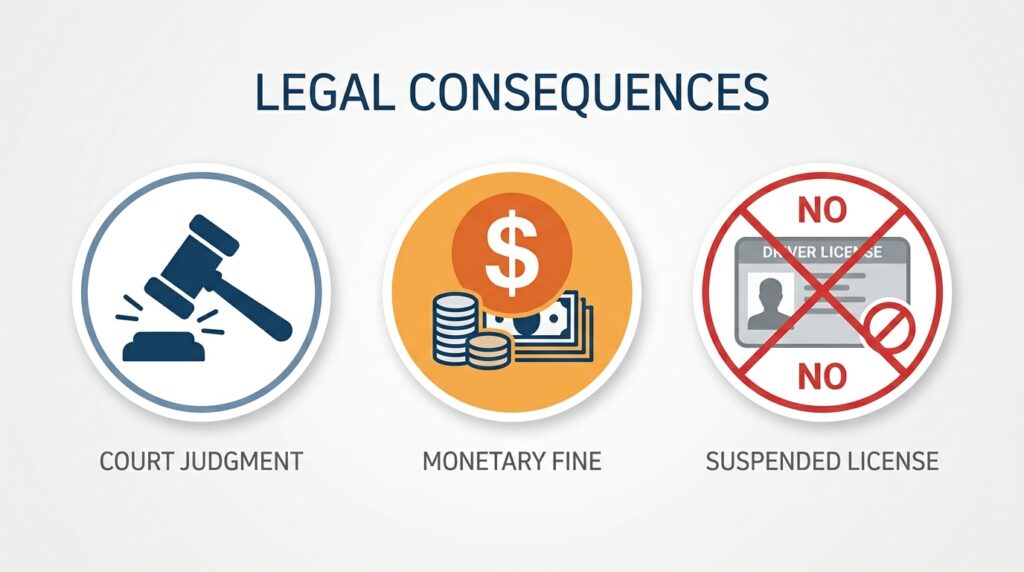
This is not a “slap on the wrist” situation. Depending on the state, an artist who tattoos a minor outside the legal process can face a misdemeanor charge, thousands of dollars in fines, suspension or permanent revocation of their license, and in some states even jail time. Texas allows administrative fines up to $5,000 per violation. Pennsylvania’s statute sets a fine and up to three months in jail for a first offense. This is exactly why a reputable, licensed shop will never quietly wave you through just because you seem mature for your age or you are one week away from your 18th birthday.
There is also a lesser-known risk for parents: if a parent signs a consent form knowing the tattoo is illegal in that state, or lies about being the legal guardian, that parent can face liability, especially if something goes wrong medically. I would treat “just have my aunt sign it” as a genuinely bad idea, not a clever workaround.
Pros and Cons of Getting a Tattoo Before 18
Pros, if your state legally allows it:
- You avoid a waiting period if the design is tied to a specific event, such as a memorial tattoo after losing a family member.
- Getting it done properly, in a licensed shop with sterile equipment, is far safer than the DIY or “someone’s basement” alternative some teens turn to when a legal shop turns them away.
Cons worth weighing seriously:
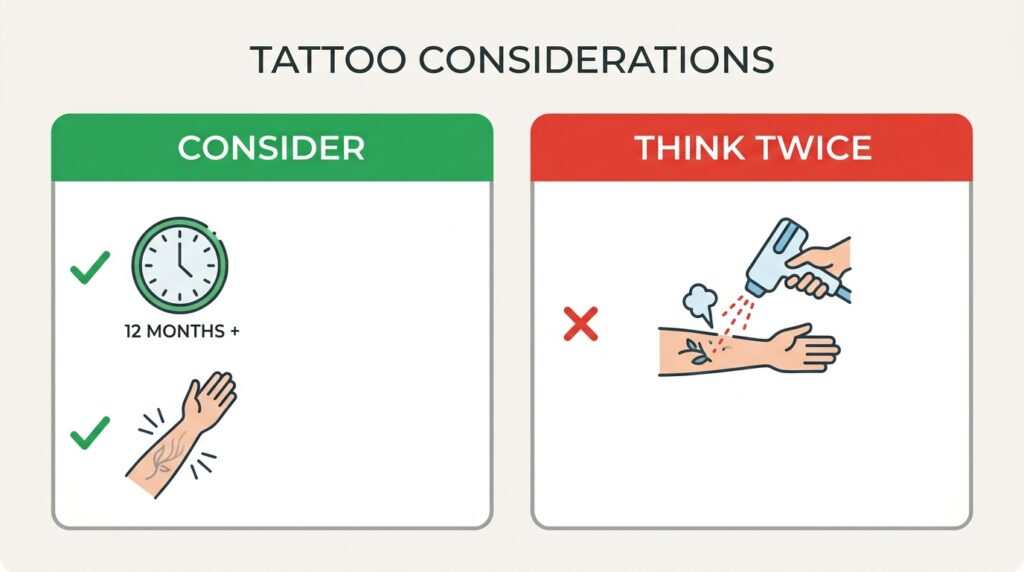
- Skin is still changing shape through your late teens, so a design placed on the arm, back, or leg at 16 can look stretched or distorted by the time you are 22.
- Tastes change fast in your teens and early twenties. What feels permanent-worthy at 16 sometimes feels like a mistake by 20, and laser tattoo removal is expensive, painful, and rarely gets skin back to 100 percent.
- Reputable studios often decline minors on their own house policy even where state law technically allows it, so you may drive to three shops before finding one willing to do it.
My Honest Take
I will be direct with you here. Even in the states where a minor can legally get tattooed with parental consent, most of the working artists I have come across strongly prefer not to. It is not about the money. It is about liability and about genuinely not wanting to be the reason a 16-year-old is stuck with something they regret at 25. If you are a parent reading this because your teenager is pushing for one, I would ask the artist directly what their studio’s actual policy is before you even get into the legal-age question, since the studio’s own rules will often be the real deciding factor.
If you are the teenager reading this, my honest advice is to wait if you possibly can. Not because the law says so, but because I have watched enough people go through the regret-and-removal cycle to know that eighteen months of patience costs you nothing, while a rushed tattoo can cost you a lot more than money.
Frequently Asked Questions
Can I get a tattoo at 16 with my parents’ permission?
It depends entirely on your state. States like Pennsylvania, Ohio, and New Jersey allow it under specific conditions, usually requiring the parent to be physically present with ID. States like Texas, New York, and South Carolina do not allow it at any age under 18, regardless of parental consent.
Do I need my birth certificate to prove my age for a tattoo?
Most shops accept a valid government-issued photo ID with your date of birth, such as a driver’s license, state ID, or passport. If a parent is providing consent for a minor, many states also require proof of the parent-child relationship, which sometimes means bringing a birth certificate as well.
Is it illegal for a tattoo artist to lie and say I’m old enough?
Yes. In nearly every state, both the person giving false identification and the artist who tattoos a minor without proper legal consent can face criminal penalties, not just the studio losing its license.
Can I get a tattoo removed if I got it as a minor and regret it?
Yes, laser tattoo removal is available regardless of when the tattoo was done, though it typically takes multiple sessions, can be uncomfortable, and rarely erases the tattoo completely without any trace.
What if my state requires 18 but I’m getting married, joining the military, or otherwise legally emancipated?
Emancipation status can change how some of these laws apply, though it varies significantly by state and by the specific statute involved. This is genuinely worth a quick conversation with a family law attorney in your state rather than assuming military enlistment automatically unlocks tattoo eligibility everywhere.
Final Thoughts
So, how old do you have to be to get a tattoo? Everywhere in the country, 18 gets you in the chair, no questions asked. Below that, it is a genuine patchwork: some states open the door with a parent standing beside you, others keep it locked no matter what paperwork you bring. The safest move, every single time, is a direct phone call to a licensed shop in your own county before you get emotionally attached to an appointment date. Laws shift, county health departments interpret things differently, and the shop that turns you away is not being difficult; they are staying within the law that protects both of you.
If you are working through a related family law question, whether that is parental consent, custody disagreements over medical or cosmetic decisions for a minor, or general guardianship rules, take a look at The Law Learner’s civil services and family law resources for more plain-language breakdowns like this one.
Also Read: How Much Does It Cost to Change Your Name in 2026?
How to Get Out of Jury Duty (Legally) in 2026
