

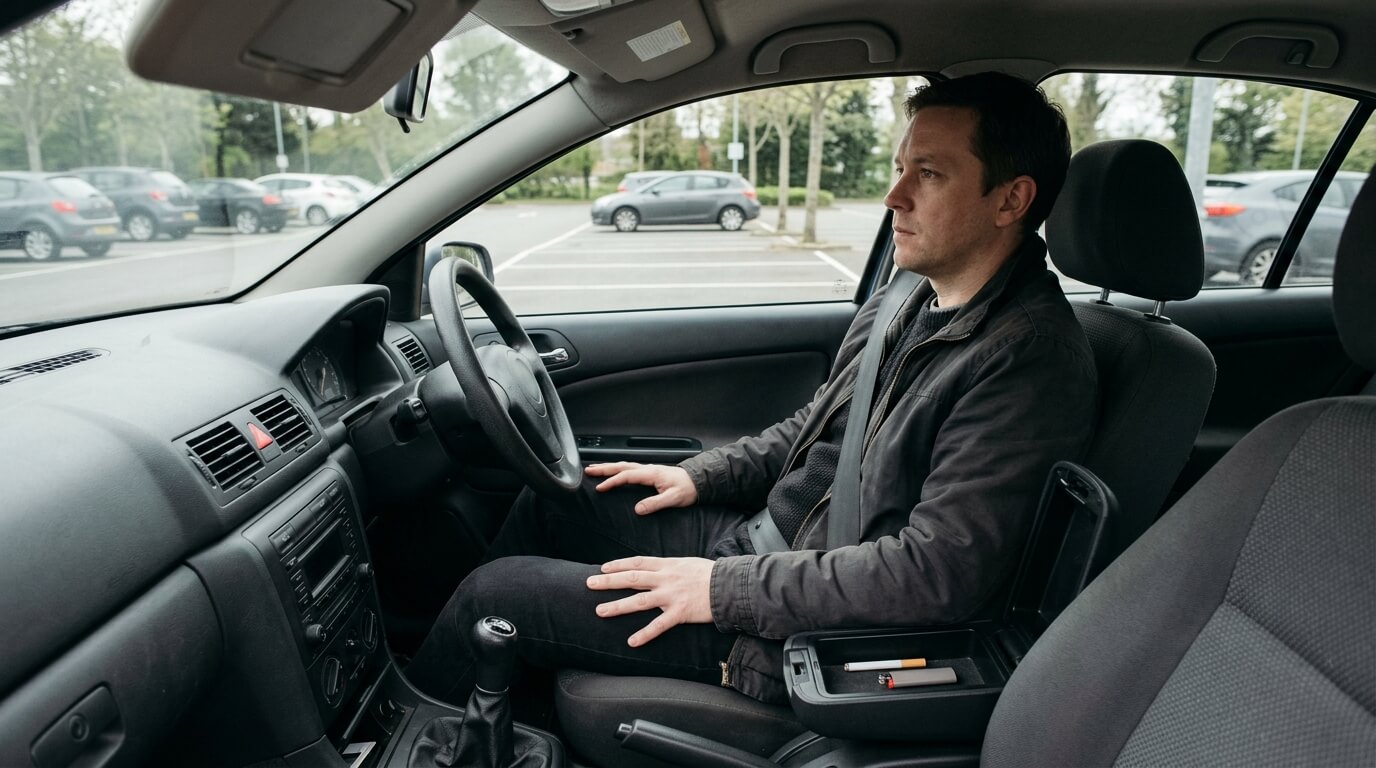
Is It Illegal to Smoke a Cigarette While Driving?
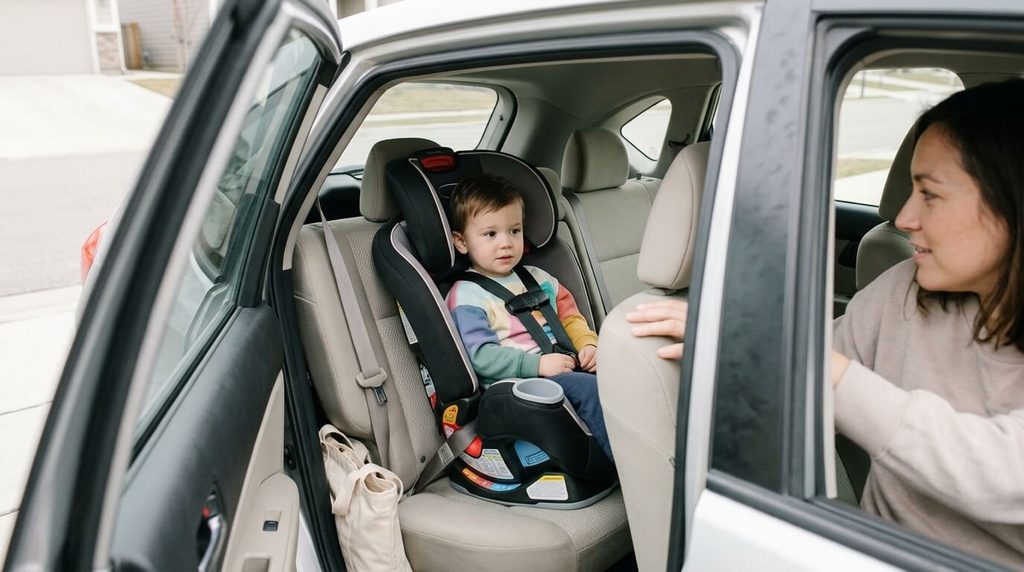
Generally, smoking a tobacco cigarette while driving your own private car is not illegal by itself in the United States. But that answer does not cover every passenger, vehicle, or driving situation. A child-passenger smoking ban may apply even when the car is stopped. Lighting a cigarette can also lead to a separate driving violation if you lose control, and throwing the butt outside can create a littering offense.
The useful question is not just whether you can hold a cigarette. It is which rules apply to the people in the vehicle and what you do while smoking.What drivers should know
- There is no simple nationwide permission covering every vehicle and situation.
- Some states prohibit smoking with children present, with different age thresholds.
- A child-passenger ban may apply to passengers as well as drivers.
- Unsafe driving and roadside cigarette disposal are separate legal issues.
- Parked cars and open windows are not automatic exceptions.
When Can Smoking While Driving Become Illegal?
Separate into three questions.
- First, is smoking itself prohibited in this vehicle or with this passenger? That includes child-passenger laws and smoke-free workplace rules.
- Second, did the driver violate a traffic rule while handling the cigarette? A lane departure or dangerous maneuver is not excused because cigarette smoking is otherwise permitted.
- Third, was the cigarette discarded unlawfully? Legal tobacco use does not authorize littering.
Keeping those questions separate avoids a common mistake: treating “smoking is generally allowed” as permission for everything connected with it.
Smoking in a Car With Children: State Examples
Age thresholds matter. “Under 15” and “15 or younger” do not mean the same thing.
The table below compares six official statutory examples. It is not a complete list of states with restrictions. A state missing from the table should not be assumed to allow smoking with children. Follow the state links to check the controlling provisions.Selected child-passenger smoking restrictions
| State | Protected passenger | Smoking rule | Specified penalty |
|---|---|---|---|
| Delaware | Someone under 16 | Applies moving or at rest, regardless of open windows; a sole occupant is exempt. | $100 first violation; at least $250 for subsequent violations under § 2907. |
| Louisiana | A child under 13 | Covers operators and passengers; includes vaping and applies regardless of open windows. | $150 per offense, or at the judge’s discretion at least 24 hours of community service. |
| Maine | A minor | The operator or a passenger may not smoke with a minor present; open windows do not change the rule. | $50 traffic-infraction fine. |
| Vermont | A child subject to specified child-restraint requirements in § 1258(a)(1) or (2) | Prohibits possessing lighted tobacco or using a tobacco substitute. The tobacco rule differs from its cannabis rule. | Civil penalty up to $100; no points for the tobacco provision. |
| Virginia | A minor under 15 | Smoking is prohibited whether the vehicle is moving or at rest. | $100 civil penalty; no demerit points or court costs under this section. |
| West Virginia | A person age 16 or younger | A person age 18 or older may not smoke or possess a lit tobacco product in a covered motor vehicle. | Misdemeanor with a fine of no more than $25; no court costs or other fees under this section. |
What Broad State Lists Often Miss
A single age column can hide important conditions. Delaware exempts a sole occupant. Vermont ties its tobacco rule to specified child-restraint requirements rather than using the same threshold as its cannabis rule. Louisiana expressly includes vaping. Read the definitions and exceptions as well as the passenger’s age.
Maine: The Current Rule Covers Minors
Under Maine Title 29-A, Section 2120, the prohibition applies to an operator or passenger when a minor is present, regardless of whether the windows are open. Older guides sometimes cite the former under-16 rule or repealed Title 22, Section 1549. Use the current motor-vehicle provision rather than relying on an old state list.
Virginia: Read “Under 15” Carefully
Under Virginia Code Section 46.2-810.1, the protected passenger must be under 15. A child who has already turned 15 falls outside that particular age threshold, though other applicable rules still matter. The statute applies when the vehicle is moving or at rest.
West Virginia: The Smoker’s Age Also Matters
Under West Virginia Code Section 16-9A-11, the prohibited conduct is by a person age 18 or older when someone age 16 or younger is present in a covered vehicle. The provision reaches possession of a lit tobacco product as well as smoking. Do not assume that holding a burning cigarette without inhaling avoids a ban.
Do Open Windows or a Parked Car Make It Legal?
Not automatically. Maine explicitly states that open windows do not remove its child-passenger prohibition. Virginia expressly covers vehicles at rest, so simply pulling over does not avoid that restriction.
Check the wording of the applicable law before assuming there is a parked-car, convertible, ventilation, or engine-off exception. The CDC’s vehicle-smoking fact sheet also explains that open windows do not eliminate secondhand-smoke exposure. Ventilation is therefore not a substitute for a smoke-free trip.
Can Smoking Lead to a Distracted-Driving Charge?
Potentially, but a safety description is not automatically the same as a statutory offense. The National Highway Traffic Safety Administration’s distracted-driving guidance treats activities that divert attention from driving as potential distractions. Looking for a lighter or reacting to a dropped cigarette can fit that safety concept.
Whether an officer can issue a particular citation depends on the state’s law and the driving behavior. A law targeting handheld phones does not automatically prohibit every object held in a driver’s hand—for example, Virginia Code Section 46.2-852 addresses driving that recklessly endangers people or property. Smoking itself does not establish that offense; dangerous conduct while smoking may be relevant.
Hypothetical example: A driver looks down to find a lighter and crosses into another lane. The legal issue may be the lane change or dangerous driving, regardless of whether tobacco smoking is otherwise allowed. If you drop a cigarette, maintain control and stop at a safe, lawful location. Do not reach into the footwell while the vehicle is moving.
Can Police Pull You Over Just for Smoking?
That depends on the offense and the state’s enforcement rules. Virginia’s child-passenger statute prohibits a stop for a violation of that section. West Virginia allows enforcement as a secondary action after a driver is detained for probable cause of another code violation.
Louisiana permits a stop solely for this primary offense when the officer has the required clear, unobstructed view. It still prohibits searching or inspecting the vehicle solely for that violation. Delaware prohibits a stop, detention, search, or inspection solely for its vehicle-smoking violation.
Maine’s statute contains a different limitation: it prohibits a search or inspection solely because of the smoking violation. A search restriction should not be mistaken for a restriction on every traffic stop. These distinctions matter. “Police cannot stop you solely for this violation” does not mean the prohibited conduct is legal or cannot be cited during another lawful stop.
Is Throwing a Cigarette Out of the Window Illegal?
It can violate littering law, even if smoking inside the vehicle was permitted. For example, Virginia Code Section 33.2-802 prohibits disposing of litter on public property, including highways and rights-of-way.
Do not assume an extinguished butt is exempt. A burning cigarette also creates an avoidable fire hazard. Keep waste in an appropriate container and dispose of it properly after stopping. Littering penalties are separate from child-passenger smoking penalties.
What About Company Cars, Rentals, Vaping, and Cannabis?
Company and Other Work Vehicles
Workplace or childcare-transport rules may restrict smoking even without a child currently present. The CDC’s vehicle-smoking overview distinguishes these categories from ordinary personal vehicles. An employer can also impose a no-smoking policy. Breaking that policy may lead to employment consequences even where the conduct is not a separate traffic offense.
Rental Cars
Check the rental agreement. A cleaning charge under a no-smoking contract is different from a government fine. Do not assume a legal activity is permitted by the vehicle owner.
Vaping
Check the applicable definitions. Some laws expressly include electronic devices; others focus on lighted or combustible products. Permission to smoke tobacco in one situation does not settle the rules for vaping in another.
Cannabis
This article’s general answer concerns tobacco cigarettes. Cannabis can raise separate consumption, possession, and impaired-driving issues. For example, Virginia Code Section 18.2-266 prohibits drug-impaired operation under its stated conditions. Legal access to a substance does not authorize impaired driving.
What Happens if Smoking Contributes to a Crash?
Smoking alone does not automatically establish fault. The important question is whether the driver’s conduct contributed to the collision. Relevant evidence may include witness accounts, video, vehicle movements, and statements about reaching for a lighter or a dropped cigarette. The applicable negligence rules and available compensation depend on the jurisdiction and facts.
For a collision in Kansas, TheLawLearner’s guide to legal steps after a car accident in Kansas explains state-specific reporting and information duties. Do not apply its Kansas requirements automatically to another state.
What Should You Do if You Receive a Smoking Ticket?
Read the cited statute first. A child-passenger smoking citation, littering citation, and reckless-driving charge involve different conduct and consequences. Check the response deadline and hearing instructions printed on the notice. Keep the ticket and relevant records about the passenger’s age, vehicle use, location, and circumstances of the stop. An incorrect age or wrong statutory provision may matter; opening a window is not a defense where the statute expressly rejects it.
Use the court or agency named on the notice to confirm how to respond. Before paying, check whether payment resolves the allegation and what consequences apply. A local lawyer can assess disputed facts, enforcement restrictions, or a related criminal charge.
How to Check Your Local Rule
Check the rule before your trip
- Identify the jurisdiction: Check the state and relevant local ordinances where the vehicle will travel.
- Check passenger ages: Read the exact threshold instead of treating “under” and “or younger” as interchangeable.
- Identify the vehicle’s use: Private, workplace, childcare, rental, and public-transport vehicles may have different restrictions.
- Read the current official provision: Verify definitions, exceptions, penalties, and effective dates.
- Check any citation promptly: Read the alleged offense and response deadline; consult a local lawyer if the consequences are unclear.

Conclusion
Is it illegal to smoke a cigarette while driving? Generally, tobacco smoking by itself is not prohibited in an ordinary private car, but child-passenger restrictions, vehicle-specific rules, unsafe driving, and littering can change the result. Check the exact law where you drive, especially before traveling with children. The simplest practical approach is a smoke-free vehicle and a distraction-free trip.
Explore TheLawLearner’s driving-law guides for more explanations, and consult a local attorney when a citation or crash creates a specific legal problem.Can you smoke a cigarette while driving alone?
Generally, an adult can smoke tobacco in an ordinary private car without violating a smoking-specific rule. Local restrictions and vehicle-use rules may apply, and unsafe driving or littering remains a separate issue.
Is smoking illegal if a child is in the car?
In some states and localities, yes. The passenger’s age and the statute’s definitions matter. Check the current official rule rather than assuming all states protect the same age group.
Can a passenger get in trouble for smoking?
Yes. A child-passenger law may apply to the person smoking rather than only the driver. Maine expressly covers operators and passengers, while other statutes use their own definitions.
Does opening the window make smoking with children legal?
Not automatically. Maine expressly says open windows do not change its prohibition. Read the applicable statute for any actual exception.
Is holding a cigarette without inhaling allowed?
Not necessarily. Some statutes include holding, carrying, or possessing a lighted product. West Virginia’s provision expressly reaches possession of a lit tobacco product under its stated conditions.
Will a smoking ticket put points on your license?
It depends on the jurisdiction and offense. Virginia’s child-passenger smoking provision assigns no demerit points. A separate unsafe-driving charge has its own consequences.
Can you smoke in a parked car with children?
Parking does not automatically remove the restriction. Virginia expressly covers vehicles at rest. Other jurisdictions require checking their statutory wording and exceptions.
