

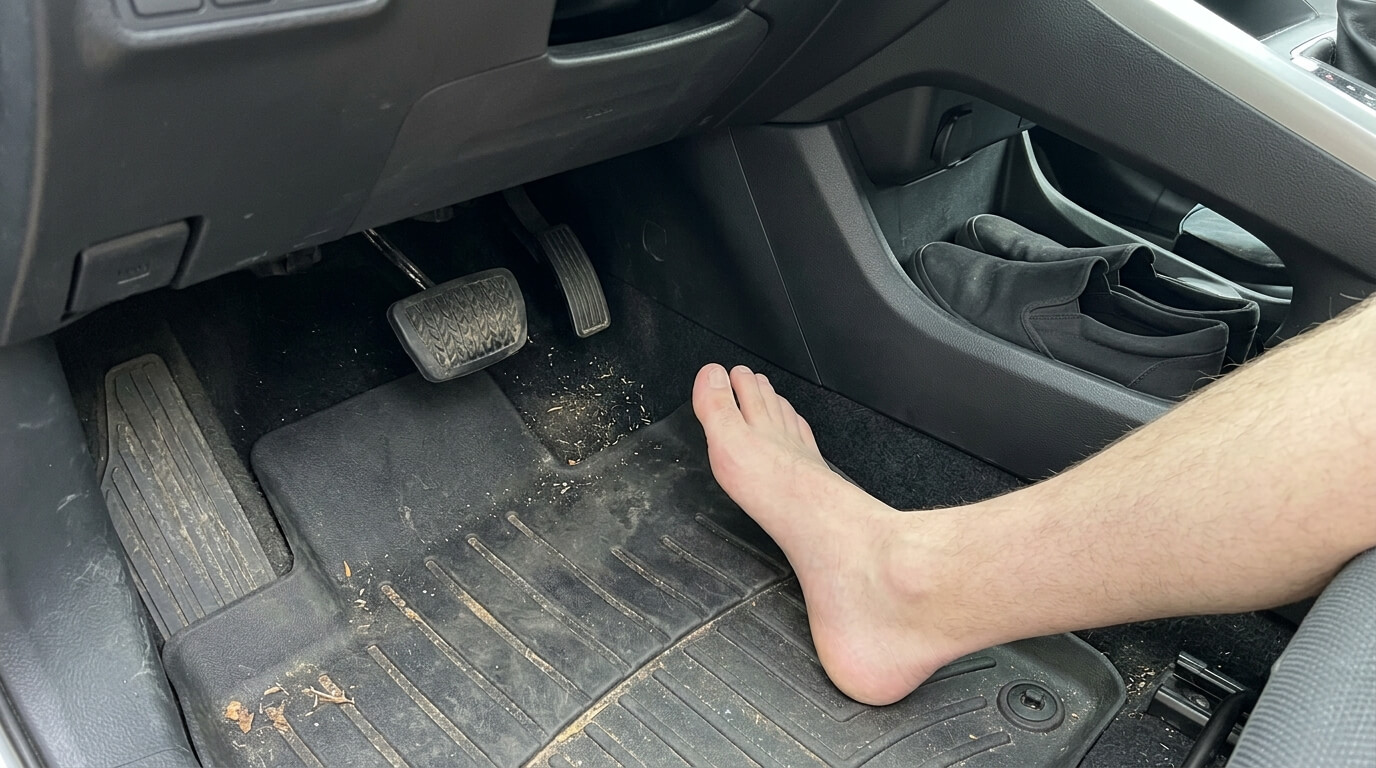
Is It Illegal to Drive Barefoot in Texas? The Law, Tickets, and Crash Liability
No, it is not illegal to drive barefoot in Texas in an ordinary private passenger vehicle. You do not commit a separate traffic offense simply by driving without shoes. However, removing your shoes does not excuse another violation or determine who is responsible for a crash.
The useful distinction is between your footwear and your driving conduct. Texas law regulates actions such as speeding, failing to yield, and reckless driving without imposing a general shoe requirement for ordinary passenger driving. If a citation or insurance dispute arises, the actual allegation and supporting evidence matter more than the footwear myth.What Texas drivers should know
- Texas does not create a separate barefoot-driving offense for ordinary private passenger vehicles.
- Being barefoot does not automatically meet the legal standard for reckless driving.
- Footwear can be relevant when evidence connects it to a collision.
- Crash responsibility and insurance coverage are separate questions.
- Keep removed shoes and other loose objects away from the pedals.
What Texas law actually says about barefoot driving
Texas does not need a statute specifically permitting barefoot driving for it to be lawful. The relevant question is whether an applicable rule prohibits it. The state’s rules of the road regulate driving conduct without establishing a general footwear requirement for ordinary passenger vehicles.
This explains why “you should wear suitable shoes” and “you must wear shoes by law” are different statements. The first can be practical advice, while the second requires an applicable legal rule. A warning from a friend, instructor, or employer does not automatically establish a statewide traffic prohibition.
The same distinction helps with other driving questions. The article explaining whether smoking a cigarette while driving is illegal separates the activity itself from additional restrictions and driving conduct. Apply that approach here rather than assuming every discouraged habit is a traffic offense.
Can you get a ticket for driving barefoot in Texas?
There is no separate Texas barefoot-driving offense for ordinary private passenger vehicles. A driver can still receive a ticket for an independently applicable violation. Driving without shoes does not excuse running a red light, speeding, or failing to yield.
If an officer mentions your feet during a stop, read the citation before drawing conclusions. Identify the stated offense and check the response instructions. A comment about footwear and the legal basis for a charge aren’t necessarily the same.
Is barefoot driving automatically reckless driving?
Under Texas Transportation Code Section 545.401, reckless driving requires “wilful or wanton disregard” for the safety of people or property. That standard should not be reduced to the fact that someone removed their shoes. An allegation must be evaluated against the required conduct and evidence.
Hypothetical example: A barefoot driver obeys traffic signals, follows the speed limit, and maintains control. The absence of shoes alone does not establish reckless driving. If the driver engages in dangerous conduct, any charge must be assessed under the applicable legal standard.
Is there a barefoot-driving fine?
No special fine exists simply for ordinary passenger driving without shoes. Penalties for separate offenses should not be presented as barefoot-driving penalties. For example, the reckless-driving statute provides a maximum $200 fine, up to 30 days in county jail, or both, but those penalties concern reckless driving.
Can driving barefoot affect responsibility for an accident?
Footwear can matter when evidence links it to the collision. Someone might allege that a foot slipped, a shoe became caught, or an object obstructed a pedal. A driver being barefoot does not prove any of those things happened.
Hypothetical example: A barefoot driver is stopped at a red light when another car strikes the vehicle from behind. The driver’s bare feet do not, by themselves, explain the collision. Responsibility still depends on the evidence.
A different example could involve a driver reporting difficulty operating a pedal before a crash. That information may deserve investigation alongside other evidence. It still does not justify assigning fault solely because the driver was not wearing shoes.
How Texas proportionate responsibility works
For claims within its scope, Texas proportionate responsibility law generally prevents a claimant from recovering damages when their responsibility exceeds 50%. When recovery is permitted, damages are generally reduced by the claimant’s assigned percentage. The statute includes scope provisions and exceptions, so it should not automatically apply to every insurance payment.
Simplified example: Assume an applicable claim involves $10,000 in damages, and the claimant is assigned 20% responsibility. The percentage reduction would leave $8,000 before other applicable adjustments. Being barefoot does not automatically produce that percentage or any other allocation.

Does barefoot driving invalidate car insurance?
Do not assume that driving barefoot automatically cancels insurance coverage. A coverage question depends on the policy, the claim, and applicable law. A dispute over responsibility for an accident is also different from a dispute over whether insurance covers a particular loss.
If an insurer raises footwear, request a written explanation. Ask whether it alleges that footwear contributed to the collision or relies on a specific policy provision. Preserve the correspondence and obtain advice if the explanation or consequences remain unclear.
Avoid treating an adjuster’s allegation as a final legal determination. Evidence may support, contradict, or fail to establish the claimed connection. Review the actual issue instead of accepting the mistaken premise that barefoot driving must be illegal.
Are socks, flip-flops, or high heels illegal while driving?
Texas does not impose a general footwear requirement for ordinary private passenger driving. That does not mean every footwear choice works equally well for every driver and vehicle. Consider fit, comfort, and unobstructed movement before starting the car.What to check before driving
| Footwear | Practical consideration |
|---|---|
| Bare feet | Whether you can operate the pedals comfortably and consistently. |
| Socks | Whether your foot moves or slips against the pedal surface. |
| Flip-flops or loose sandals | Whether they shift or interfere with movement between pedals. |
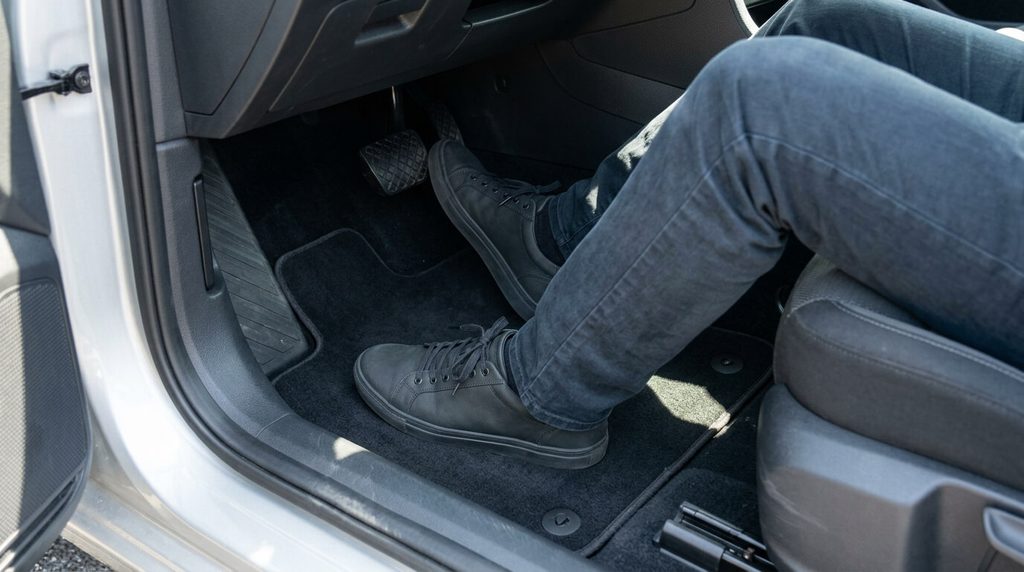
| High heels or bulky shoes | Whether their shape restricts comfortable pedal operation. |
| Secure, familiar shoes | Whether they fit properly and allow free movement around the controls. |
Does the same answer apply to motorcycles, work vehicles, and driving tests?
This article’s conclusion concerns ordinary private passenger vehicles. Motorcycle operation involves different equipment and practical considerations, while work vehicles may be subject to employer or specialized operating requirements. Do not assume the passenger-car answer resolves every vehicle or employment situation.
A driving test may also have attendance or operating instructions that differ from general road law. Confirm the testing provider’s current requirements before your appointment. While reviewing the permit test guide, remember that footwear questions do not replace studying the applicable traffic rules.
Likewise, avoid extending the Texas conclusion to an unfamiliar jurisdiction without checking. A statement about one state and one type of vehicle has limits. Verify the rules relevant to your trip or activity when those circumstances change.
What should you do if footwear becomes part of a dispute?
For a ticket, identify the specific offense and follow the citation’s instructions. For a crash claim, preserve photographs, available footage, statements, and correspondence. Neither issue should be approached on the assumption that driving barefoot is automatically unlawful.Respond to the actual allegation
- Read the allegation: Identify the offense, disputed conduct, or policy provision.
- Keep supporting records: Preserve relevant photographs, footage, documents, and messages.
- Check response instructions: Follow the procedure and deadline stated in the applicable notice.
- Request an explanation: Ask how footwear allegedly relates to the charge, collision, or coverage question.
- Seek individual advice: Consult a Texas attorney when a disputed charge or significant claim requires legal assessment.
Conclusion
Is it illegal to drive barefoot in Texas? No, not for ordinary private passenger driving. Bare feet alone do not create a separate traffic offense, establish reckless driving, or determine crash responsibility. Other applicable rules and evidence still matter.
Before driving, choose a setup that lets you operate the pedals comfortably, and keep the footwell clear. If footwear becomes part of a citation or claim, identify the actual allegation and preserve relevant records. Seek individual legal advice when the dispute or potential consequences require it.Frequently asked questions
Can police ticket you just for driving barefoot in Texas?
There is no separate barefoot-driving offense for ordinary private passenger vehicles in Texas. Police can still cite an independently applicable traffic violation. Read the alleged offense rather than assuming a comment about footwear identifies the charge.
Is barefoot driving automatically reckless driving?
No, bare feet alone do not establish reckless driving. The conduct must meet the standard required by Texas law. The surrounding facts and evidence need a separate assessment.
Is it illegal to drive in flip-flops or socks in Texas?
Texas does not impose a general footwear requirement for ordinary private passenger driving. Socks or flip-flops do not create a separate offense merely because they are worn. Check that your choice allows comfortable pedal operation before driving.
Can barefoot driving affect a car accident claim?
Footwear may be relevant when evidence connects it to the collision. Being barefoot does not automatically make a driver responsible. The claim must be evaluated using the applicable law and facts.
Does driving barefoot automatically invalidate insurance?
Do not assume that barefoot driving automatically invalidates coverage. The policy, claim, and applicable law must be reviewed. Request a written explanation if footwear is raised as a reason to dispute payment.
