

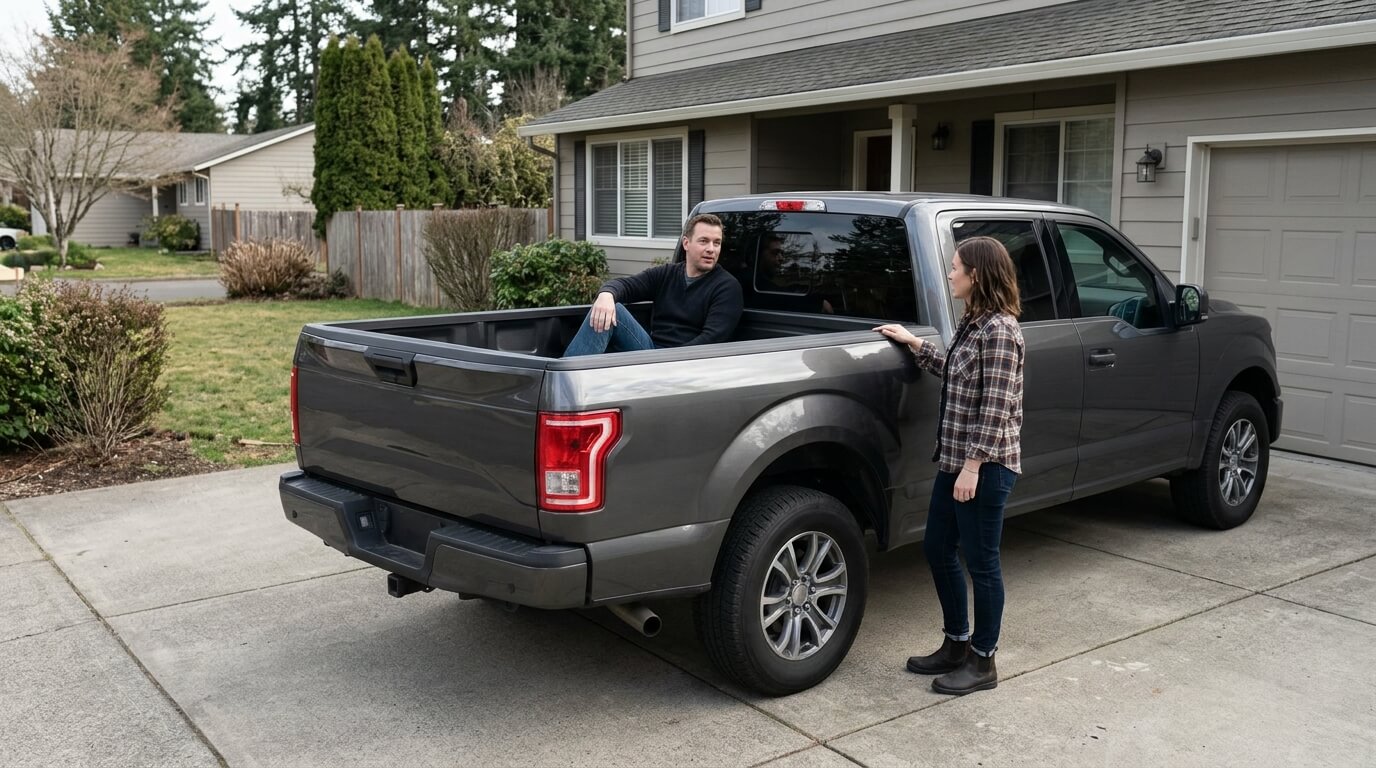
Is It Illegal to Ride in the Bed of a Truck? State Laws
Is it illegal to ride in the bed of a truck? It can be, and being over 18 doesn’t always settle the question. The answer depends on where you’re traveling, who is riding, and sometimes how fast the truck is going. Some states focus on children, while others also restrict adults or particular highway trips.
That’s why advice from a friend in another state can lead you astray. Even a familiar explanation such as “it’s allowed on farms” may leave out important conditions. The comparisons below cover 14 selected states and show which details matter before anyone climbs into the bed for a ride.
Check more than the passenger’s age
- There is no single nationwide minimum age that settles every truck-bed trip.
- Road type and speed can change the answer, including for adults.
- Parental permission, a full cab, or a short distance does not automatically create an exception.
- A camper shell or added belt does not automatically satisfy the law or provide proper passenger protection.
- Use suitable seats inside the cab, with the correct restraints for each passenger.
What Determines Whether a Truck-Bed Ride Is Legal?
Age is usually the first thing people ask about. Some laws focus on children under 16, while others use 18 or a younger cutoff. But reaching that birthday doesn’t remove a separate rule about speed or where someone may sit.
The road matters, too. A law that mentions an “interstate highway” does not necessarily cover the same roads as one that says “highway” or “limited-access facility.” Some states also specify a truck’s manufacturer rating or licensed gross weight, so check the vehicle details rather than judging by its appearance.
Exceptions need a closer look than a yes-or-no state list can give them. Permission under a cargo-area rule does not necessarily remove a separate child-restraint requirement. And when searching for “the back of a truck,” make sure the advice concerns the cargo bed, not the rear seats inside the cab or a trailer.
Truck-Bed Passenger Laws in 14 Selected States
Use this table to find the main restriction in your state. The right-hand column highlights conditions that a simple “legal” or “illegal” label would miss. Open the linked law when you need the full wording of an exception.
Selected state rules for pickup-bed passengers
| State | Main restriction | Details that matter |
|---|---|---|
| Texas | Generally prohibits driving an open-bed pickup or open flatbed with a passenger under 18. | Section 545.414 lists specific defenses, including certain parades, emergencies, farmworker trips, beach driving, household-only vehicles, and permitted hayrides. |
| Florida: § 316.2015 | Restricts under-18 passengers in open pickup or flatbed bodies on limited-access facilities. | The provision addresses modified trucks with secure seating and restraints, medical emergencies, and a county opt-out process. |
| North Carolina: § 20-135.2B | Generally prohibits transporting children under 16 in open beds or cargo areas. | Exceptions include adult supervision in the bed, qualifying restraints, emergencies, parades, and agricultural use. |
| Ohio: § 4511.51 | Restricts under-16 passengers in unenclosed or unroofed cargo areas when traveling faster than 25 mph. | Specified original-equipment seating and restraints or life-threatening emergencies can qualify as exceptions. An unlatched tailgate creates a separate restriction. |
| Virginia: § 46.2-1156.1 | Generally prohibits under-16 passengers in pickup rear cargo areas on highways. | Exceptions cover authorized organized parades and specified movement between fields or parcels for farming operations. |
| Tennessee: § 55-8-189 | For pickups rated ¾ ton or less by the manufacturer, restricts under-6 passengers on public roads and ages 6–11 on interstate/state highways. | Local rules may also restrict ages 6–11 on city or county roads. Agricultural and qualifying ceremonial exceptions require closer review. |
| Georgia: § 40-8-79 | Prohibits under-18 passengers in uncovered pickup beds on interstate highways. | Other roads fall outside this particular prohibition, but separate applicable passenger-restraint rules still matter. |
| Utah | The November 2026 national comparison identifies no specific statewide pickup-bed passenger restriction. | That finding is not an exemption from applicable child-restraint, seat-belt, or other traffic laws. |
| Arizona | The November 2026 national comparison identifies no specific statewide pickup-bed passenger restriction. | Check applicable restraint requirements and other traffic rules rather than treating the absence of a specific ban as blanket permission. |
| Wisconsin: § 346.922 | Generally prohibits under-16 children in open cargo areas of motor trucks with a gross weight of 10,000 pounds or less on highways. | Exceptions include specified farm-truck operations, sanctioned parades, and transport of licensed deer hunters. Section 346.92 also addresses illegal riding. |
| Colorado: § 42-4-201(6) | Recognizes sitting in a cargo area fully or partially enclosed on all four sides as an exception to its exterior-riding prohibition. | The sitting position and enclosure matter. Other provisions address hazardous riding positions. |
| Michigan: § 257.682b | Generally prohibits under-18 passengers in open pickup beds above 15 mph on the roads covered by the statute. | Exceptions include permitted parades, specified work activities, military and authorized emergency vehicles, and search-and-rescue transport. |
| Missouri: § 304.665 | Generally restricts under-18 passengers in unenclosed beds of trucks with licensed gross weight below 12,000 pounds on state/federal highways or within cities. | Detailed exceptions cover specified work, agricultural, event, restraint, recreational-assistance, and family-vehicle circumstances. |
| Pennsylvania: § 3719 | Prohibits driving an occupied open-bed pickup or flatbed above 35 mph. Separately restricts under-18 passengers at any speed. | Listed farm, licensed-hunting, and officially sanctioned parade exceptions apply to the child restriction. |
If your state isn’t listed, the broader cargo-area law comparison can help you find a starting point. That comparison also supports the Utah and Arizona entries above. For a trip that depends on an exception, read the actual provision before relying on the summary.
Can You Ride in the Bed of a Truck in Texas?
Texas generally prohibits transporting passengers younger than 18 in an open pickup bed. The open-bed statute in Chapter 545 does not itself ban an adult from riding there. That answers the age-based question, but other applicable rules still matter.
Texas lists several defenses to prosecution, but they have specific conditions. The farmworker defense, for example, describes field-to-field transport on certain roads outside a municipality. A hayride also needs the required permission; calling a casual outing a hayride is not enough.
Can You Ride in the Bed of a Truck in Florida?
In Florida, the under-18 open-bed restriction is tied to limited-access facilities. The law provides for modified trucks with secure seating and restraints, certain medical emergencies, and a county opt-out process. That makes the road and any relevant county action part of the answer, not just the passenger’s age.
Check the road’s actual classification rather than relying on what people call it locally. You also need to know whether a relevant county exemption applies. Even away from a limited-access road, separate child-restraint requirements may still affect the trip.
Is It Legal to Ride in the Bed of a Truck in NC?
North Carolina generally prohibits transporting children under 16 in an open cargo area, with listed exceptions. One allows an adult to supervise the child from inside the bed or cargo area. A parent at the wheel in the cab does not meet that particular condition.
Other exceptions cover qualifying restraints, emergencies, parades, and agricultural use. The restraint exception has technical requirements, so it does not mean any added strap will do. The law defines an open area as one without permanent overhead restraining construction.
Can Adults Ride in the Back of a Pickup Truck?
Adults fall outside some age-based truck-bed bans. Pennsylvania is a good example of why that still isn’t the whole answer. Its separate speed restriction applies whenever anyone occupies the open bed, regardless of age.
Example: A 30-year-old is riding in an open pickup bed in Pennsylvania at 40 mph. The passenger’s age is not the problem, but the speed is: the law prohibits traveling above 35 mph with the bed occupied. Turning 18 does not remove that limit.
In Colorado, the person’s position and the cargo area’s enclosure matter. The exterior-riding provision makes an exception for someone sitting in a cargo area fully or partially enclosed on all four sides. It does not give the same permission to stand on a tailgate or hang onto the outside of the truck.
Does a Camper Shell or Added Seat Belt Make It Legal?
Putting a shell over the bed can change how a particular law treats the cargo area. It does not, on its own, create an approved passenger seat. The enclosure wording and any separate restraint requirements still need to be checked.
An added belt is not an automatic fix, either. Ohio’s relevant exception requires a properly secured seat and compliant belt installed when the vehicle was originally assembled. Bolting a seat or strap into the bed later does not meet that condition.
Closing the tailgate does not settle everything. Ohio separately restricts riding in the cargo area or on the tailgate when it is unlatched, except for specified public-agency workers. Latching it does not remove the under-16 restriction or give the bed the protection of the cab.
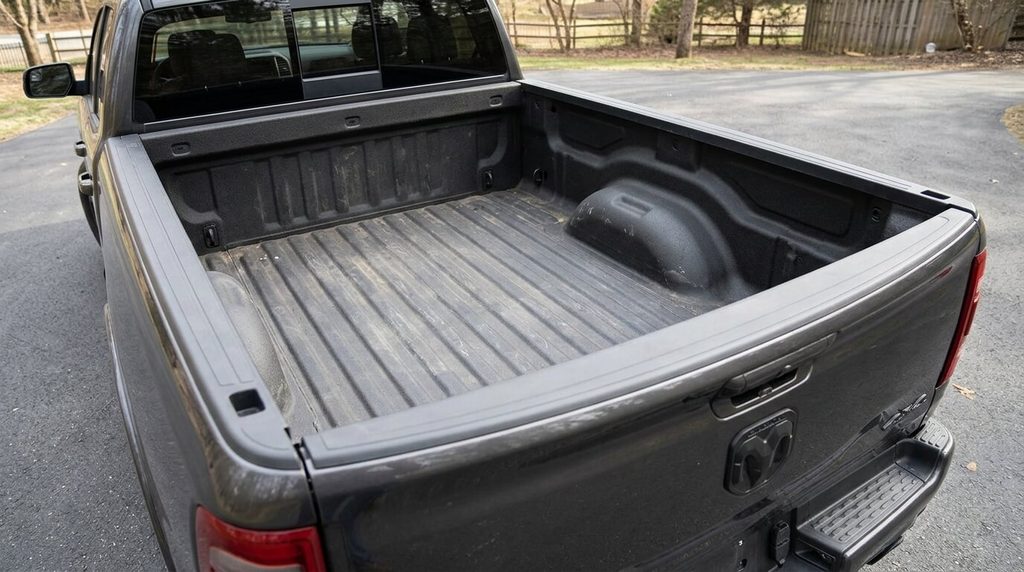
Are Farm Trips, Parades, or Short Rides Exempt?
A trip doesn’t qualify for an exception simply because it takes place near a farm. Virginia’s farming exception describes travel on or across a highway between fields or parcels in connection with farming operations. The purpose and route matter more than the rural setting.
The word “parade” also comes with conditions. Michigan refers to a parade held under a permit from the government responsible for the road. Pennsylvania limits its child-parade exception to participation during an officially sanctioned parade.
“We’re only going around the corner” is not a universal exception. Some laws turn on speed, road type, or work activities rather than distance. A short journey can still fall within the prohibition.
Staying on private property raises a different question. A provision limited to highway travel may not cover a trip entirely off-road. That does not automatically remove other applicable safety or property rules.
Who Gets the Ticket, and How Much Can It Cost?
The driver can be responsible for allowing a prohibited passenger to ride in the bed. In Texas, § 545.414 specifies a misdemeanor fine of $25–$200. That is the statutory fine range, which is not necessarily the final amount owed in every case.
North Carolina specifies an infraction with a penalty of no more than $25 and no court costs. It also bars license points and an insurance surcharge for that violation. Those consequences do not carry over to another state or a different offense.
If you receive a citation, start with the section number and response instructions. Keep any relevant details about the passenger’s age, the road, the truck, and the exception you believe applies. A local attorney can help assess a disputed charge or an incident involving injuries.
Why a Legal Truck-Bed Ride Can Still Be Dangerous
A ride can be allowed by a particular law and still leave the passenger badly exposed. The cargo-area safety guidance explains that a sharp turn or crash can eject someone from the bed even at relatively low speeds. Holding a rail does not provide the protection of a proper seat and restraint.
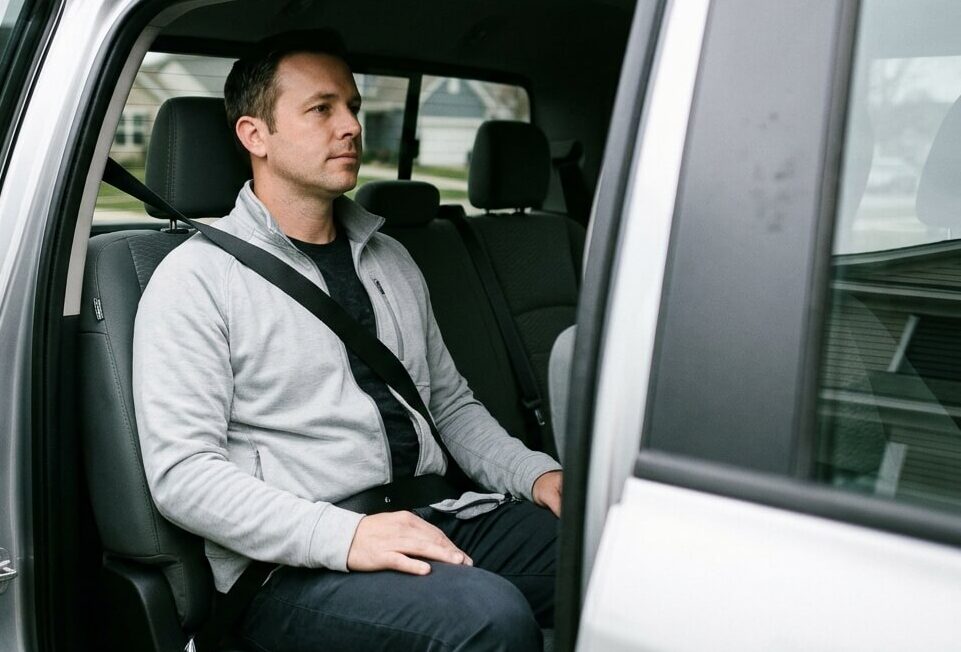
The better choice is a suitable seat inside the cab, with the right restraint for the passenger. If you’re traveling with children, the guide to front-seat age and child-passenger rules explains what to consider when arranging their seats. If everyone cannot be seated appropriately, use another vehicle or make another trip.
How to check the rule for your trip
- Identify the route: Check each state and any relevant local rules along the way.
- Confirm the passenger’s age: Use the actual statutory cutoff rather than assuming all states use 18.
- Check the truck and road: Review any weight, manufacturer-rating, enclosure, road-type, or speed conditions.
- Read the exception completely: Look for permit, supervision, equipment, work-purpose, and other requirements, then check separate restraint laws.
- Arrange proper passenger seating: Use the cab with suitable restraints, or choose another transport arrangement.
Conclusion
When asking “is it illegal to ride in the bed of a truck?” don’t rely on age alone or on what someone does in another state. Check the route, speed, truck details, and the exact conditions of any exception. For the journey itself, use properly restrained seats inside the cab or arrange another way to travel.
How old do you have to be to ride in the bed of a truck?
There isn’t one age that works in every state. Some cargo-area laws use 16 or 18, while others set different conditions or have no specific age-based pickup-bed rule. Adults may still face restrictions involving speed, the road, or where they sit.
Can you ride in the bed of a truck on the interstate?
It depends on the state and passenger. Georgia specifically prohibits under-18 passengers in uncovered pickup beds on interstate highways, while other states use different rules. Check the entire route rather than assuming the same rule continues across a state line.
Does a parent’s permission make a child’s truck-bed ride legal?
No, a parent’s permission alone does not override the law. A supervision exception helps only where the law provides one and its conditions are met. Separate child-restraint requirements may still apply.
Is it illegal to sit in the back of a truck while it is parked?
Sitting in a parked pickup is different from riding in it while it moves. Many of the restrictions in this guide concern driving or transporting passengers. Parking, property, and other applicable rules can still matter.
Does having no room in the cab make riding in the bed legal?
Not automatically. Some states list narrow household or family-vehicle exceptions, but their conditions differ and cannot be assumed elsewhere. When suitable passenger seats are unavailable, arrange another vehicle or another trip.
