

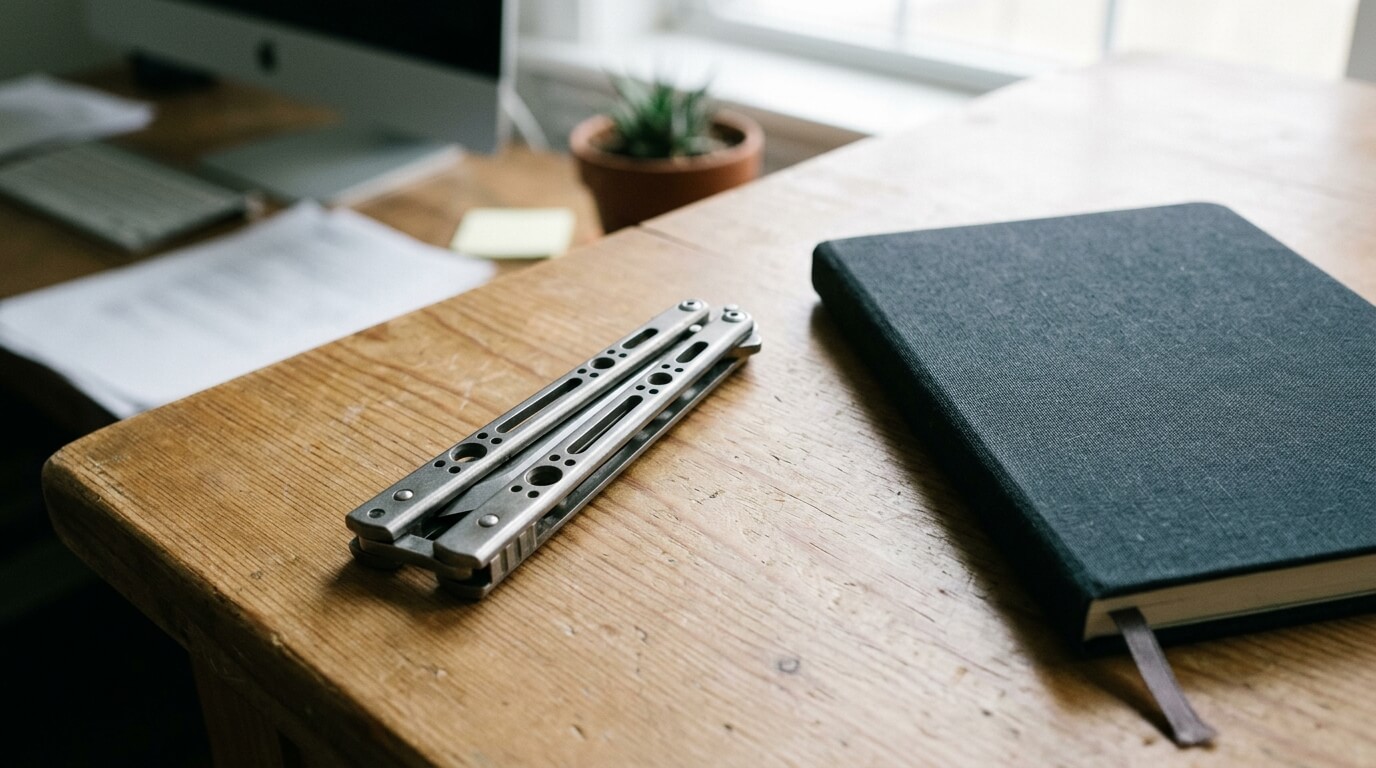
Are Balisong Knives Illegal in California? The Rules Explained
Are balisong knives illegal in California? A balisong that meets California’s switchblade definition and has a blade 2 inches or longer generally cannot be carried on your person, sold, lent, or given to someone else. Possessing it in a vehicle’s passenger or driver area in public is also prohibited.
Simply keeping one at home is a different question. The main switchblade statute doesn’t ban possession in every setting, but that doesn’t create a broad exception for carrying or transferring one inside a house. To understand the rule, separate the knife itself from what you plan to do with it.The main rules to remember
- Exactly two inches meets the statewide switchblade blade-length threshold.
- Home storage, carrying, vehicle possession, and transferring are separate legal questions.
- Keeping a qualifying knife closed does not create a carrying exception.
- The transfer restriction includes private gifts and loans.
- A product labeled “trainer” or “California legal” still needs to be checked.
Why a Balisong Counts as a Switchblade
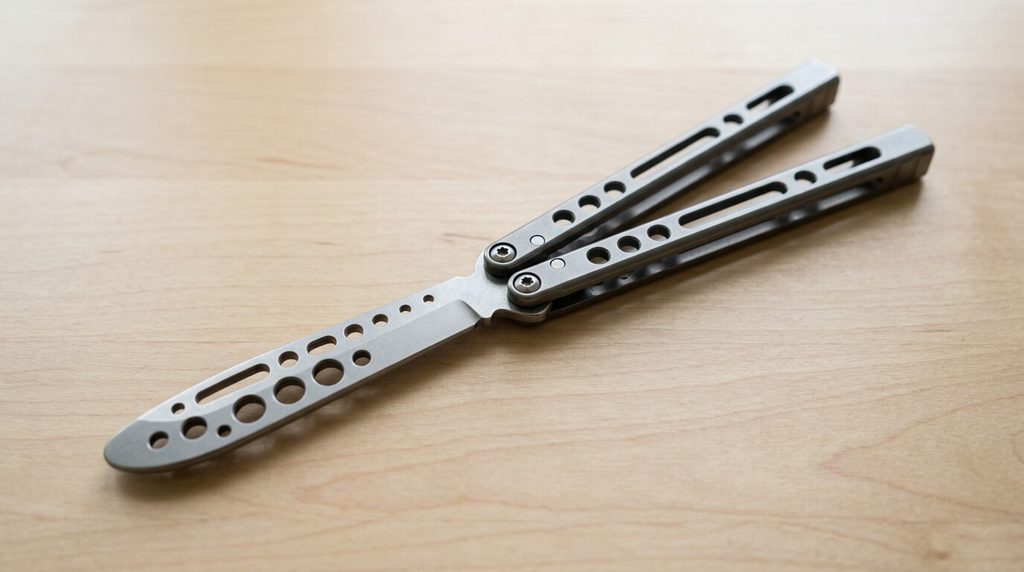
A balisong, commonly called a butterfly knife, usually has two handle sections that fold around its blade. It may have no spring or release button. That does not automatically place it outside California’s switchblade law.
The legal definition of a switchblade covers more than button-operated knives. It includes qualifying designs that release a blade through wrist action, gravity, or other mechanisms. It also excludes certain thumb-opening knives with specified opening resistance or a closing bias.
In People ex rel. Mautner v. Quattrone, the court treated the butterfly knives before it as prohibited switchblades. The published butterfly-knife ruling rejected the argument that the absence of a spring or the need for several movements settled the issue. The knife’s operation mattered more than its everyday label.
California’s Balisong Rules at a Glance
The answer changes with the activity. A knife stored in a display case raises a different issue than one in a jacket pocket. Use the comparison below to identify which rule you need to examine.How the main switchblade restriction applies
| Situation | Rule for a qualifying blade two inches or longer |
|---|---|
| Stored at home | Simple storage is not prohibited by Section 21510 alone. |
| Carried on your person | Prohibited; keeping it closed or visible does not create an exception. |
| In a vehicle’s passenger or driver area | Prohibited when the vehicle is in a public place or somewhere open to the public. |
| Sold or offered for sale | Prohibited. |
| Lent, gifted, or transferred | Prohibited. |
| Blade shorter than two inches | Outside this particular statewide threshold; other restrictions may apply. |
The Two-Inch Rule Includes Exactly Two Inches
The threshold is two inches or more. A qualifying blade measuring exactly two inches therefore meets the length requirement. Advice saying only blades “over two inches” are covered leaves out an important part of the rule.
The switchblade conduct restrictions apply that threshold to the listed activities. They do not establish a two-inch limit for every knife in California. Ordinary folding knives, fixed blades, and other designs have their own legal questions.
A shorter balisong falls outside this particular statewide switchblade threshold. However, that doesn’t guarantee it can be carried in every city or location. Check the applicable local rules and destination before relying on blade length alone.
Can You Keep a Balisong at Home?
Section 21510 does not separately prohibit simple ownership or storage in a home. That is why describing every qualifying balisong as “illegal to own” is too broad. Other laws or personal restrictions can still affect a particular owner.
Home storage should not be confused with home carrying. The carrying clause does not contain the same public-place wording found in the vehicle clause. Putting a qualifying knife in your pocket is not automatically lawful just because you remain indoors.
The transfer clause also matters inside a house. Giving a qualifying knife to a friend or lending it for practice can raise a separate issue. A private setting does not itself remove the gift or loan restriction.
Can You Carry a Butterfly Knife if It Is Closed?
Keeping a qualifying balisong closed does not create a general exception. Section 21510 prohibits carrying it on your person. The restriction applies even if the blade is not exposed.
Open carrying does not solve the problem either. Advice about carrying a different type of knife openly should not be applied to a balisong without checking its classification. The switchblade rule and concealed dirk-or-dagger rules are separate.
Example: Someone puts a qualifying three-inch balisong in a coat pocket before walking to a friend’s house. The knife remains closed and is intended only for showing a collection. Those facts do not create a general exception to the carrying prohibition.
Can You Leave a Balisong in Your Car?
The vehicle rule covers the driver and passenger areas when the vehicle is in a public place or somewhere open to the public. A glove compartment, center console, or passenger cabin can therefore be relevant. The knife need not be held or used.
A storage case inside the cabin does not automatically make possession lawful. The jury instructions explaining vehicle possession focus on the prohibited area and possession requirements. A closed container is not stated as a general exception.
The trunk requires separate analysis because the statute names the driver and passenger areas. That wording should not be turned into a blanket transport permit. Carrying the knife to the vehicle, accessing it, and complying with other rules still need consideration.
Can You Buy, Sell, or Give One Away?
The statute prohibits selling, offering or exposing for sale, lending, transferring, or giving a qualifying knife to another person. These restrictions reach beyond commercial shops. A private gift or temporary loan can also fall within the listed conduct.
Buying is not separately named in that list. However, that does not make a proposed transaction lawful for everyone involved. The seller’s transfer and the buyer’s carrying or vehicle possession are separate issues.
An online seller’s willingness to accept an order does not establish legality. Check the actual knife and transaction rather than relying on shipping availability. A listing marked “collector’s item” does not itself create an exception.
Are Balisong Trainers Legal in California?
A purpose-built trainer with a non-cutting practice insert presents a different classification question from a live-blade balisong. Still, “trainer” is a product description, not a blanket statutory exemption. The item’s actual construction matters.
A knife blade that has been dulled is not necessarily equivalent to a non-cutting trainer insert. Taping over an edge or rounding a tip also does not automatically change the legal result. Avoid treating those modifications as legal approval.
Before buying, review clear photographs and the manufacturer’s specifications. Confirm whether the product has a functional knife blade and check any rules for where it will be used. If the design is unclear, get advice about that model rather than relying on a broad statement about all trainers.
Why Are Butterfly Knives Restricted?
The butterfly-knife ruling discussed how quickly the knives could expose a blade. The court concluded that their operation fell within the switchblade law. That legal classification explains why the absence of a button does not settle the question.
A collector does not have to intend an attack for the carrying offense to apply. Prosecutors need not prove that the knife was used or intended as a weapon. Instead, they must establish the required elements of the charged offense.
Threatening someone raises separate questions. This explanation of when threats can become criminal covers how words and surrounding conduct affect that analysis. A threat allegation and a switchblade charge are not the same offense.
What Are the Penalties?
Violating Section 21510 is a misdemeanor. The general misdemeanor penalty rule ordinarily allows up to six months in county jail, a base fine of up to $1,000, or both. Assessments and other court costs can increase the amount owed.
Those figures are potential maximums, not an automatic sentence. The charge, evidence, record, and available sentencing options affect the result. Separate alleged conduct may also lead to different charges.
A defense lawyer may examine whether the blade met the threshold, whether the knife had the required characteristics, and whether the alleged possession or carrying was proved. Knowledge is also part of the jury instructions. None of those issues guarantees dismissal, but each should be assessed against the evidence.
Did the 2026 Court Challenge Change the Rules?
The 2026 California switchblade challenge did not invalidate Section 21510. The January 2026 appellate decision rejected a facial challenge on narrow grounds involving concealed public carrying. It did not decide that every possible application of the statute was constitutional.
Rehearing was denied in July 2026. A later filing extension gave the challengers until December 13, 2026, to seek Supreme Court review. Extending a deadline did not suspend the restrictions or make carrying lawful.
Be careful with headlines about cases from other states. A dissent, pending challenge, or decision about a different statute does not automatically change California law. The practical question is whether an applicable ruling has changed the rule governing your conduct.
What About New York Butterfly-Knife Laws?
Do not apply California’s classification to New York without a separate review. The states have different definitions and weapons provisions. New York also distinguishes certain prohibited weapons from dangerous knives possessed with unlawful intent.
The New York weapons-possession provisions need to be read with the relevant definitions, cases, and local rules. A full answer depends on the knife and circumstances. California’s two-inch threshold does not supply a New York answer.
What to Check Before Buying or Moving a Balisong
Start with the knife’s construction and blade length. Then identify the planned activity: storage, carrying, vehicle possession, sale, or transfer. Check the city and destination as well as statewide law.
If you already have a knife and are unsure how to handle it, seek advice before moving it. Don’t assume carrying it into a police station is the right way to ask. Contact a California attorney or the relevant agency first for instructions suited to your circumstances.

Conclusion
Are balisong knives illegal in California? Qualifying balisongs with blades two inches or longer are restricted when carried, possessed in a vehicle’s passenger or driver area in public, or sold and transferred. Simple home storage is a separate question, and shorter blades or trainers are not automatically lawful everywhere. Check the specific knife, activity, and local rules before acting.
Is a two-inch butterfly knife legal in California?
Exactly two inches meets the statewide switchblade threshold. If the knife otherwise qualifies, the carrying, vehicle-possession, and transfer restrictions apply. A blade must be shorter than two inches to fall outside that particular threshold.
Can I carry a balisong openly?
Open carrying does not create an exception for a qualifying balisong under Section 21510. The rule prohibits carrying it on your person. Do not apply open-carry advice for other knife categories without checking.
Can I keep a balisong in a home collection?
Simple home storage is not prohibited by Section 21510 alone. Other restrictions may still matter. Carrying, lending, and gifting the knife remain separate questions.
Does a dull blade make a balisong a legal trainer?
Not automatically. A dulled knife blade may still be legally different from a purpose-built non-cutting practice insert. The actual design needs to be assessed.
Does self-defense create an exception?
A self-defense purpose does not create a general exception to the switchblade carrying restriction. Prosecutors need not prove intended use as a weapon for that offense. An actual defensive incident requires separate legal analysis.
Did the 2026 court case legalize butterfly knives in California?
No blanket legalization resulted from the California challenge discussed here. The facial challenge failed, and rehearing was denied. The later deadline extension did not suspend the statute.
