

Why Is Collecting Rainwater Illegal?
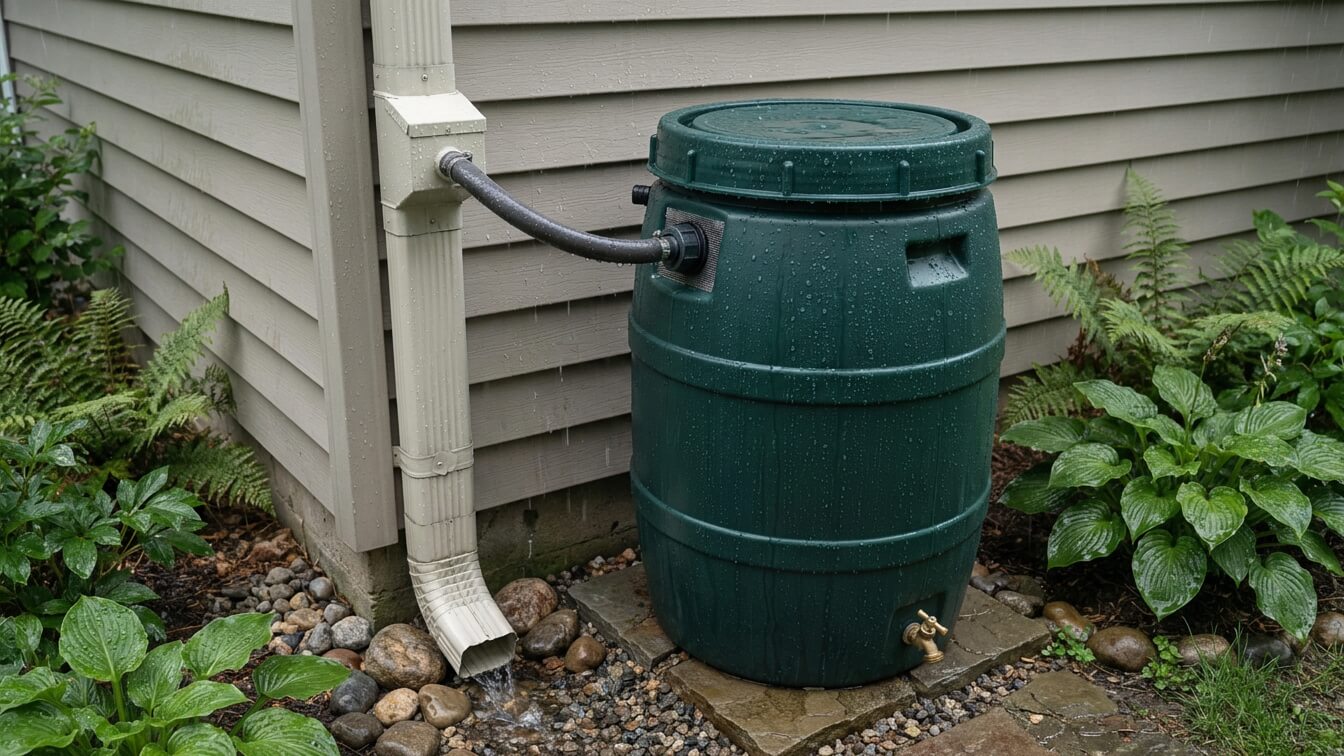
Put a barrel under a downspout, save some water for the garden, and use less from the hose. It sounds simple enough until someone tells you that collecting rainwater is illegal. They may even mention a man who went to jail in Oregon, which makes an ordinary garden project sound surprisingly risky.
Why is collecting rainwater illegal? Usually, it is not. There is no general federal ban on household rainwater harvesting, but state water-rights laws and local installation rules can limit particular systems. A rule about storage capacity or drinking-water plumbing is different from a blanket ban on catching rain.
The federal overview of alternative water sources explains that states regulate rainwater collection and use. So the answer depends on where you live and what you want to build. A small roof-fed barrel for garden watering is a different proposition from a pond, a large tank, or a system supplying the kitchen faucet.
Why Would a State Restrict Rainwater Collection?
The rules become easier to understand once you look beyond the barrel. Water held on one property may otherwise have flowed toward a stream used by someone else. And when a collection system supplies a building, officials also have to consider the tank, plumbing, and water quality.
Existing Water Rights Can Matter
Some western states use a system called prior appropriation to decide who can use water. Under that system, older recognized rights generally take priority when there is not enough water for everyone. The state explanation of water rights walks through how that works.
Owning the land does not necessarily give you the right to hold back all the water flowing across it. A collection project can intercept water that would otherwise reach a stream or another user. Small rooftop systems may qualify for exemptions, while larger diversions need separate authorization.
This does not mean every drop from every roof would have reached a river. Nor does it mean a small barrel has the same effect as a reservoir. That is why the legal rules distinguish between a roof-fed barrel, a large cistern, and a project that holds back natural runoff.
Does the Government Own the Rain?
Some states describe water as belonging to the public and administer rights to use it. That is different from saying the government prohibits you from catching any rain that lands on your property. Oregon’s official explanation of exempt water uses discusses both public ownership and uses that do not require a water-right permit.
For a homeowner, the useful question is whether the planned system fits an exemption or needs approval. Saying “it is my property” does not answer that on its own. Saying “the water belongs to the public” does not tell you whether a roof-fed barrel is allowed, either.
Permission to Collect Is Different From Permission to Install
A state may let you collect rooftop rain without a water-right permit while still requiring approval for plumbing or construction. Oregon offers a useful example: its tank and cistern guidance distinguishes the water-right exemption from building, plumbing, and electrical permits. Indoor connections can therefore raise requirements that an outdoor gravity-fed barrel does not.
You might be told that no water-right permit is needed and still need a plumbing or building permit. A tank beside a shed and a tank connected to a house are not necessarily reviewed the same way. Give the permitting office the full plan so you do not get an answer that covers only half the project.
Drinking-Water Use Raises Another Question
Watering ornamental plants and supplying a kitchen faucet are different uses. A system allowed for outdoor irrigation may not be approved for drinking, cooking, or indoor household use. Treatment and plumbing requirements must be checked separately from the right to collect the water.
The public-health guidance on collected rainwater explains how roofing, gutters, storage materials, and animal waste can affect water quality. It also recommends keeping rainwater from entering treated-water pipes. A collection system needs to be suitable for its intended use, not merely able to hold water.
What Selected State Rules Actually Allow
Colorado and Utah come up often in warnings about rainwater collection. Both allow it, but the limits are easy to misquote. The examples below show what the rules cover and where a simple yes-or-no answer falls short.
Permission often comes with conditions
| State | Selected rule to know |
|---|---|
| Colorado | The ordinary residential rain-barrel allowance permits up to two barrels with a combined capacity of 110 gallons. It covers qualifying rooftop collection for outdoor use on the same property, not drinking or indoor household use. |
| Utah | No registration is needed for up to two covered containers if neither exceeds 100 gallons. The registered allowance permits total storage of up to 2,500 gallons, subject to the law’s conditions. |
| Oregon | ORS 537.141 includes a water-right permit exemption for collecting precipitation from artificial impervious surfaces. Separate installation and use requirements can still apply. |
| Washington | Agency policy allows rooftop collection without a water-right permit when its conditions are met, including use on the same property and collection from existing structures with another primary purpose. |
Colorado: 110 Gallons Is a Storage Limit
Under the ordinary allowance, qualifying properties include single-family residences and residential buildings with four or fewer units. The residential rain-barrel guidance explains the two-barrel, 110-gallon combined-capacity limit. It also describes separate permit-based provisions for certain qualifying rural properties.
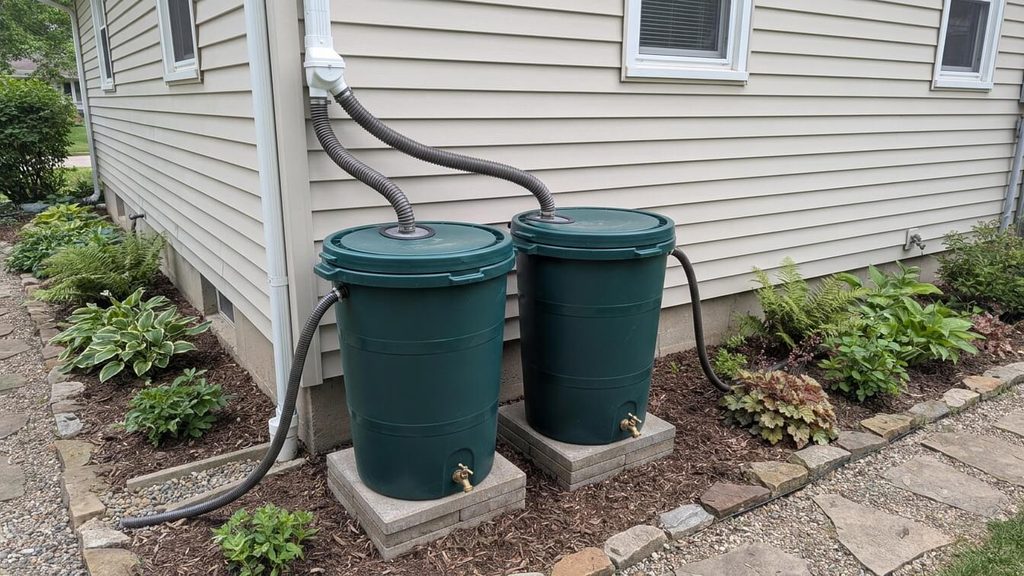
The 110 gallons is a combined storage-capacity limit, not an annual collection allowance. Two 55-gallon barrels fit that capacity limit; two 75-gallon barrels do not. You can use the stored water and refill the permitted barrels in later storms, but a larger tank does not qualify simply because you plan to keep it partly empty.
Using those barrels does not give you a separate water right. Colorado can still restrict their use under its water-rights administration provisions. Some qualifying properties have other permit-based options, so a project outside the small-barrel allowance needs a closer look rather than an automatic assumption that it is banned.
Utah: Two Small Containers or Registered Storage
Utah’s precipitation-storage statute allows collection on a parcel the person owns or leases, with beneficial use on that same parcel. Its no-registration provision allows no more than two covered containers, each with a maximum capacity of 100 gallons. That differs from a single 200-gallon container.
For larger arrangements within the statutory allowance, the rainwater registration page states a total storage limit of 2,500 gallons and no registration charge. Construction-code requirements still matter. Registration is not permission for unlimited storage or use on another parcel.
Oregon and Washington: The Collection Surface Matters
Oregon’s statutory exemption for precipitation collection covers collection from artificial impervious surfaces. Its extension guidance explains the roof-to-tank exemption as water that does not contact soil between collection and storage. Do not assume the same exemption covers capturing a creek or impounding ground runoff.
Washington’s rainwater-collection policy applies conditions to rooftop collection and on-property use. It also explains that using rainwater as a primary drinking-water source for new construction requires checking with the county. A roof-fed barrel and a new household water supply therefore require different questions to be answered.
What About the Oregon Man Jailed for Collecting Rainwater?
There was a real Oregon case, but it was not about someone putting a barrel under a gutter. In 2012, contemporaneous reporting on Gary Harrington’s reservoirs described a 30-day jail sentence and a $1,500 fine for maintaining three illegal reservoirs. The report described dams capturing water that would otherwise flow into a nearby creek and noted that Harrington was appealing.
That is a very different situation from catching water from your gutter. The case concerned reservoirs and dams, not an ordinary roof-fed barrel covered by an exemption. The sentence described in that report is not a standard rain-barrel penalty, and the report should not be treated as the final record of what happened on appeal.
A Rain Barrel Is Not a Permit to Dam a Channel
Hypothetical example: A homeowner installs a covered roof-fed barrel for ornamental plants. Another landowner builds an embankment across a drainage channel to fill a pond. Permission for the first project does not establish permission for the second, even if both owners describe their supply as rainwater.
When a headline says someone was punished for collecting rain, look at what they built and what rule they were accused of breaking. A roof-collection exemption may have little to do with a dam across a drainage channel. The fact that both hold rainwater does not put them in the same legal category.
Similar confusion comes up with other environmental-law claims. Our guide to whether it is illegal to kill a praying mantis separates a familiar garden myth from real wildlife protections. As with rainwater collection, the specific rule and location matter more than a blanket warning.
Can an HOA Stop You From Collecting Rainwater?
An HOA may have something to say about where the barrel goes or how it looks. But a rule in the association’s documents is not automatically enforceable in every state. Texas, for example, protects rainwater installations while preserving some limits on placement and appearance.
The state rainwater-harvesting overview identifies Property Code §202.007 as protecting rainwater installations from HOA bans. The statute nevertheless preserves certain limits involving location, appearance, and visible equipment. Check the applicable law alongside your association’s documents before treating either as the final answer.
How to Check Your Plan Before Buying Equipment
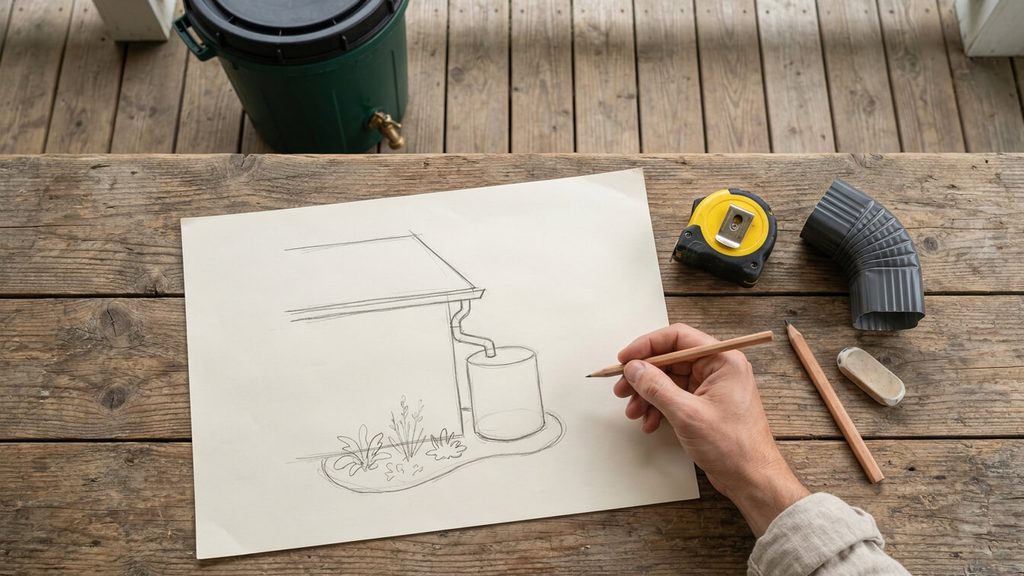
Before buying a tank or cutting a downspout, write down what you want to install. Note the collection surface, the capacity of each container, and what you will use the water for. A quick sketch showing the tank and overflow route can save a lot of back-and-forth with the permitting office.
Check the rules for your planned system
- Identify the source: Specify rooftop runoff, another hard surface, ground runoff, or a stream. Do not assume one exemption covers all four.
- List the storage: Give the number of containers, each container’s rated capacity, and the combined capacity.
- Explain the use: Distinguish outdoor irrigation from indoor non-drinking uses and drinking-water supply.
- Contact the right offices: Ask the state water agency about water rights and registration, and local officials about construction, plumbing, health, and drainage requirements.
- Check property restrictions: Review applicable HOA documents, lease terms, and any state-law protections.
- Keep the answer: Save relevant agency guidance, permits, registration records, and written project-specific advice.
One useful question is: “I want two covered roof-fed barrels for outdoor watering, with no connection to indoor plumbing; what approvals apply at this address?” Add the rated capacity of each barrel and a sketch showing the overflow route. That gives an official much more to work with than asking whether rainwater harvesting is legal.
For a larger system, get answers before excavation or permanent plumbing begins. Ask again if the project changes from garden watering to indoor supply. Approval for one design should not be assumed to cover a substantially different installation.
What If You Receive a Violation Notice?
Start with the notice itself, not an online list of supposed rainwater fines. There is no single nationwide penalty for owning a rain barrel. The complaint might be about water diversion, a missing permit, an indoor connection, or an HOA restriction, and each calls for a different response.
Find the rule being cited, the response deadline, and what you are being asked to change. Keep photos of the setup along with any permits, registration, and written advice you received. If the dispute involves water rights, a substantial penalty, or an expensive installation, a local water-law or land-use attorney can help you assess it.
Conclusion
Why is collecting rainwater illegal? For many homeowners, it is not, provided the system follows the rules for its location, capacity, and use. Before you install one, check the whole plan, including any plumbing or construction, rather than relying on a blanket warning or a blanket promise that anything goes.
Is there a federal law banning rainwater collection?
There is no general federal ban on household rainwater harvesting. State and local rules determine many collection and installation requirements. That does not exempt a larger project from other applicable environmental laws.
Why would it be illegal to collect rainwater on your own property?
Owning land does not remove every water-right, construction, or public-health requirement. A particular project may exceed a storage allowance or involve a diversion that needs authorization. Check the rule for the actual system rather than assuming private ownership settles it.
Is collecting rainwater still illegal in Colorado?
Colorado permits qualifying residential rooftop collection under its ordinary two-barrel allowance, with combined capacity of no more than 110 gallons. That water is for outdoor use on the same property, not drinking or indoor household use. Other qualifying projects may fall under separate provisions.
Do I need to register a rain barrel in Utah?
Not if you use no more than two covered containers and neither has a maximum capacity above 100 gallons. Registered collection under the statutory allowance can have total storage of up to 2,500 gallons. Other conditions, including same-parcel use, still apply.
Can I drink rainwater if collecting it is legal?
Permission to collect does not establish that the water is safe or approved for drinking. Roof runoff can contain both germs and chemicals. Ask the health department about the required testing, treatment, and plumbing before using it as a household supply.
