

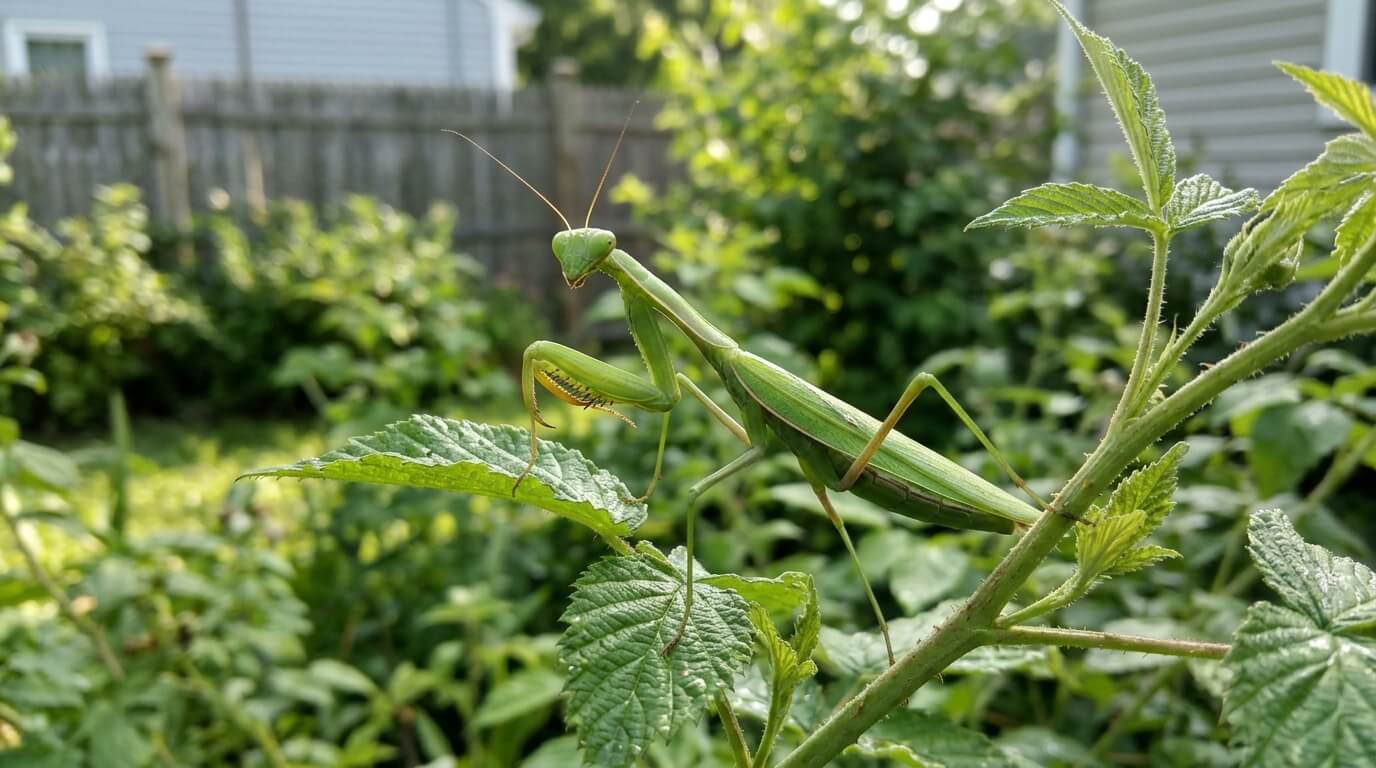
Is It Illegal to Kill a Praying Mantis? Laws and Myths
A praying mantis turns up on your porch, and you remember the warning: don’t kill it, or you’ll get fined. Maybe a parent told you that years ago. Maybe a neighbor still insists it is the law.
Is it illegal to kill a praying mantis? Generally, no—the familiar claim that killing an ordinary garden mantis automatically brings a $50 fine is a myth. Connecticut’s decision to name one its state insect does not create that penalty, either. However, rules protecting wildlife in places such as national parks can still apply.
The distinction matters because both versions of the story can go too far. A supposed nationwide mantis fine is one thing; a real rule against harming wildlife in a park is another. Here is how to tell them apart and what to do if you find a mantis at home.
What to know
- The familiar automatic $50 fine for killing a praying mantis is a myth.
- Connecticut’s state-insect designation does not give the European mantis additional protection.
- National park wildlife rules can protect insects even when they are not endangered.
- A species list answers a different question from a rule protecting a particular place.
- If a mantis is not causing a problem, leaving it alone is usually the easiest option.
Why Do People Think Killing a Praying Mantis Is Illegal?
The story usually comes with a surprisingly specific number: $50. That detail makes it sound like someone has read an actual law, even when no one can point to one. Repeating the amount does not establish that the offense exists.
A few real facts may make the warning seem believable. Mantises eat other insects, and the European mantis is Connecticut’s state insect. Neither fact, on its own, creates a law against killing one.
The sources reviewed for this article do not establish a reliable origin for the rumor. They also do not support the familiar blanket prohibition. If you searched “why is it illegal to kill a praying mantis,” the first thing to know is that the question assumes a rule that has not been established.
Is It Illegal to Kill a Praying Mantis in Connecticut?
Connecticut is an understandable source of confusion because the European mantis is its official state insect. The state-symbol account gives October 1, 1977, as the date that designation took effect. Being chosen as a state symbol, however, is different from receiving legal protection as a threatened or endangered species.
The state agricultural fact sheet on praying mantises addresses the issue directly. It explains that the European mantis has no additional protection because it is not considered threatened or endangered. In other words, the state-insect title does not create the special killing offense people often describe.
That answers the state-symbol question without settling every possible situation. A mantis in a backyard and a mantis in a protected natural area may be subject to different rules. The place still matters, even when the insect is the same.
What About Pennsylvania, Ohio, New York, New Jersey, Massachusetts, and Virginia?
These states also appear frequently in questions about the rumor. The selected sources reviewed did not identify a special prohibition on killing an ordinary mantis simply because it is a mantis. However, the evidence differs by state, so a simple row of “legal” labels would hide useful distinctions.
Some sources list particular protected insects. Others define which animals fall under a particular wildlife law. The table explains what each source establishes, rather than treating one document as a complete answer to every situation.
What the state sources show
| State | Finding and limitation |
|---|---|
| Pennsylvania (PA) | No special mantis ban was identified in the reviewed material. Title 34’s wildlife definition covers wild birds and mammals, so that definition does not itself protect mantises. |
| Connecticut (CT) | The state’s agricultural fact sheet expressly says the European mantis has no additional protection from its state-insect designation. |
| Ohio (OH) | No mantis appears in the reviewed endangered-species rule. The rule’s protection for listed insects does not automatically extend to every insect. |
| New York (NY) | No mantis entry was identified in the reviewed endangered, threatened, or special-concern species list. Separate rules for a protected location may still apply. |
| New Jersey (NJ) | The available wildlife-program guidance connects its invertebrate take protections to formal endangered, threatened, or special-concern listings. No mantis-specific protection was identified in the agency material reviewed. |
| Massachusetts (MA) | No mantis entry was identified in the reviewed protected-species list. This finding does not remove separate restrictions in parks or preserves. |
| Virginia (VA) | No mantis appears in the reviewed endangered and threatened plant-and-insect regulation. That finding concerns this particular listing, rather than every rule affecting insects. |
A Closer Look at Pennsylvania
Pennsylvania comes up often enough to deserve a little explanation. The Game and Wildlife Code definitions describe wildlife for that title as wild birds and mammals. A mantis is an insect, so that definition does not itself support the rumored mantis fine.
The limit of that conclusion is just as important. Reading one definition does not rule out other restrictions on a park, preserve, or other property. If someone claims a particular encounter was illegal, the next step is to identify the rule they mean.
Are Praying Mantises Endangered or Protected?
“Praying mantis” covers many species, so there is no single answer about their status worldwide. Connecticut’s guidance, for example, specifically discusses the European mantis. It should not be stretched into a statement about every mantis species in every country.
Another common misunderstanding here is that an animal does not have to be endangered to receive legal protection. Separate laws can protect wildlife regardless of its endangered-species status. The article on legal protection for bald eagles explains that distinction through a different wildlife example.
If you need to check a particular insect, start with a clear photograph. A local extension office or wildlife agency may be able to help identify it. Its scientific name is more useful for checking a species list than a description such as “the large green one.”
What About a Praying Mantis Egg Case?
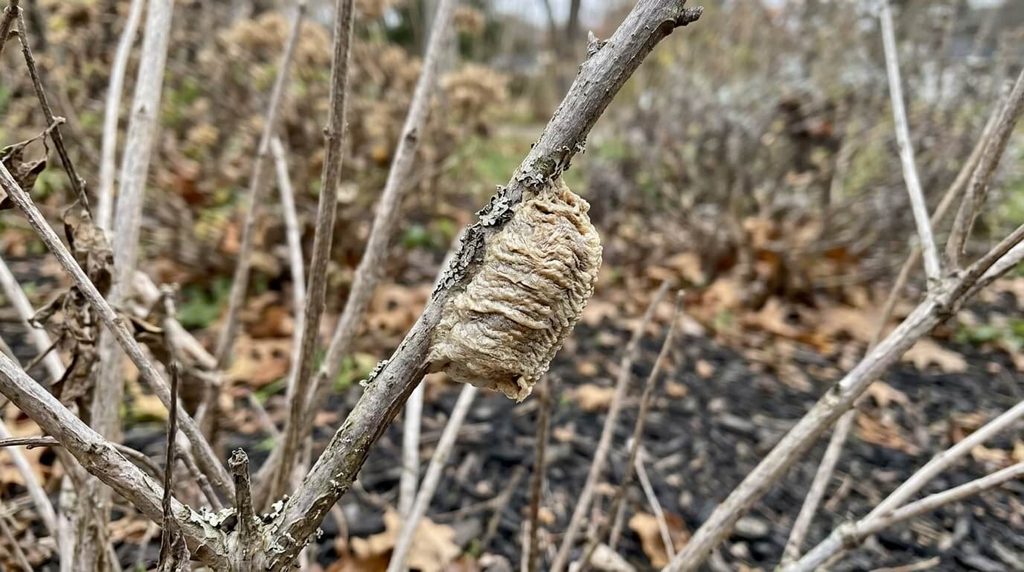
A tan, foam-like lump on a twig may be a mantis egg case, known as an ootheca. It can look dry and lifeless while still holding developing insects. If it is attached to outdoor vegetation and causing no problem, you can simply leave it there.
An egg case is not automatically outside a wildlife rule just because no adult insect is visible. The federal park regulation’s definition of wildlife expressly includes eggs and offspring. In a National Park Service area, leave the case where you found it and ask a ranger before collecting or moving it.
When Could Harming a Praying Mantis Break a Rule?
National parks provide a clear example of why “there is no special mantis fine” is not the whole answer. The federal rule protecting park resources generally prohibits destroying, injuring, removing, or disturbing wildlife from its natural state, subject to the chapter’s exceptions. The associated definition of wildlife is broad enough to include insects.
That protection does not depend on a mantis being rare or endangered. Intentionally harming one in a National Park Service area can therefore raise a legal issue that does not arise from the familiar backyard rumor. Its being a common insect does not, by itself, make the park rule disappear.
Hypothetical example: A visitor spots a mantis beside a national park trail and deliberately crushes it. The relevant question would concern the park’s wildlife-protection rule, not an automatic nationwide $50 mantis penalty. Whether a violation occurred and what consequences followed would depend on the applicable law and facts.
State parks, preserves, and other managed properties may have their own restrictions. Check the rules for the place you are visiting instead of assuming that a federal national park regulation applies to every public space. When in doubt, observing and photographing the insect avoids the disturbance involved in catching or moving it.
What Happens If You Kill a Praying Mantis?
For an ordinary backyard encounter, the fact that the insect was a mantis does not, by itself, trigger the special fine described in the rumor. If you accidentally stepped on one, hearing that old warning is not a reason to assume you owe $50. An actual violation would need an applicable legal basis.
If someone insists that you broke the law, ask which statute, regulation, or property rule applies. The answer should identify more than the insect’s common name. The location, conduct, species, and wording of the rule all help determine whether the claim makes sense.
An actual citation deserves a different response from a neighbor repeating a story. Read the notice, follow its response instructions, and get local legal advice if you need help. Do not ignore it merely because the familiar mantis rumor is false.
Was It Illegal in the Past?
The phrase “is it still illegal to kill a praying mantis” suggests that a known ban once existed. The sources reviewed for this article did not establish that history. They do not provide a reliable basis for saying a nationwide mantis ban was repealed on a particular date.
That does not justify claiming that no relevant rule has ever existed anywhere. Historical laws and local restrictions require their own research. The supported point is narrower: the familiar blanket prohibition and automatic $50 fine should not be treated as established law.
Why Leave a Praying Mantis Alone Anyway?
You do not need a legal penalty to have a reason to leave wildlife alone. A mantis sitting on a garden stem is usually something you can watch without doing anything. If it is not causing a problem, there may be no practical reason to interfere.
Its reputation as a garden helper needs a little balance, though. The extension guide to praying mantids explains that their overall pest-control value is limited. They hunt a range of prey and do not distinguish between insects gardeners welcome and insects gardeners dislike.
That means a mantis should not be sold as a perfect solution to every garden pest. It also does not mean an occasional mantis needs to be destroyed. For most homeowners, leaving it where it is will be the simplest response.
What Should You Do With a Praying Mantis Found Indoors?
A mantis on your living-room curtain creates a more practical question: how do you get it outside? For an ordinary local insect that has wandered indoors, a roomy container and a stiff card can help you move it gently. Avoid grabbing its legs or wings, which can injure it.
Choose nearby sheltered vegetation rather than carrying it somewhere far from where it was found. This advice concerns an outdoor insect that entered your home. This is not guidance for releasing a purchased exotic pet or removing wildlife from a protected area.
Move an indoor visitor gently
- Give yourself room: Move pets away and clear the immediate area so you do not have to chase the insect.
- Use a roomy container: Gently position it over the mantis, keeping the rim clear of its legs.
- Slide a stiff card underneath: Work slowly and avoid pressing the card against the insect’s body.
- Let it leave on its own: Set the open container beside nearby sheltered plants on your property and allow the mantis to walk out.
- Ask when the situation is uncertain: Contact a local extension office or the responsible land manager if identification or location restrictions are unclear.

Conclusion
Is it illegal to kill a praying mantis? For an ordinary garden encounter, the familiar special prohibition and automatic $50 fine are myths. Broader wildlife rules can still apply in protected places, so leave the insect alone when possible and check the actual local rule when the setting calls for it.
Frequently asked questions
Is there a $50 fine for killing a praying mantis?
The familiar automatic $50 mantis fine is a myth. The sources reviewed did not establish that penalty simply for killing an ordinary mantis. A separate wildlife or location-based rule can still apply.
Does Connecticut protect praying mantises because they are the state insect?
The state-insect title does not itself add protection. Connecticut’s agricultural fact sheet specifically explains this for the European mantis. Rules protecting wildlife in a particular park or managed area are a separate issue.
Is it illegal to kill a praying mantis in Pennsylvania?
No special mantis-killing ban was identified in the Pennsylvania material reviewed. The Game and Wildlife Code definition discussed in this article concerns wild birds and mammals, rather than insects. Separate rules for a protected location still need to be checked.
Were praying mantises once endangered?
There is no single historical conservation status for every mantis species. The reviewed sources do not support the story that ordinary garden mantises were covered as a group by a nationwide endangered-species ban. A claim about a particular species or year needs the actual listing from that time.
Can I move a praying mantis instead of killing it?
An ordinary local mantis that wandered indoors can often be moved gently to nearby sheltered vegetation. Use a roomy container and card rather than holding its legs or wings. Collecting wildlife in a protected area or releasing a purchased exotic species raises different questions.
