

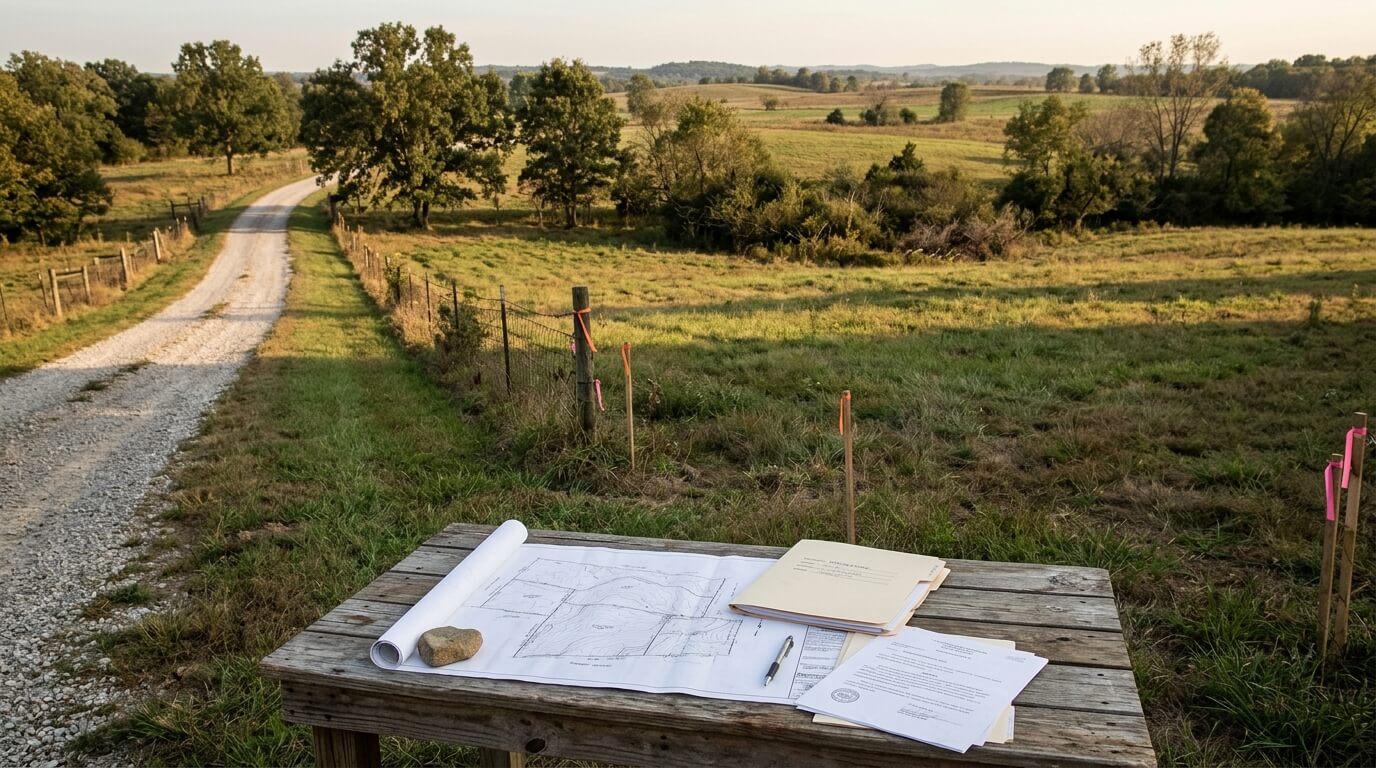
Newton County Missouri Lawsuit Settlement: What the Court Records Show
A search for Newton County, Missouri lawsuit settlement can lead to two different legal disputes. One is a 2026 federal case in which the United States seeks forfeiture of approximately 15.17 acres in Newton County and another property in Oklahoma. The other is a local Sunshine Law lawsuit that the Newton County Commission settled in January 2025.
The federal property case is United States v. Approximately 15.17 Acres in Newton County, Missouri, et al., No. 3:26-cv-05052, filed in the Western District of Missouri on June 18, 2026. The federal docket shows that property claimants challenged the action and that the court ordered a 90-day pause on August 4. The records reviewed do not establish a settlement or final forfeiture judgment in this case.
There is an important newer development. A public docket index updated November 2, 2026 lists entries 21 and 22, described as a stay and an order on a motion to stay. Because the actual order was not available in the records reviewed, it would be premature to say whether the court extended the pause, modified it, or allowed proceedings to resume.What matters most
- The federal property case was filed June 18, 2026, as No. 3:26-cv-05052.
- It concerns approximately 15.17 acres in Missouri and separate property in Ottawa County, Oklahoma.
- The government alleges the properties are traceable to proceeds from unlawful peptide sales.
- The complaint says the defendant’s real properties had not been seized when the action was filed.
- Casey R. Crider and Trenton A. Wilson asserted property claims, and Crider moved to dismiss.
- The court granted a 90-day stay on August 4, 2026.
- A November 2 index shows new stay-related docket entries, but their text was not verified.
- No settlement amount, payout program, or final forfeiture judgment was established in the records reviewed.
- An unrelated Sunshine Law case settled in January 2025 without monetary consideration.
What Is the Federal Newton County Property Case About?
The federal case is a civil forfeiture action, which means the government is asking a court to transfer ownership of property it alleges is connected to illegal activity. In this type of case, the property itself is named as a defendant, rather than suing someone for ordinary money damages. The government still has to establish the legal basis for taking the property.
The Missouri property consists of approximately 15.17 acres described in the complaint as land in the Haunted Springs Estates survey. The lawsuit also includes a separate parcel in Ottawa County, Oklahoma. The complaint identifies Blome Properties LLC as the recorded owner of the Missouri acreage and associates the Oklahoma land with Casey Crider and Jason Huston.
The action relies on federal forfeiture provisions under 18 U.S.C. § 981, including theories involving alleged proceeds and financial transactions connected to unlawful activity. That is the government’s legal theory, not a finding that the allegations have been proved. The full complaint reproduced in the case record gives the detailed account behind the government’s claim.
Civil forfeiture is a legal process in which the government asks a court to forfeit property allegedly connected to an offense. A criminal conviction is not always required before a civil case can be filed against the property. Owners and other people with qualifying interests can assert claims and challenge the government’s evidence.
What Does the Government Allege About Blome Research?
The complaint connects the property dispute with an investigation of Blome Research, Jason Huston, and Casey Crider. Investigators allege that the business sold unlicensed or misbranded products, including semaglutide, tirzepatide, and retatrutide, and that communications promoted products for weight-loss use. The complaint also describes activity involving the Missouri Board of Pharmacy, undercover purchases, and shipments.
According to the filing, approximately $15 million entered associated accounts between July 2023 and December 2025. Investigators also alleged that approximately 31,776 parcels were shipped during a period spanning 2024 and 2025. These figures come from the government’s pleading and have not been established as final findings in this forfeiture action.
The government attempts to connect the land purchases to the alleged proceeds. Its complaint identifies two cashier’s checks, each for $84,330.51, as part of the financial trail relating to property transactions. Claimants may dispute the source of the money, the tracing analysis, and whether the statutory forfeiture requirements are met.
The $15 million figure is not a lawsuit settlement. It describes alleged account receipts, not damages awarded by a judge or money available for residents to claim. Confusing an alleged financial total with a settlement is one of the clearest ways this case can be misreported.
Did Federal Agents Already Seize the 15.17 Acres?
The federal complaint expressly states that the defendant’s real properties had not been seized when the complaint was filed. That is different from saying the government had no legal claim or that it could never take the properties. The forfeiture action was the legal route by which the government sought to establish its claim.
Real estate receives special treatment under 18 U.S.C. § 985. As a general rule, the statute prevents the government from seizing real property before a forfeiture order, subject to limited exceptions. It also explains how the government can initiate proceedings by filing a complaint, posting notice, and serving the owner.
The docket lists lis pendens notices filed on June 22, 2026. A lis pendens gives public notice that litigation may affect the title to property, but the federal statute expressly says it is not itself a seizure. Nor does it mean the government has already won ownership of the land.
Who Is Contesting the Forfeiture?
The docket names Casey R. Crider and Trenton A. Wilson as claimants. Crider filed his claim on July 1, 2026, and Wilson followed on July 15. Filing a property claim allows an interested person to participate in the action, but it does not automatically prove the claim or defeat the government’s case.
Crider also filed a motion to dismiss on July 16. The United States opposed the motion on July 27. A motion to dismiss is a request for a ruling, not evidence that the court has already dismissed the lawsuit.
Federal forfeiture procedure gives claimants ways to contest ownership, the alleged connection with unlawful activity, and the government’s compliance with the law. Under 18 U.S.C. § 983(c), the government generally must prove by a preponderance of the evidence that property is subject to forfeiture. The statute also protects qualifying innocent owners and sets additional requirements for certain forfeiture theories.
Why Was the Case Paused, and What Happened on November 2?
The government asked for a 90-day stay in July 2026, and Crider also requested a pause. On August 4, U.S. District Judge Megan Blair Benton granted the stay motions. The stated reason involved concerns about the effect of civil litigation on a related criminal investigation or proceeding.
A stay does not decide the underlying case. It generally pauses specified court activity while the reason for the pause remains relevant. The original 90-day period ran to November 2, 2026, making the older article’s prediction about a future November 2 deadline outdated today.
The newer case index reports docket entries 21 (Stay) and 22 (Order on Motion to Stay) dated November 2. However, it does not display the order’s operative text, and the free Justia docket was last retrieved in August. The latest safe conclusion is that there was new stay-related activity, not that a particular extension or resumption has been confirmed.
New docket activity needs the actual order for confirmation
The original 90-day stay reached its scheduled endpoint on November 2, 2026. A public court index lists an order concerning a stay on that date, but its text was not available in the sources reviewed for this article. The case should therefore not be described as newly settled, permanently stayed or reopened on the basis of that short index entry alone.
Is There a Settlement or a Class-Action Payout?
No verified federal settlement has been identified in the material reviewed through November 12, 2026. The available docket information documents a forfeiture complaint, claims to the property, a motion to dismiss, and stay-related orders. It does not show a settlement agreement, consent judgment, or final forfeiture order resolving the 15.17-acre action.
This is not a class-action lawsuit for Newton County residents. The government is seeking forfeiture of specific real property, not creating a compensation fund for the general public. There is no verified claims administrator, payment deadline or resident payout associated with this federal case.
Even when a case ends, its outcome must be read from the actual court documents. A notice of dismissal or procedural order does not, by itself, reveal whether private settlement terms or payments exist, as TheLawLearner explains: a lawsuit dismissal does not necessarily establish a settlement payment. The same caution applies here: the word settlement should not appear as an established federal outcome without documentation.
No verified $15 million settlement fund
The roughly $15 million amount mentioned in the federal complaint concerns alleged financial receipts associated with the investigated business. It is not a settlement, damages award or money reserved for the public. A website offering residents a share of that amount would need independent verification from court records before anyone should rely on it.
What Was the Separate Newton County Sunshine Law Settlement?
A different Newton County lawsuit settled in January 2025. Prosecuting Attorney William P. Lynch and the Newton County Commission resolved a dispute over a commission meeting agenda and Missouri’s public-meeting rules. It was a local-government transparency case, not the federal property-forfeiture case.
The published January 2, 2025 settlement agreement identifies state case 23NW-CV03476. The commission acknowledged a knowing and purposeful Sunshine Law violation involving the December 12, 2024 meeting. It agreed to compliance steps, including training and obtaining legal advice before future agenda changes.
Crucially, the agreement says no monetary consideration was necessary. That means the reported settlement was about compliance with open-government rules, not a cash payout to Newton County residents. It is a legitimate settlement result, but it should never be mixed with the Blome Research forfeiture allegations.
Federal Case Timeline
Major verified docket events
| Date | Development |
|---|---|
| June 18, 2026 | United States files the federal civil forfeiture complaint. |
| June 22, 2026 | Lis pendens notices filed. |
| July 1, 2026 | Casey R. Crider files a claim. |
| July 15, 2026 | Trenton A. Wilson files a claim. |
| July 16, 2026 | Crider moves to dismiss the case. |
| July 27, 2026 | United States opposes the dismissal motion. |
| August 4, 2026 | Court grants motions to stay proceedings for 90 days. |
| November 2, 2026 | Original 90-day endpoint; a newer index lists stay-related entries 21 and 22, without displaying the order’s terms. |
What Happens Next in the Federal Case?
The next meaningful question is what November 2 docket entry 22 actually ordered. It could affect when the parties must file answers, respond to pending motions, or resume other litigation steps. Without its text, the timing and scope cannot be stated confidently.
The judge may eventually address Crider’s pending motion to dismiss or allow the parties to develop evidence. The parties could also reach a negotiated resolution or litigate whether the properties satisfy the forfeiture requirements. Those are possible outcomes, not confirmed developments.
A reliable update should check Case No. 3:26-cv-05052 and, where available, the underlying federal filing through PACER. A new docket label alone may be enough to identify an event but not enough to explain its effect. That distinction is particularly important when readers are searching for a settlement.
Conclusion
The phrase Newton County, Missouri lawsuit settlement describes at least two separate stories. The federal action over approximately 15.17 acres is a civil forfeiture case involving government allegations about proceeds associated with Blome Research-related peptide sales. The records reviewed through November 12, 2026 do not establish a final forfeiture judgment, settlement agreement or public payout.
There is now more to the timeline than the original August stay. A public index lists new November 2, 2026 stay-related docket entries, although the text of the order was not available for verification. Readers should therefore avoid assuming that the stay was extended, lifted or converted into a settlement.
An unrelated January 2025 Sunshine Law case did settle, but the written agreement involved training and compliance measures rather than money. Keeping the two cases separate is the clearest way to answer the search query accurately. The federal docket remains the decisive source for any future settlement announcement.
Frequently asked questions
Is there a Newton County Missouri lawsuit settlement?
No federal settlement was verified in the records reviewed through November 12, 2026 for the case involving approximately 15.17 acres. The available material shows a pending property-forfeiture dispute and new stay-related entries on November 2. A separate county Sunshine Law case did settle in January 2025 without a monetary payment.
What is the 15.17-acre lawsuit about?
The United States seeks civil forfeiture of land in Newton County, Missouri and another property in Oklahoma. The government alleges that funds connected with unlawful peptide sales were traced into property transactions. Those allegations remain subject to challenge and have not been established as final findings in this action.
Did the government already seize the land?
The federal complaint states that the defendant real properties had not been seized when the case was filed. Federal law generally restricts seizure of real property before a forfeiture order, subject to specified exceptions. A lis pendens or posted notice does not itself establish that the government has obtained title.
Is the $15 million a settlement payment?
No. The roughly $15 million figure appears in the government’s allegations about money entering accounts associated with the business and individuals under investigation. It is not a class-action fund, a damages award or an amount available to Newton County residents.
What happened when the 90-day stay reached November 2, 2026?
A public docket index lists new entries for a stay and an order on a motion to stay dated November 2. The text of the order was not available in the sources reviewed, so its precise effect could not be verified. The actual federal order should be checked before reporting that the proceedings resumed or that the pause was extended.
