


Feagins v Memphis Shelby County Schools: Why Marie Feagins Is Suing MSCS
The search for Feagins v. Memphis-Shelby County Schools refers to the legal fight between former Memphis-Shelby County Schools Superintendent Dr. Marie Feagins and the Shelby County Board of Education. The school board voted 6-3 to terminate Feagins on January 21, 2025, less than a year after she began leading the district. Feagins disputes the reasons given for her firing and has challenged the board through both Tennessee state court and federal court.
Her lawsuits do not all raise the same legal questions. The state case began with allegations that board members violated Tennessee’s Open Meetings Act while planning her removal and later expanded to include other claims, including allegations involving board member Towanna Murphy. The federal case, filed in March 2026, focuses on alleged sex discrimination, retaliation, and related civil-rights claims arising from Feagins’ employment and termination.
As of October 31, 2026, the federal case remains active and has not produced a final judgment deciding whether MSCS unlawfully discriminated or retaliated against Feagins. Her state case also survived beyond her unsuccessful request for immediate reinstatement in 2025. A separate October 2026 lawsuit filed by former MSCS employee Camalyn Turner concerns allegations against Feagins herself and must not be confused with Feagins’ cases against the district.
What to know
- Marie Feagins became MSCS superintendent effective April 1, 2024.
- The school board voted 6-3 to terminate her contract on January 21, 2025.
- The board’s formal resolution identified three specific alleged misconduct issues plus broader leadership and communication concerns.
- Feagins denies that the board’s accusations justified her removal and has described the effort as politically motivated.
- Her Tennessee lawsuit alleges problems with the process used to terminate her, including alleged Open Meetings Act violations.
- A judge denied her request for immediate reinstatement in August 2025, but that did not end the underlying state lawsuit.
- Her 2026 federal case alleges sex discrimination and retaliation.
- The federal lawsuit remained active after the court lifted a stay on October 14, 2026.
- No final federal ruling has determined whether MSCS unlawfully discriminated or retaliated against Feagins.
Who Is Marie Feagins?
Marie Feagins was appointed superintendent of Memphis-Shelby County Schools, one of Tennessee’s largest public school districts. Her contract became effective on April 1, 2024, and she entered the role after working in other public-school leadership positions. Her tenure lasted less than ten months before the board voted to remove her.
The relationship between Feagins and several board members deteriorated during 2024. Public disagreements emerged over finances, communication, district decision-making, and the superintendent’s relationship with the board. By December, the board was formally considering whether to terminate her employment contract.
Feagins maintained that several accusations against her were misleading or false. She also argued that political and governance conflicts played a major role in the effort to remove her. Those disagreements later became part of both public debate and litigation.
Why Was Marie Feagins Fired?
The school board’s formal termination resolution identified several alleged problems. The first concerned a statement Feagins made that the district had paid approximately $1 million in overtime wages for time employees had not worked. The board said Feagins failed to provide evidence supporting that statement and did not adequately correct or clarify it.
The second issue concerned a donation of more than $45,000. The board alleged that Feagins accepted the donation without required board approval and misrepresented her knowledge or involvement concerning the check. Feagins disputed the board’s account.
The third specific allegation concerned federal grant funding. The resolution accused Feagins of saying that certain federal funds remained available even though the board maintained that the funds had not been obligated before the required deadline. The board characterized that statement as dishonest.
The resolution also included broader leadership concerns. It accused Feagins of failing to communicate or cooperate adequately with district partners and of failing to promptly inform the board about significant matters. The board concluded that her conduct constituted professional misconduct and breach of contract.
Was There Another Allegation in the Investigation?
Yes, but it is important to distinguish the investigation from the formal termination resolution. A special-counsel report described in local coverage considered an additional concern involving Feagins’ alleged interference with a formative-assessment request-for-proposals process after an evaluation committee had selected a vendor. That issue appeared in the investigation but was not one of the three specifically numbered allegations in the formal December termination resolution.
This difference matters when summarizing why Feagins was fired. Saying the board formally listed four identical charges would blur the distinction between the resolution and the later investigative report. The safest description is that the resolution contained three specific accusations plus broader leadership concerns, while the investigation addressed an additional procurement-related issue.
Feagins disputed the accusations and publicly defended her record before the final termination vote. Some board members also opposed firing her and supported giving her additional time under stronger oversight. The majority nevertheless voted to terminate her.
When Was Marie Feagins Fired?
The school board voted on January 21, 2025, to terminate Feagins’ employment. Six board members voted for termination and three voted against it. The decision ended her tenure as superintendent less than ten months after her official start date.
The vote followed a December 2024 meeting at which the board had delayed a final termination decision. Feagins later provided a point-by-point response and argued that some board members were presenting misleading information. Another board member proposed allowing her to remain superintendent under additional governance and reporting requirements.
The board rejected that alternative and approved termination for cause. Because the board treated the termination as being for cause, its attorney maintained that Feagins was not entitled to the severance payment that would otherwise have been available under different termination circumstances. That compensation dispute later became relevant to her requested remedies.
What Does Feagins Claim in Her State Lawsuit?
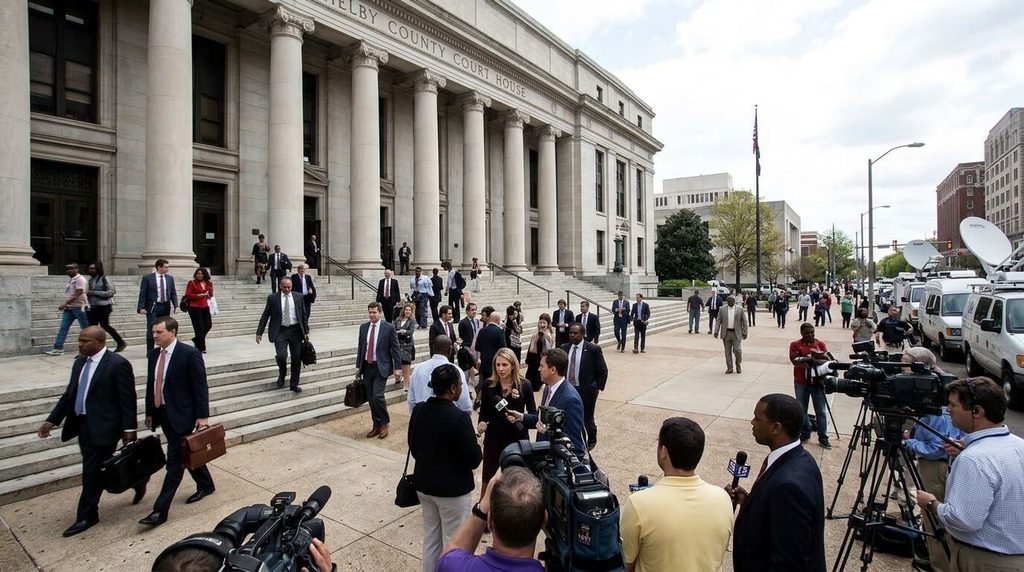
Feagins filed her Tennessee lawsuit on February 3, 2025, as shown in the Shelby County Circuit Court docket. One of her central claims is that board members violated Tennessee’s Open Meetings Act by privately discussing or coordinating her removal before deciding on it in a properly noticed public meeting. She argues that those alleged violations should affect the termination vote’s validity.
The Tennessee Open Meetings Act generally requires qualifying public bodies to conduct public business openly. Feagins alleged that secret meetings, communications, and informal discussions among board members crossed the line from permissible individual communication into unlawful private deliberation. The board disputes her interpretation and has argued that members could discuss employment and performance matters without violating the Act as Feagins claims.
The state case later expanded beyond the original Open Meetings Act theory. Feagins sought permission to add claims including defamation allegations involving board member Towanna Murphy. The court allowed amendment of the complaint, meaning those allegations could be litigated, but permission to amend was not a ruling that the allegations were true.
An open-meetings law generally requires qualifying public governmental bodies to conduct official deliberations and decisions in meetings that are open to the public. Tennessee’s law is intended to prevent public business from being decided through private deliberations that avoid public observation. Whether particular conversations, messages, or gatherings violate the law depends on who participated, what was discussed, and whether the communications amounted to deliberation covered by the statute.
Did a Judge Order MSCS to Give Feagins Her Job Back?
No. Feagins asked the Shelby County Circuit Court for a preliminary injunction that would effectively undo the termination while the lawsuit continued. After an evidentiary hearing in July 2025, the court denied that request in August.
The denial meant Feagins was not immediately reinstated as superintendent. It did not amount to a final judgment rejecting every claim in her state lawsuit. Her underlying case continued after the preliminary-injunction decision.
This distinction is important because preliminary relief and final relief involve different questions. A judge can deny an immediate injunction because the legal requirements for emergency or interim relief have not been met while still allowing the underlying claims to continue. Therefore, saying Feagins “lost her lawsuit” in August 2025 would be inaccurate.
What Relief Is Feagins Seeking in State Court?
Feagins has sought reinstatement to the superintendent position as one possible remedy. Her amended litigation also sought approximately $487,500 in back pay and additional employment benefits as an alternative form of relief. Those amounts represent requested relief, not money a court has awarded.
She has also pursued claims connected with alleged reputational harm. The amended complaint included defamation-related allegations involving Towanna Murphy and statements Feagins says falsely connected her to misconduct. Those claims remain subject to proof, defenses, and whatever later rulings the court enters.
A lawsuit can request several alternative remedies without guaranteeing that any of them will be awarded. The court must first determine whether a legal violation occurred and, if so, which remedies are legally available. Requested damages should therefore never be reported as an existing judgment.
Why Is Towanna Murphy Part of the Dispute?
Towanna Murphy is a member of the Shelby County Board of Education and voted to terminate Feagins. Feagins alleges that Murphy spread false statements accusing her of involvement in conduct connected with Murphy’s stolen vehicle and later made other damaging accusations. Feagins says those statements harmed her reputation.
The state court allowed Feagins to amend her complaint to include defamation claims against Murphy. That procedural ruling allowed the allegations to be added to the case. It did not determine that Murphy had defamed Feagins.
Murphy’s role also appears in Feagins’ federal litigation. Because the state and federal cases are separate, however, readers should check which complaint or claim is being discussed before attributing a particular allegation to a particular case. The same person can appear in multiple proceedings without the claims being identical.
What Does Feagins Claim in the Federal Lawsuit?
Feagins filed her federal lawsuit on March 19, 2026, in the U.S. District Court for the Western District of Tennessee, where the case is indexed as No. 2:26-cv-02292. The case is captioned Feagins v. Shelby County Schools Board of Education et al., No. 2:26-cv-02292. Her federal claims include allegations of sex discrimination and retaliation under Title VII of the Civil Rights Act of 1964.
Feagins argues that the board treated her less favorably than male district leaders who faced serious accusations or employment controversies. Reporting on the complaint says she relies on comparator evidence to argue that gender influenced the way the board responded to her conduct. She also disputes the legitimacy of the board’s stated reasons for firing her.
Those allegations remain contested. The school board can defend its decision by arguing that it was based on legitimate, nondiscriminatory reasons, such as the misconduct and leadership concerns identified in its termination materials. Feagins can then attempt to prove that those stated reasons were not the true reason for the decision or were applied differently because of sex.
Title VII of the Civil Rights Act of 1964 generally prohibits covered employers from discriminating against an employee because of sex and other protected characteristics. A plaintiff must connect the protected characteristic to an adverse employment action, not merely show that a workplace decision was unfair or disputed. Evidence can include employer statements, treatment of comparable employees, timing, inconsistencies in explanations, and other facts relevant to whether unlawful discrimination affected the decision.
Why Do Male Comparators Matter in Feagins’ Case?
Comparator evidence can be important in employment-discrimination litigation. A plaintiff may try to show that employees outside the protected group committed similar misconduct or faced similar circumstances but received less severe discipline. The comparison is strongest when the employees are similar in legally relevant respects.
Feagins reportedly contrasts her treatment with that of former male district leaders, including former superintendent Joris Ray. Ray left MSCS after an investigation involving alleged inappropriate relationships with employees and received a negotiated separation arrangement. Feagins argues that she was treated more harshly.
Different outcomes alone do not automatically prove discrimination. A court may examine differences in contracts, alleged misconduct, evidence, board membership, timing, decision-makers, negotiated agreements, and other circumstances. Whether the proposed comparators are sufficiently similar is ultimately a legal and factual question.
What Is Feagins’ Retaliation Claim?
Retaliation is legally different from discrimination. Title VII generally prohibits an employer from taking certain adverse actions because an employee opposed unlawful discrimination or participated in protected activity. A retaliation claim therefore focuses on protected conduct, adverse action, and the causal connection between them.
Feagins’ federal lawsuit includes retaliation allegations along with her sex-discrimination claims. Her theory involves the treatment she received during the disputes surrounding her leadership and eventual removal. The exact legal analysis depends on the operative complaint and evidence developed during litigation.
A retaliation allegation should not be treated as established simply because the events occurred close together. Courts examine what protected activity occurred, who knew about it, when the adverse action happened, and what evidence connects the two. Those issues remain unresolved in Feagins’ federal case.
Has the School Board Responded to the Federal Lawsuit?
Yes. The school board has contested Feagins’ claims and has pursued dismissal and other procedural relief in federal court. Its broader public position remains that Feagins was terminated for professional misconduct, dishonesty, communication problems, and contractual concerns, not because she is a woman.
That creates the central conflict in the federal case. Feagins says the stated reasons were false, exaggerated, selectively applied, or part of discriminatory and retaliatory treatment. The board says those reasons legitimately explain its employment decision.
A court does not decide that conflict merely by reading which side’s allegations sound more convincing. Discovery, documents, testimony, comparator evidence, board communications, and later motions can all become relevant. That is why the current pretrial status matters.
What Is the Current Status of the Federal Case?
As of October 31, 2026, the federal case remains active. A stay that had paused the litigation was lifted on October 14, allowing the case to move forward again. Recent docket entries show continued disputes involving pleadings and discovery.
On October 27, the docket reflected a motion to compel and a filing seeking leave to submit another document. Earlier October entries concerned amended pleadings, counsel withdrawal, and extensions relating to discovery. These signs point to active pretrial litigation rather than a completed case.
The federal court has not entered a final judgment saying Feagins was discriminated against, nor has it entered a final merits judgment rejecting her claims. Anyone describing the lawsuit as won, lost, settled, or finally dismissed is getting ahead of the current docket. The proper status is ongoing.
The federal lawsuit is still in pretrial litigation
The federal case remained active at the end of October 2026 after the court lifted a stay on October 14. Subsequent filings involved discovery and pleading issues rather than a trial verdict or final summary judgment. The central discrimination and retaliation allegations therefore remain unresolved.
Why Did the Federal Case Have a Stay?
A stay temporarily pauses litigation. It does not automatically dismiss the case, decide the merits, or mean that either side has won. Federal judges can stay cases for several case-management reasons, including related litigation, pending procedural matters, or circumstances affecting discovery and scheduling.
The important fact for current readers is that the stay did not remain in place indefinitely. The court lifted it on October 14, 2026. The federal case then continued with additional filings later that month.
This shows why current docket review matters. An article written while the case was stayed could now incorrectly suggest that nothing is happening. The October activity shows that the case resumed.
What Happened With Feagins’ Attorneys?
Feagins changed legal representation during the federal lawsuit. Her earlier attorney, Johnathan Austin, withdrew after Feagins ended that firm’s representation, and attorney Brittany Hinton later sought permission to withdraw as well. The court addressed counsel withdrawal and discovery timing in early October 2026.
Changes in lawyers can affect deadlines and case scheduling. A party may need additional time to retain counsel, review prior work, respond to discovery, or prepare filings. The court can decide whether extensions are justified.
Attorney withdrawal does not tell readers who will win the lawsuit. It is a procedural development, not evidence that proves or disproves discrimination. Avoid speculation about private disagreements between a lawyer and client unless supported by public filings.
How Is the State Case Different From the Federal Case?
Feagins’ state and federal cases address different legal issues
Issue
Tennessee state case
Federal case
Main focus
Termination process, Open Meetings Act allegations, contract-related issues, and later state-law claims.
Sex discrimination, retaliation, and related federal employment claims.
Court
Shelby County Circuit Court.
U.S. District Court for the Western District of Tennessee.
Immediate reinstatement
Requested but preliminary injunction denied in August 2025.
Not the same preliminary-injunction proceeding.
Final merits decision
The injunction denial did not end the underlying lawsuit.
No final discrimination or retaliation judgment as of October 31, 2026.
| Issue | Tennessee state case | Federal case |
|---|---|---|
| Main focus | Termination process, Open Meetings Act allegations, contract-related issues, and later state-law claims. | Sex discrimination, retaliation, and related federal employment claims. |
| Court | Shelby County Circuit Court. | U.S. District Court for the Western District of Tennessee. |
| Immediate reinstatement | Requested but preliminary injunction denied in August 2025. | Not the same preliminary-injunction proceeding. |
| Final merits decision | The injunction denial did not end the underlying lawsuit. | No final discrimination or retaliation judgment as of October 31, 2026. |
Did Feagins Lose Her State Case When the Court Denied Reinstatement?
No. This is one of the easiest parts of the litigation to misunderstand. In August 2025, the judge denied Feagins’ request for a preliminary injunction that would have immediately restored her to the superintendent position.
A preliminary injunction requires a plaintiff to satisfy specific standards before the court will order temporary relief while the case is still pending. Failing to obtain that temporary relief does not necessarily defeat the underlying claims. Feagins’ state-court docket continued to show activity after the injunction decision.
The difference matters for accurate headlines. “Judge refuses to immediately reinstate Feagins” accurately describes the ruling. “Judge rules Feagins was legally fired and ends lawsuit” would describe a much broader decision than the one actually entered.
What Is the Camalyn Turner Lawsuit?
Camalyn Turner, a former MSCS employee who worked as a special assistant to Feagins, filed a separate federal lawsuit on October 29, 2026. Turner alleges that Feagins exposed herself to her on two occasions in 2024 and retaliated against her after Turner rejected or did not respond to the alleged conduct. Turner sued the Shelby County Board of Education rather than naming Feagins as the defendant in the Title VII action.
Turner alleges sexual harassment, retaliation, and constructive discharge. She claims her work role changed, her pay was threatened or reduced, and she eventually resigned because of the alleged working conditions. The district has acknowledged the lawsuit but declined to comment substantively while it is pending.
Those are allegations in a newly filed complaint. No court had ruled on their truth by October 31, 2026. Turner reportedly seeks substantial monetary relief, but a demand for damages is not the same thing as a judgment awarding those damages.
Does the Turner Lawsuit Prove MSCS Was Right to Fire Feagins?
No. The board’s publicly stated reasons for firing Feagins focused on different subjects, including overtime statements, the donation, federal grant funding, communication, and leadership concerns. News reporting about Turner’s lawsuit also notes that Feagins was fired for reasons unrelated to Turner’s later-filed allegations.
The Turner allegations could potentially become relevant to other litigation if a court finds them admissible and connected to a disputed issue. That possibility does not mean the filing retroactively proves the board’s January 2025 reasoning. Courts distinguish between what decision-makers knew at the time, later allegations, and evidence admissible for a particular legal purpose.
The reverse is equally important. Feagins’ claim that she was discriminated against does not prove that Turner’s accusations are false. The two plaintiffs have different claims and different burdens of proof.
Feagins v. Memphis-Shelby County Schools Timeline
Key events in the Feagins and MSCS dispute
| Date | Development |
|---|---|
| April 1, 2024 | Feagins’ appointment as MSCS superintendent becomes effective. |
| December 2024 | The board formally considers a resolution seeking to terminate her contract. |
| January 21, 2025 | The board votes 6-3 to terminate Feagins. |
| February 3, 2025 | Feagins files her Tennessee lawsuit challenging the board’s process. |
| May 30, 2025 | Feagins seeks to amend the state complaint with additional claims and allegations. |
| July 22, 2025 | The state court holds a hearing on her request for preliminary reinstatement and allows amendment involving defamation claims. |
| August 2025 | The judge denies the preliminary injunction seeking immediate reinstatement, while the underlying case continues. |
| March 19, 2026 | Feagins files her federal discrimination and retaliation lawsuit. |
| September-October 2026 | The federal case experiences attorney changes and discovery-related procedural activity. |
| October 14, 2026 | The federal court lifts the stay. |
| October 27, 2026 | The federal docket shows a motion to compel and additional filing activity. |
| October 29, 2026 | Camalyn Turner files a separate Title VII lawsuit against the school board. |
Has Marie Feagins Won or Lost Her Lawsuits?
It is not accurate to say Feagins has won or lost the overall litigation. She lost her request for immediate reinstatement through a preliminary injunction in the Tennessee case, but the underlying state case continued. That procedural defeat is narrower than losing every claim.
Her federal discrimination and retaliation case also remains unresolved. Recent October 2026 filings concern pleadings, counsel, discovery, and related pretrial matters. There has been no final federal merits ruling deciding the central claims.
This distinction makes the article more useful than a simple news recap. Lawsuits can contain dozens of motions, and each procedural ruling does not decide the entire case. Readers can see a similar distinction between accusations and reported case outcomes in TheLawLearner’s Shelby Sapp lawsuit explanation. Readers should look for words such as “final judgment,” “summary judgment,” “dismissal,” “verdict,” or “settlement” before assuming a case is over.
What Could Happen Next in the Federal Case?
Discovery can continue now that the federal stay has been lifted. The parties may seek documents, testimony, electronic communications, deposition evidence, or other information relevant to Feagins’ discrimination and retaliation theories and the board’s defenses. The October motion to compel suggests that discovery disputes are already part of the litigation.
The court may also rule on requests concerning amended pleadings. If additional amendments are permitted, the exact claims or allegations could change before the case reaches dispositive motions. That is why future updates should rely on the operative complaint rather than an older version.
Later stages could include summary judgment, settlement, or trial. A summary-judgment motion would ask the judge to decide claims without trial when a party believes no genuine dispute of material fact requires a jury. None of those future outcomes is guaranteed as of October 31, 2026.
Conclusion
Feagins v Memphis Shelby County Schools grew out of the school board’s January 21, 2025 decision to terminate superintendent Marie Feagins after less than a year in office. The board’s formal materials cited alleged misleading statements about overtime, an unapproved donation, federal grant funding, and broader communication and leadership concerns. Feagins disputes the board’s account and has argued that the process and reasons for her removal were unlawful.
Her legal challenge now exists on more than one track. The Tennessee lawsuit attacks aspects of the termination process and includes state-law claims, while her 2026 federal lawsuit alleges sex discrimination and retaliation. Her unsuccessful effort to obtain immediate reinstatement in 2025 did not end the state case, and the federal case remains in active pretrial litigation.
As of October 31, 2026, no final federal judgment has decided whether MSCS unlawfully discriminated or retaliated against Feagins. The federal stay was lifted on October 14, and later October filings show continuing disputes involving discovery and pleadings. A separate lawsuit filed by Camalyn Turner should be discussed only as a separate proceeding, not treated as proof for either side in Feagins v. Memphis-Shelby County Schools.
What is Feagins v. Memphis-Shelby County Schools about?
Feagins v. Memphis-Shelby County Schools concerns former superintendent Marie Feagins’ legal challenges following her January 2025 firing. Her state litigation challenges aspects of how the school board handled the termination, while her federal case alleges sex discrimination and retaliation. The school board disputes her claims, and no final federal judgment has yet decided whether its actions violated Title VII.
Why did Memphis-Shelby County Schools fire Marie Feagins?
The board’s formal resolution accused Feagins of making misleading statements about overtime, accepting a donation exceeding $45,000 without required approval, and making inaccurate statements concerning federal grant funds. It also cited broader concerns about communication, cooperation, and leadership. Feagins disputes the board’s accusations and has argued that the reasons given for removing her were false, exaggerated, or improperly motivated.
Did a judge order Marie Feagins back to her superintendent job?
No, a Tennessee judge denied Feagins’ request for a preliminary injunction that would have immediately reinstated her while the state lawsuit continued. That August 2025 ruling denied temporary relief rather than entering a final judgment on every claim in the case. Her underlying state litigation continued after the injunction decision.
What does Feagins claim in her federal lawsuit?
Feagins alleges sex discrimination and retaliation under federal employment law. She argues that the school board treated her more harshly than male leaders in comparable situations and disputes the legitimacy of the reasons given for her termination. Those allegations remain contested and have not yet been established through a final federal judgment.
What is the current status of Feagins v. Memphis-Shelby County Schools?
The federal lawsuit remains active as of October 31, 2026. The court lifted a stay on October 14, and later October docket activity involved discovery, motions, and pleading issues. No final federal ruling has decided whether Memphis-Shelby County Schools discriminated or retaliated against Feagins.
